
Japan · Noodle soups
Kitsune udon
Thick udon in a pale, fragrant Kansai dashi, topped with fried tofu simmered sweet until it brims with juice. Osaka's gentlest classic.
- Prep
- 10 min
- Cook
- 45 min
- Total
- 1 hr 20 min
- Effort
- Easy
- Serves
- 4
The total includes 25 min of soaking, resting or chilling.
Ratings by the Soupmap Culinary Team, not readers.
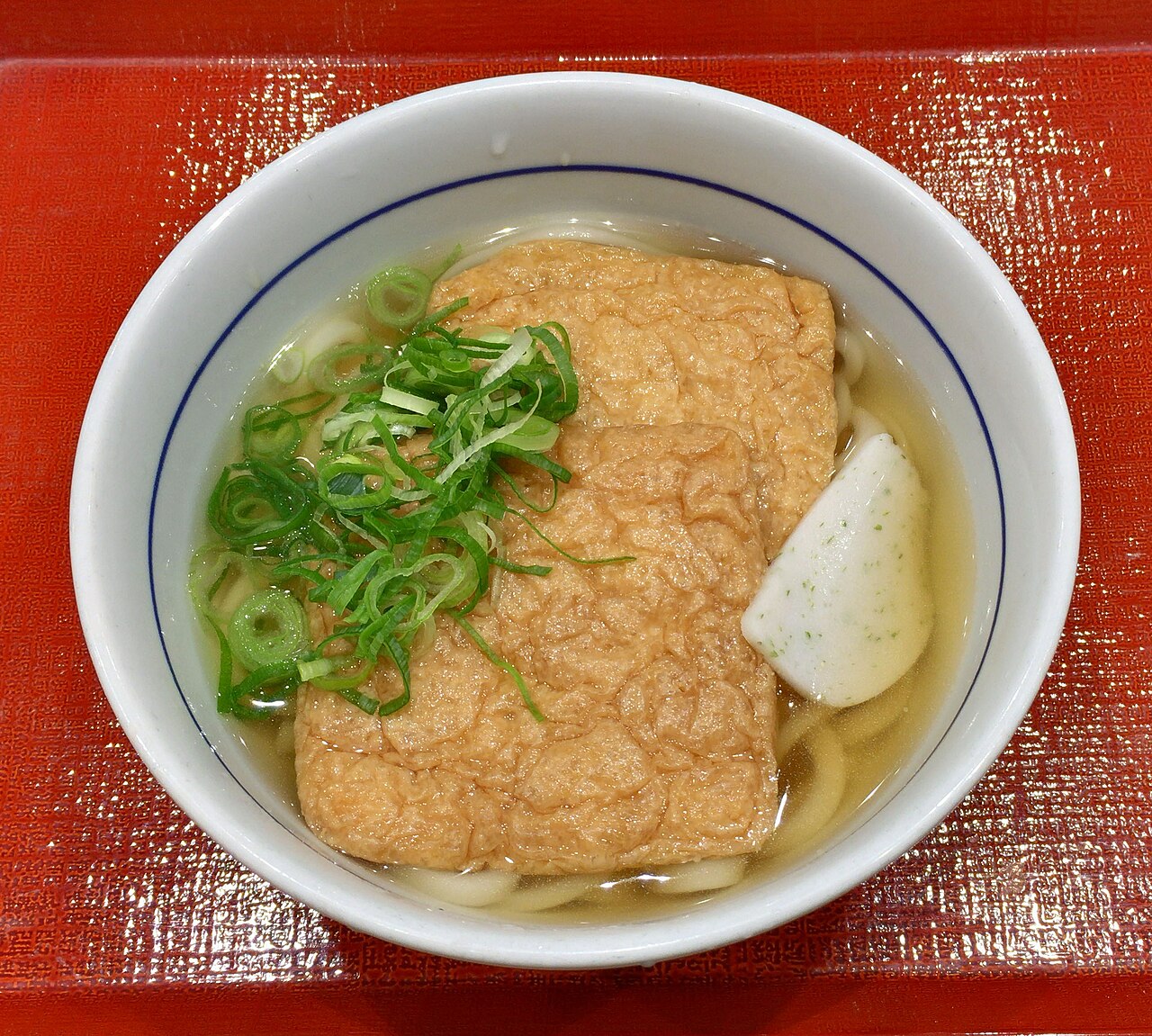
Kitsune means fox. The name comes from the topping, a sheet of aburaage (thin deep-fried tofu) simmered in sweetened soy and dashi, because foxes, the messengers of Japan's Inari shrines, are traditionally said to love fried tofu. The dish is usually traced to Osaka in the late 1800s, and it's still an Osaka standard.
This is the Kansai version, and the broth is the point. Western Japan seasons its udon soup with usukuchi (light-coloured soy sauce), mirin (sweet rice wine) and salt, so it stays a clear, pale amber and tastes of dashi (Japanese stock) rather than of soy. You're meant to drink it to the last drop. Kombu (dried kelp), a generous amount of katsuobushi (dried, smoked bonito flakes) and, if you can find them, mackerel flakes give it real depth.
What people usually get wrong is the tofu. Skip the quick scald that strips its surface oil and the sheet can't soak up the seasoning, so you're left with something greasy and bland instead of tofu that floods your mouth with sweet, savoury juice. Fixing it takes one kettle of boiling water.
Ingredients
Dashi
Sweet simmered tofu
Broth
To serve
Method
Tap a step's number to tick it off, and a time to start a timer.
Make the dashi
Wipe the kombu with a damp cloth, leaving any white powder on it (that's flavour, not dust). Put it in a large pot with the water and leave to soak for 30 minutes.
Heat over medium-low until small bubbles cling to the kombu and the edges of the pot, 15–20 minutes. Lift out the kombu just before the water boils; boiled kombu turns slippery and gives the dashi a heavy, seaweedy taste.
If you're using mackerel flakes, add them now and keep the pot at a gentle simmer for 5 minutes; they're thicker than katsuobushi and need longer to give up their flavour. Add the katsuobushi (all of it, if you skipped the mackerel), simmer for 1 minute, then turn off the heat and leave until the flakes sink, 3–4 minutes.
Strain through a sieve lined with kitchen paper or a clean cloth and let it drip through without pressing; squeezing the flakes makes dashi cloudy and fishy. You should have about 1.9 l.
Simmer the tofu
Put the aburaage in a sieve and pour boiling water slowly over both sides, then press gently between sheets of kitchen paper. This scald, called abura-nuki ("removing the oil"), is what lets the tofu absorb the seasoning. Cut each sheet in half on the diagonal to make two triangles.
Put 250 ml of the dashi in a small, wide pan with the sugar, soy sauce and 1 tbsp mirin and bring to a simmer. Lay the tofu in, cover with a drop lid (a circle of baking paper pressed onto the surface) and simmer over low heat, turning the pieces once, until the liquid has cooked down to a few spoonfuls of syrup and the tofu is glossy, deep golden brown and heavy with juice, 15–20 minutes. Leave it in the pan.
Make the broth
While the tofu simmers, put a large pot of water on to boil for the noodles and fill the serving bowls with hot water to warm them.
Put 1.6 l of the dashi in a saucepan with the usukuchi soy sauce, 4 tbsp mirin and the salt, bring to a simmer over medium heat and let it bubble gently for 1 minute to cook off the mirin's alcohol. Taste: it should be savoury enough to drink on its own, lightly salty and only faintly sweet. Add salt a pinch at a time if it needs it, then keep the broth hot over low heat without boiling.
Cook the noodles and serve
Cook the udon in the boiling water until hot through and tender: 1–1 1/2 minutes for frozen (straight from the freezer), or as the packet says for fresh, usually 8–12 minutes, until there's no white core when you bite one. Drain well, shaking out as much water as you can.
Empty the bowls and divide the noodles between them. Ladle about 400 ml of broth over each, then lay two tofu triangles on top with a spoonful of their syrup. Add the kamaboko and spring onion and serve at once, with shichimi on the table.
Swaps
Cooking for coeliac disease or an allergy? Check every label: the notes below say which ones matter.
Gluten-free
- Udon is a wheat noodle, so a gluten-free bowl is no longer really kitsune udon. The nearest options are 100% buckwheat soba labelled gluten-free (kitsune soba, see Variations) or thick rice noodles labelled gluten-free; neither has udon's soft, springy chew.
- Replace both soy sauces with tamari labelled gluten-free: 2 tbsp in the tofu syrup, and 3 tbsp plus an extra 1/2 tsp salt in place of the usukuchi. The broth will be darker, more like a Tokyo bowl.
- Leave out the kamaboko unless it's labelled gluten-free (many fish cakes contain wheat starch), and check the aburaage, mirin and shichimi labels. Ready-seasoned inari tofu is usually made with regular soy sauce, so skip that shortcut.
Plant-based
- Make a kombu-shiitake dashi. Soak 25 g kombu and 8 dried shiitake (about 25 g) in the 2.4 l cold water in the fridge for at least 5 hours, then warm it slowly, lift out the kombu before it boils and simmer the shiitake gently for 5 minutes before straining. Use it for the tofu and the broth. It's earthier and softer than bonito dashi: a gentler bowl, but a good one.
- Leave out the kamaboko, which is made from fish, and don't use bought noodle-soup base or dashi powder, which usually contain bonito. The udon, aburaage, soy sauces, mirin and shichimi are normally plant-based, but check the labels on packaged noodles and tofu.
High-protein
- Add an egg: a halved soft-boiled egg on each bowl adds about 6 g protein.
- Simmer in some chicken: slice 300 g boneless chicken thigh thinly and simmer it in the seasoned broth until cooked through with no pink inside, 5–6 minutes, before ladling. About 14 g more protein per bowl.
Tips
- Don't skip the scald. The oil on the surface of aburaage keeps the seasoning out. With it gone, the tofu soaks up the syrup like a sponge and releases it into the broth as you eat.
- Usukuchi is lighter in colour, not in salt. It's actually saltier than regular soy sauce, so the two don't swap one for one. If you can't find it, use 3 tbsp regular soy sauce and an extra 1/2 tsp salt; the broth will be darker but taste much the same.
- Season the broth on the light side. The sweet, salty syrup in the tofu seeps into the bowl as you eat, so a broth that tastes perfect on its own can end up too strong.
- Frozen udon is a good choice, not a compromise. It's frozen straight after boiling and keeps a springy bite. Cook it straight from the freezer and drain it thoroughly, because water clinging to the noodles dilutes the broth.
- Keep the dashi clean. Take the kombu out before the water boils and never press the flakes. In a broth this pale, a cloudy, fishy dashi has nowhere to hide.
Make ahead and storage
- The dashi keeps for 2 days in the fridge or 1 month in the freezer. Cool it quickly rather than leaving it warm on the stove.
- The simmered tofu keeps in its syrup for 4 days in the fridge, and the seasoning goes deeper overnight. It also freezes well for up to 1 month.
- The seasoned broth keeps for 2 days in the fridge. Bring it back to a simmer before serving.
Variations
- Kitsune soba. The same broth and tofu over buckwheat noodles. In Osaka, this bowl is often called tanuki (raccoon dog), which confuses visitors from Tokyo, where tanuki means tempura bits.
- Kizami udon. Skip the sweet simmer: slice the scalded aburaage into thin strips and warm them in the broth for 2 minutes. It's lighter and less sweet, and a common order in Kyoto and Osaka.
- Shortcut: ready-seasoned inari tofu. The sweet fried-tofu pouches sold for inari sushi can stand in for the simmered tofu. They're sweeter than homemade, so keep the broth lightly seasoned.
Don't feel like cooking?
Places serving udon in Japan
From the Soupmap catalog: places listed as udon places, picked across cities. Listings, not reviews; check before you go.
- Dotonbori Imai Honten 道頓堀今井 本店 Osaka Map
- Daifuku Udon 大福うどん Fukuoka Map
- Azuma Udon あづまうどん Takamatsu, Kagawa Map
- Darumado だるま堂 Kitakyushu, Fukuoka Map
- Asahi Udon Otobashi あさひうどん 尾頭橋店 Nagoya, Aichi Map
- Kameyaserufu Udon かめやセルフうどん Okayama Map
See them on the map Udon in every city
City guidesUdon in Osaka 285Udon in Fukuoka 192Udon in Takamatsu 170Udon in Kitakyushu 142Udon in Nagoya 99Udon in Okayama 83
Your notes
Keep your cooking notes private in your account. Save what you changed and what you'd do next time.
Reviews & cooks' tips
Reviews and tips from people who've cooked this appear here.