
Japan · Noodle soups
Hōtō (Yamanashi miso noodle stew)
Thick, flat noodles cooked straight in a miso broth with kabocha and root vegetables until the pot turns velvety. Yamanashi's winter one-pot, from a simple homemade dough.
- Prep
- 35 min
- Cook
- 55 min
- Total
- 1 hr 35 min
- Effort
- Takes some care
- Serves
- 4
Ratings by the Soupmap Culinary Team, not readers.
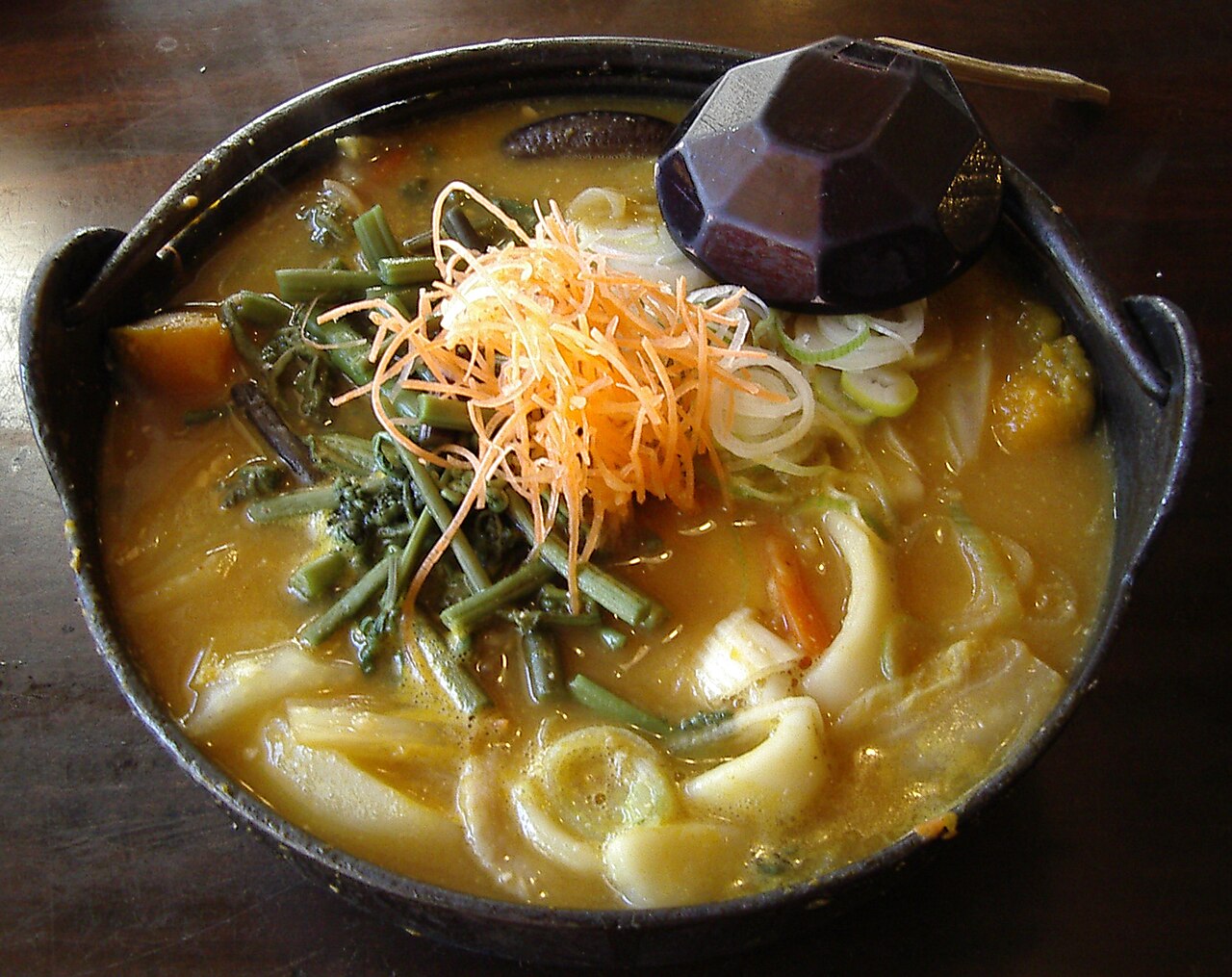
Hōtō is the winter dish of Yamanashi Prefecture, west of Tokyo on the northern side of Mount Fuji: wide, thick wheat noodles simmered in a miso (fermented soybean paste) broth with a heap of vegetables, above all kabocha (Japanese pumpkin), until everything turns soft and thick. It's closer to a stew than a noodle soup, and on a cold night I think that's exactly what you want.
The key is that the noodles go into the pot raw. Udon is boiled separately and its starchy cooking water poured away; hōtō keeps all of it. The flour dusting the noodles and the starch they shed thicken the broth into something velvety, the softest pieces of kabocha collapse into it for sweetness, and the noodles in turn drink up the miso.
The dough is simpler than udon dough, too. It has no salt, because salt tightens gluten and gives udon its springy bite, while hōtō is meant to be soft and yielding; the miso broth does all the seasoning. With no bounce to build, the dough needs only a short rest before you roll it.
The usual mistake is rinsing the noodles or shaking off their flour. Put them in just as they are.
Ingredients
Noodles
Dashi
Vegetables
Seasoning
Method
Tap a step's number to tick it off, and a time to start a timer.
Start the dashi
Pinch the heads off the niboshi and pull out the dark bellies, which taste bitter. Put the fish in a large pot with the 2 l water and the kombu, if using, and leave to soak for 30 minutes while you make the dough.
Make the dough
Put the flour in a large bowl and add 140 ml water a little at a time, mixing with your fingertips until it forms shaggy crumbs. Add the last 10 ml only if there's still dry flour at the bottom of the bowl, then press everything into a ball.
Knead on the work surface until smooth and about as soft as an earlobe, 5–8 minutes. Cover with cling film or an upturned bowl and leave to rest at room temperature for 30 minutes, just long enough to roll out without springing back.
Make the dashi
Set the soaked pot over medium heat and bring it slowly to a simmer, about 10 minutes, lifting out the kombu just before it boils. Skim off any foam and simmer gently, uncovered, for 10 minutes, then strain. You should have about 1.8 l.
Prepare the kabocha
Scoop the seeds out of the kabocha and cut it into chunks, skin on: about half into 4 cm pieces that will hold their shape, and the rest into 2 cm pieces that will melt into the broth.
Roll and cut the noodles
Halve the dough. On a generously floured surface, roll one half into a sheet about 3 mm thick and roughly 25 cm square, dusting with more flour whenever it sticks. Repeat with the other half.
Dust the sheets well with flour, fold each one loosely in three like a letter and cut across into strips 1–1.5 cm wide. Shake the noodles loose, toss them with a little more flour so they don't stick together and spread them out on a floured tray. Cook them within 1 hour.
Cook the hōtō
Put the dashi, daikon, carrot and taro in a wide, heavy pot that holds at least 4 l. Bring to a boil over medium-high heat, then simmer over medium heat until the daikon starts to turn translucent, about 8 minutes.
Add the kabocha and mushrooms. Put half the miso in a ladle, lower it into the broth and stir with chopsticks until it dissolves, then bring the pot back to a boil.
With the broth bubbling, add the noodles a handful at a time, with the flour that clings to them, stirring gently so they don't clump. Simmer over medium-low heat with the lid ajar, stirring gently and scraping the bottom every few minutes (the starchy broth catches and boils over easily), until the noodles are soft right through with no floury core, 15–20 minutes. The broth will thicken noticeably.
Add the napa cabbage and negi and simmer until wilted and tender, about 5 minutes. Dissolve the rest of the miso into the pot the same way, taste, add a little more if it needs it and simmer for 2 more minutes. If it's thicker than you like, loosen it with a splash of hot water.
Ladle into deep bowls straight from the pot, piping hot, with shichimi on the table.
Swaps
Cooking for coeliac disease or an allergy? Check every label: the notes below say which ones matter.
Gluten-free
- Hōtō is a wheat-noodle dish, so a gluten-free version is really a miso vegetable stew with noodles. Wide, flat rice noodles labelled gluten-free come closest: soak or par-cook them as the packet directs and add them for the last 2–3 minutes, or they turn to mush.
- Without the noodle flour the broth stays thinner, so cut all the kabocha into 2 cm pieces, and if you want it thicker, stir in 1 tbsp potato starch mixed with 2 tbsp cold water at the end.
- Check the miso: barley (mugi) miso contains gluten and some blends include barley or wheat, so choose one labelled gluten-free. Check the shichimi too.
Plant-based
- Use the kombu-shiitake dashi from Variations in place of the niboshi. The noodles (just flour and water) and the vegetables are already vegan; check that the miso isn't dashi-iri (with added dashi), which usually contains fish.
High-protein
- Around 15 g protein a bowl as written, much of it from the noodles and miso. Add 300 g boneless chicken thigh in bite-sized pieces with the root vegetables in step 8 for about 13 g more per bowl; it's cooked through long before the noodles are.
- Or add 300 g atsuage (thick deep-fried tofu), cubed, with the kabocha (about 8 g more per bowl), or crack 4 eggs into the pot for the last 4–5 minutes, lid on, until the whites are set (about 6 g each).
Tips
- Leave the flour on. The dusting on the noodles is what thickens the pot, so don't rinse them or shake them clean. Just leave behind any loose heaps of flour on the tray, which would make the broth gluey.
- Add the miso in two stages. Half goes in early because the noodles have no salt of their own and need to cook in a seasoned broth. The rest goes in at the end, because miso's aroma fades with long boiling.
- Use plain flour. Japanese cooks use chūrikiko, a medium-protein flour, and plain (all-purpose) flour is the closest match. Bread flour makes noodles that are chewy and hard to roll.
- Kabocha substitutes. Red kuri squash (also sold as onion squash or Hokkaido pumpkin) is the closest. Butternut works, but it's wetter and less starchy, so the broth will be a little thinner.
- No niboshi? Make a kombu and bonito dashi instead: soak 15 g kombu in 2 l water for 30 minutes, heat to just below boiling and remove the kombu, then add 30 g katsuobushi (bonito flakes), turn off the heat and strain after 3 minutes.
Make ahead and storage
- The dashi keeps for 2 days in the fridge.
- Cut, floured noodles freeze well: freeze them spread out on the tray until hard, then bag them for up to 1 month. Cook from frozen, adding 3–5 minutes.
- Leftover hōtō keeps for 2 days in the fridge; cool it quickly first. The noodles keep drinking the broth, so it will be much thicker and softer the next day. Loosen it with water or dashi and bring it back to a full simmer, stirring, before serving.
Variations
- With pork. Add 150 g thinly sliced pork belly, cut into bite-sized pieces, with the root vegetables in step 8, and skim the foam as it comes to the boil. Pork or chicken often goes into hōtō in Yamanashi.
- Vegan. Replace the niboshi with 20 g kombu and 4 dried shiitake soaked in the 2 l water for at least 1 hour; simmer for 10 minutes, strain, and slice the shiitake into the pot. Check that your miso has no added dashi.
- Shortcut: shop-bought noodles. Use about 450 g fresh, uncooked hōtō noodles or thick, flat fresh udon. Avoid pre-boiled or frozen udon: they've lost the surface flour that thickens the pot.
Your notes
Keep your cooking notes private in your account. Save what you changed and what you'd do next time.
Reviews & cooks' tips
Reviews and tips from people who've cooked this appear here.