
Japan · Noodle soups
Tsukemen (dipping ramen)
Thick, cold-rinsed noodles with a hot, intense pork, chicken and dried-fish dip, finished by thinning the last of it with dashi into a soup.
- Prep
- 25 min
- Cook
- 4 hr 5 min
- Total
- 4 hr 40 min
- Effort
- Takes some care
- Serves
- 4
The total includes 10 min of soaking, resting or chilling.
Ratings by the Soupmap Culinary Team, not readers.
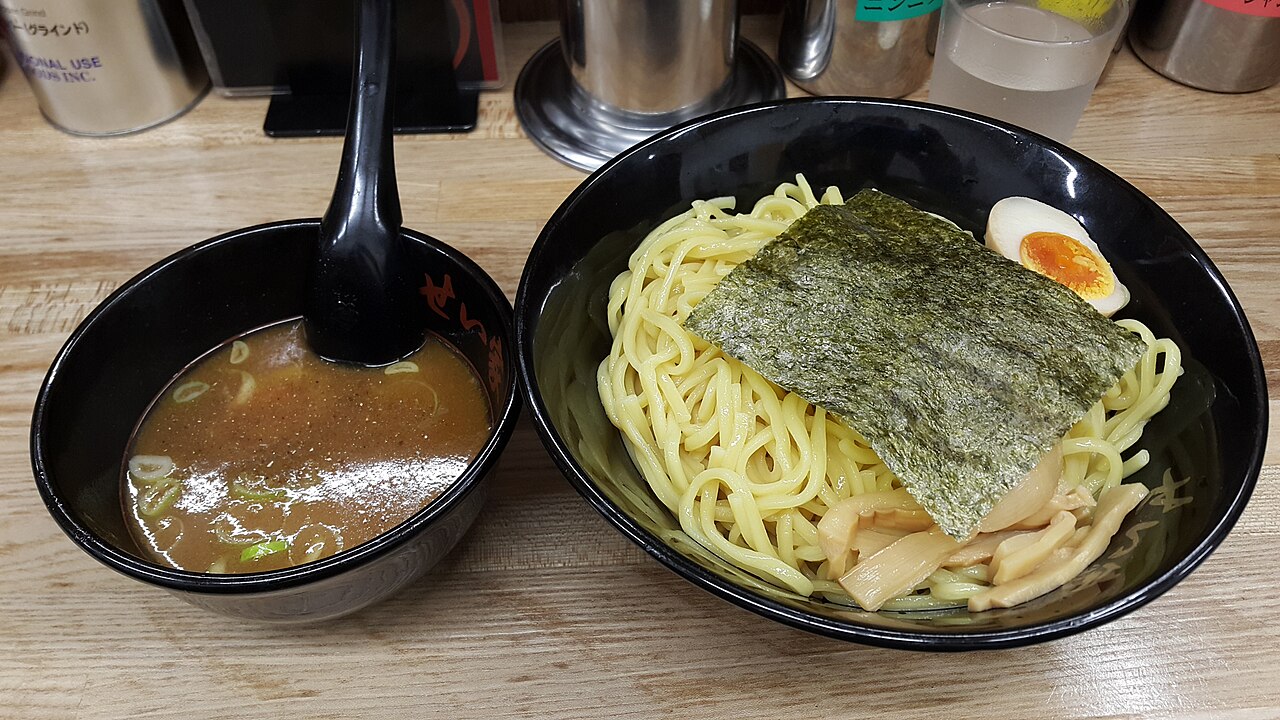
Tsukemen means dipping noodles. Instead of floating in soup, thick noodles are boiled, rinsed in cold water until springy, and served beside a small bowl of hot, concentrated broth. You lift a bundle, dip it and eat. The idea is usually credited to Kazuo Yamagishi of the Tokyo shop Taishoken, who popularised it in the 1950s under the name morisoba.
The dip is the whole game, and it's built to be too strong to drink. This one starts with a sticky pork-and-chicken stock, boiled hard and reduced, then adds dashi (a stock of kelp and dried fish) and gyofun, a powder of ground dried fish, for depth and body. Soy sauce, a little vinegar and a little sugar finish it. It clings to the noodles, so each mouthful is coated rather than drenched.
The common mistake is making the dip like a ramen soup: a weak dip on cold noodles tastes of nothing. And don't skip the end. Soup-wari, hot dashi poured into the leftover dip, turns it into a gentle soup to finish the meal.
Ingredients
Stock
Dashi (for the dip and the soup-wari)
Fish powder (gyofun)
Dip seasoning
To serve
Method
Tap a step's number to tick it off, and a time to start a timer.
Make the stock
Put the trotters and wings in a large pot, cover with cold water and bring to a boil over high heat. Boil for 10 minutes, then drain and rinse every piece under cold running water, scrubbing any clotted blood off the trotters. Wash the pot.
Return the trotters and wings to the pot with the 3 l cold water and bring to a boil over high heat, skimming off the foam for the first 15 minutes. Then keep it at a lively rolling boil with the lid ajar. It will turn cloudy, then creamy-beige.
Boil like this for 2 hours, topping up with boiling water whenever the bones poke above the surface and scraping the bottom every 30 minutes so nothing catches. Then add the onion, garlic and ginger, take the lid off, stop topping up and boil hard for 1 hour more, still scraping the bottom, so the stock reduces.
Strain through a sieve into a jug, pressing hard on the solids and pushing the soft onion, garlic and trotter skin through for body. You want about 175 ml of thick, sticky stock per person. If you have more, boil it down in a wide pan, 10–20 minutes; if you have less, add a splash of water.
Make the dashi and fish powder (during the last hour of the stock)
Put the kombu and niboshi for the dashi in a pan with the 1 l cold water and leave to soak for 30 minutes. Heat slowly over medium-low heat until small bubbles appear at the edge, about 10 minutes, then lift out the kombu. Simmer gently for 5 minutes, skimming. Turn off the heat, add the katsuobushi, leave for 5 minutes, then strain without squeezing. You'll have about 800 ml.
For the fish powder, toast the niboshi in a dry frying pan over low heat, shaking the pan, until fragrant and brittle, 3–4 minutes. Leave to cool, then grind with the katsuobushi in a spice grinder to a fine powder.
Make the dip
Put all the stock in a saucepan with about 40 ml dashi per person, the soy sauce, mirin, sugar and half the fish powder. Bring to a simmer over medium heat, whisking, and simmer for 2 minutes. Take off the heat and stir in the vinegar.
Taste: it should be strong, salty-savoury and slightly sweet and sharp, too much to sip comfortably. Adjust with a splash more soy sauce or vinegar if you like, then keep it hot, covered, over the lowest heat.
Cook the noodles and serve
Bring a large pot of unsalted water to a rolling boil. Put the rest of the dashi in a small pan over low heat so it's steaming hot for the soup-wari. Fill four small, deep bowls with hot water to warm them, and set out a large bowl of iced water.
Cook the noodles as the packet says, usually 6–9 minutes for thick noodles, stirring early so they don't stick. They should be cooked right through; the cold rinse firms them up again.
Drain the noodles, then rinse them under cold running water, lifting and rubbing them with your hands to wash off the surface starch, until cold. Dunk them in the iced water for 30 seconds, then drain very well, shaking hard.
Pile the noodles on plates with the nori, menma and halved eggs alongside. Empty the warmed bowls, ladle in the hot dip and top with the rest of the fish powder and the spring onions.
To eat, dip a few strands at a time, about two-thirds of their length, and slurp. If the dip cools too much partway through, warm it briefly in a pan or the microwave.
For the soup-wari, when the noodles are gone, add hot dashi to each bowl of leftover dip, about 100–150 ml per person, a little at a time, until it tastes like a soup you'd happily drink.
Swaps
Cooking for coeliac disease or an allergy? Check every label: the notes below say which ones matter.
Gluten-free
- Use tamari labelled gluten-free instead of the soy sauce, tasting as you go, since brands vary in saltiness. The stock, dashi and homemade fish powder are gluten-free; check the mirin label (and any ready-made gyofun), and leave out the menma unless it's labelled gluten-free, as it's usually seasoned with soy sauce.
- The noodles are wheat. Thick rice noodles or 100% buckwheat soba, labelled gluten-free, both work for dipping and rinse the same way, but neither has the chewy spring of tsukemen noodles, so it becomes a different, though still very good, meal.
Plant-based
- The dip is built on trotters, chicken and dried fish, so a plant-based version is a different dish. For a vegan dip in the same spirit, soak 20 g kombu and 8 dried shiitake in 1.5 l cold water for at least 1 hour, heat slowly to just below a simmer and strain. Use 800 ml of this dashi for the dip, simmered with the soy sauce, mirin, sugar and 3 tbsp white sesame paste for body before the vinegar goes in, and the rest for the soup-wari.
- Grind dried shiitake to a powder in place of the fish powder. Skip the eggs, and check the noodle and menma labels: some noodles contain egg.
High-protein
- Include the eggs: one soft-boiled egg per person adds about 6 g protein, two about 12 g.
- Add 300 g thinly sliced pork shoulder to the dip in step 7 and simmer until cooked through, 2–3 minutes, before the vinegar goes in: about 14 g more per bowl.
Tips
- Make the dip bold. It should taste noticeably saltier and more intense than a ramen soup, because cold noodles carry only a thin coat of it into your mouth. If it tastes balanced as a soup, it's too weak.
- Rinse and drain properly. The cold rinse washes off starch that would turn the dip gluey and firms the noodles into their springy best. Shake them hard afterwards: water on the noodles dilutes every dip.
- Keep the dip hot. Use small, deep bowls, warm them first, and don't be shy about reheating halfway. A lukewarm dip turns greasy and dull.
- Prepare the niboshi. Pull off the heads and the dark bellies, which taste bitter. If you can't find niboshi, use 30 g katsuobushi in the dashi, and make the powder from katsuobushi alone. Ready-made gyofun is also sold in Japanese grocers.
- Don't keep dashi warm for hours. Make it during the last hour of the stock and keep it hot only while you eat. If you make it earlier, cool it and refrigerate it, then reheat it to serve.
- Soft-boiled eggs. Lower fridge-cold eggs into boiling water for 6 1/2 minutes, chill them in iced water and peel. The yolks are only partly set, so for anyone pregnant, very young, elderly or with a weakened immune system, boil them for 9 minutes instead.
Make ahead and storage
- The stock sets to a firm jelly in the fridge and keeps for 3 days, or 3 months in the freezer.
- The dashi keeps for 2 days in the fridge.
- The fish powder keeps for 2 weeks in an airtight jar, though it slowly loses its aroma.
- The dip can be made a day ahead and refrigerated. Bring it back to a simmer before serving.
Variations
- Atsumori: Shops will often serve the noodles warm if you ask for atsumori. After the cold rinse, dip the noodles back into hot water for 30 seconds and drain well. They're softer, but the dip stays hotter for longer.
- Sweeter, sharper dip: Older-style tsukemen dips often have a more pronounced sweet-sour edge. Double the vinegar and add another 1 tbsp sugar.
- More toppings: Add diced chashu to the dip, or serve with the marinated eggs from the shoyu ramen.
Don't feel like cooking?
Places serving tsukemen in Japan
From the Soupmap catalog: places whose names point to the style, picked across cities. Listings, not reviews; check before you go.
- Ganso Mentai Nikomi Tsukemen Sen Nichi Mae 元祖めんたい煮こみつけ麺千日前店 Osaka Map
- Ganso Gekikara Tsukemen to Shi 元祖激辛つけ麺 とし Hiroshima Map
- Tsukemen Gagachai Nakayama Ekimae つけ麺ががちゃい中山駅前店 Yokohama, Kanagawa Map
- Ramen Tsukemen Go Ju Go Ban ラーメン・つけめん 五十五番 Nagoya, Aichi Map
- Niboshi Tsukemen Miyamoto 煮干しつけ麺宮元 Ota, Tokyo Map
- Tsukemen Senmonten Goshima つけ麺専門店五島 Fukuoka Map
See them on the map Tsukemen in every city
City guidesTsukemen in Osaka 32Tsukemen in Hiroshima 26Tsukemen in Yokohama 17Tsukemen in Nagoya 15Tsukemen in Ota 9Tsukemen in Fukuoka 8
Your notes
Keep your cooking notes private in your account. Save what you changed and what you'd do next time.
Reviews & cooks' tips
Reviews and tips from people who've cooked this appear here.