
Japan · Noodle soups
Miso ramen
Sapporo-style miso ramen: pork and vegetables seared in a very hot wok, a garlicky blend of red and white miso, thick wavy noodles, and butter and sweetcorn if you like.
- Prep
- 30 min
- Cook
- 3 hr 50 min
- Total
- 4 hr 25 min
- Effort
- Takes some care
- Serves
- 4
Ratings by the Soupmap Culinary Team, not readers.
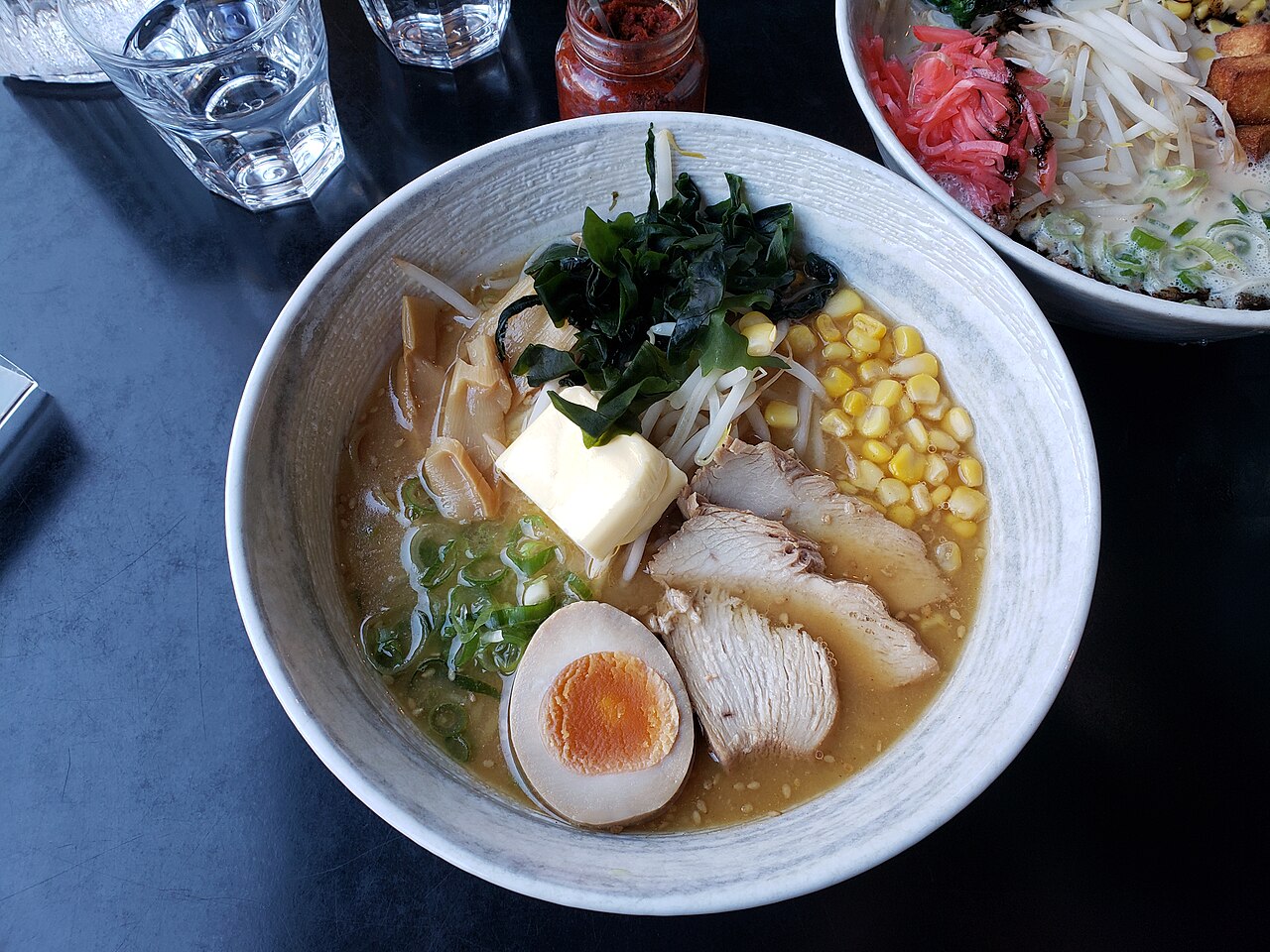
Miso ramen is a young bowl by ramen standards. It's usually traced to Sapporo in the mid-1950s, and the city made it its own through the long Hokkaido winters that followed. What sets the Sapporo style apart isn't only the miso (fermented soybean paste). It's the wok.
Minced pork, garlic, ginger, cabbage and bean sprouts hit very hot lard and sear until the edges catch, then the stock goes straight into the pan and everything comes to the boil with the miso. That quick, fierce frying gives the soup a toasty, faintly smoky depth that stirring miso into hot stock never will. The tare (the seasoning base) blends red miso for depth with white miso for sweetness, plus toasted sesame and garlic.
The usual mistake is a wok that isn't hot enough, or one that's too full: the vegetables steam instead of searing, and the soup tastes flat. Fry in two batches if your burner is modest. Thick, wavy noodles stand up to all of it.
Ingredients
Stock
Miso tare
Wok
To serve
Method
Tap a step's number to tick it off, and a time to start a timer.
Make the stock
Put the pork bones in a large pot, cover with cold water and bring to a boil over high heat. Boil for 10 minutes, adding the chicken carcasses for the last 3 minutes. Drain, rinse every piece under cold running water and scrub off any dark blood. Wash the pot.
Return the bones to the pot with the 3 l cold water and bring to a boil over medium-high heat, skimming off the foam for the first 10–15 minutes. Turn the heat down to a steady simmer, with small, lazy bubbles rising across the surface. It will be cloudier than a clear ramen broth, and under miso that's fine.
Simmer uncovered for 2 hours, topping up with hot water if the bones poke out. Add the onion, ginger, garlic and leek greens and simmer for 1 hour more.
Strain through a fine sieve, pressing lightly on the solids. You should have about 2 l, and you need 375 ml per bowl. Skim off some of the fat, but leave a little for flavour.
Make the miso tare (while the stock simmers)
Bring the mirin and sake to a boil in a small pan and bubble for 30 seconds. Turn the heat to low, add both misos, the ground sesame, grated garlic and sugar, and stir constantly with a spatula until smooth, glossy and smelling toasty, with the raw edge gone from the garlic, 3–4 minutes. Don't let it catch on the bottom. Scrape it into a bowl.
Fry and finish
Measure 375 ml stock per bowl into a pot and bring it to a simmer. Bring a large pot of unsalted water to a rolling boil for the noodles, and fill the bowls with hot water to warm them.
Heat a wok over high heat until it smokes faintly. Add the lard, then the pork, and fry, breaking it up, until no longer pink and starting to brown and crackle, 2–3 minutes. Add the chopped garlic and ginger and stir-fry for 30 seconds, until fragrant.
Add the onion and cabbage and toss for 1–2 minutes, until the cabbage edges start to char. Add the bean sprouts and white pepper and toss for 1 minute more, until glossy and just wilting but still crunchy. If your wok is small or your burner gentle, do this step and the one before in two batches, with half the lard each.
Pour a ladle (about 250 ml) of the hot stock into the wok; it should hiss and boil up at once, lifting the browned bits from the pan. Tip everything into the pot of stock.
Drop the noodles into the boiling water and cook as the packet says, usually 2–4 minutes for thick noodles, stirring early so they don't stick. Meanwhile, loosen the tare with a ladle of stock and whisk it into the pot. Bring the soup just back to a boil, then turn off the heat. A brief bubble is part of the style, but a long boil dulls the miso's aroma.
Taste the soup: it should be rich and fully savoury. If it needs more, whisk in a little extra red miso.
Drain the noodles thoroughly, shaking hard, and divide them among the empty bowls. Ladle over the soup, then heap the pork and vegetables on top. Add the corn and a pat of butter if you're using them, scatter over the spring onions and serve at once, with ichimi on the table. Warn everyone: under its layer of fat, the soup stays scalding for a long time.
Swaps
Cooking for coeliac disease or an allergy? Check every label: the notes below say which ones matter.
Gluten-free
- Swap the noodles, and accept a different bowl. Ramen noodles are made from wheat, so use noodles labelled gluten-free (usually rice or rice-and-millet "ramen"), cooked as the packet says. They're softer and lack the springy chew that kansui gives.
- Use misos labelled gluten-free. Some miso is made with barley (mugi miso) and some is made alongside it, so check both the red and the white, and the mirin and sake too.
- Mind the extras: use stock labelled gluten-free for the shortcut, and for the spicy version skip the doubanjiang, which usually contains wheat flour, in favour of a chilli oil labelled gluten-free.
Plant-based
- Without bones it's a different, lighter bowl, but still a good one. Use 1.5 l kombu-shiitake dashi or vegetable stock (check the label: some stock cubes contain milk) in place of the pork and chicken stock, and neutral oil instead of lard.
- Swap the minced pork for 250 g pressed firm tofu, crumbled and fried until golden before the vegetables, or finely chopped mushrooms. Leave out the butter or use a plant-based one.
- Check the noodles and miso: many fresh ramen noodles contain egg, and miso labelled dashi-iri (with added dashi) contains fish.
High-protein
- Double the pork to 400 g and fry it in two batches: about 9 g more protein per bowl.
- Add a soft-boiled egg to each bowl: about 6 g.
- Add chashu: 2–3 slices (about 60 g) per bowl of the braised pork belly from the shoyu ramen adds roughly 8 g.
Tips
- Choosing miso. Aka (red) miso is aged longer and tastes deeper and saltier; shiro (white or light) miso is younger and sweeter. Most pairs work. Avoid very sweet, Kyoto-style white miso here: it's much less salty, so if it's all you have, lean on the red and taste as you go.
- Dry the bean sprouts. Wet sprouts drop the temperature of the wok and stew instead of searing. Spin them in a salad spinner or roll them in a clean tea towel.
- Lard is worth it. It's traditional, it carries the wok's toastiness into the soup, and the glossy layer it forms on top keeps the bowl hot. Neutral oil works, but the soup tastes lighter and cools faster.
- Find the right noodles. Sapporo-style noodles are thick, curly and yellow from kansui (alkaline water in the dough), with a firm chew that holds up in a rich soup. Japanese and Korean grocers often sell them fresh or frozen; otherwise use the thickest wavy fresh ramen you can find.
- I think the butter is worth trying once. Taste the soup before it melts and again after: it softens the salt and rounds everything out.
Make ahead and storage
- The miso tare keeps for 2 weeks in a sealed container in the fridge, and the flavours settle and deepen after a day.
- The stock keeps for 3 days in the fridge or 3 months in the freezer. Cool it quickly and refrigerate within 2 hours.
- Do the wok stage and finish the soup only when you're ready to eat: the bean sprouts lose their crunch within minutes.
Variations
- Spicy miso: Stir 1 tbsp doubanjiang (Sichuan chilli bean paste) into the tare, or finish each bowl with a spoonful of chilli oil.
- Ginger finish: Top each bowl with a small mound of freshly grated ginger, as some Sapporo shops do. It cuts beautifully through the richness.
- With chashu: Add slices of the rolled braised pork belly from the shoyu ramen.
- Shortcut stock: Use good unsalted chicken stock, 375 ml per bowl, instead of making your own. The wok and the miso do a lot of the work, so it still makes a satisfying bowl in about 30 minutes.
Don't feel like cooking?
Places serving miso ramen in Japan
From the Soupmap catalog: places whose names point to the style, picked across cities. Listings, not reviews; check before you go.
- Sapporo Junren さっぽろ純連 札幌本店 Sapporo, Hokkaido · where the style comes from Map
- Menya Saimi 麺屋 彩未 Sapporo, Hokkaido Map
- Karamiso Ramen Fukuro Sakae からみそラーメン ふくろう 栄店 Nagoya, Aichi Map
- Gokoku Miso Ramen Miso Kore Kai 五穀味噌ラーメン 味噌之介 Yokohama, Kanagawa Map
- Sapporo Ramen Kuwana Shinjuku Gyoen さっぽろラーメン 桑名新宿御苑店 Shinjuku, Tokyo Map
- Miso Ramen Senmonten Miso Futoshi Zen 味噌ラーメン専門店味噌太善 Chiyoda, Tokyo Map
See them on the map Miso ramen in every city
City guidesSapporo ramen in Sapporo 24Miso ramen in Sapporo 32Miso ramen in Nagoya 20Miso ramen in Yokohama 9Miso ramen in Shinjuku 8Miso ramen in Chiyoda 7
Your notes
Keep your cooking notes private in your account. Save what you changed and what you'd do next time.
Reviews & cooks' tips
Reviews and tips from people who've cooked this appear here.