
Japan · Noodle soups
Shio ramen
A pale, see-through chicken, pork and kombu broth seasoned with a salt tare. Hakodate-style shio ramen, and the purest test of a good stock.
- Prep
- 25 min
- Cook
- 4 hr 5 min
- Total
- 5 hr 5 min
- Effort
- A project
- Serves
- 4
The total includes 35 min of soaking, resting or chilling.
Ratings by the Soupmap Culinary Team, not readers.
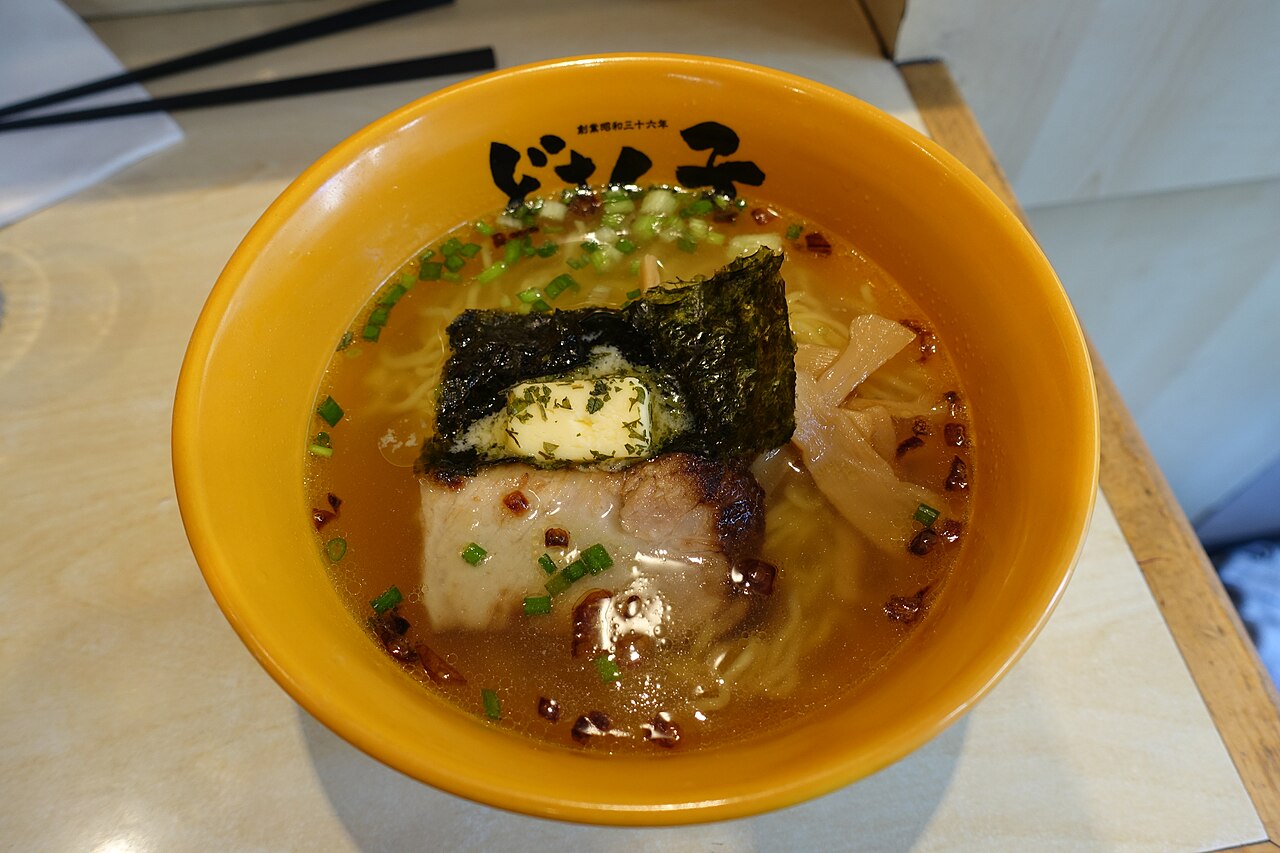
Shio means salt, and shio ramen is seasoned with a salt-based tare (the concentrated seasoning that goes into the bowl before the broth) rather than soy sauce or miso. That makes it the most revealing bowl in the ramen family. With nothing dark or fermented to lean on, the soup tastes exactly as good as the stock beneath it.
This version leans towards Hakodate, the old port city in southern Hokkaido where shio is the local style. Chicken and pork bones simmer at a bare tremble, so the broth stays pale gold and clear enough to see the noodles through it, then it steeps with kombu (dried kelp) for a rounded savouriness. The tare is more than salt water: sake (rice wine), a little mirin (sweet rice seasoning), more kombu and a few dried scallops give it a gentle sweetness of the sea.
The one thing to avoid is boiling the stock. A rolling boil churns fat into the liquid and clouds it, and in a bowl this plain there's nowhere for a muddy flavour to hide.
Ingredients
Salt tare
Simmered pork
Broth
Spring onion oil
To serve
Method
Tap a step's number to tick it off, and a time to start a timer.
Soak the tare ingredients
Put the water, sake, kombu and dried scallops for the tare in a small pan and leave them to soak for at least 1 hour, or overnight in the fridge, so the scallops soften.
Start the broth
Rub the pork shoulder all over with the salt, tie it into a neat cylinder with butcher's twine, and refrigerate it while you prepare the bones.
Put the pork bones in a large pot, cover with cold water and bring to a boil over high heat. Boil for 10 minutes, adding the chicken carcasses for the last 3 minutes. Drain, then rinse every piece under cold running water, scrubbing off dark blood and clots and pulling out the kidney tissue along the chicken backbones. Wash the pot.
Return the bones to the clean pot with the 3 l cold water and bring slowly to a bare simmer over medium heat, 25–30 minutes, skimming off all the foam as it rises. Add the pork shoulder and skim again as it comes back up to temperature, then turn the heat down until the surface barely trembles, with a bubble breaking every second or two.
Simmer uncovered, without stirring, for 2 hours, skimming now and then and topping up with a little hot water if the bones poke out. Lift out the pork: a skewer should slide easily into the thickest part. Wrap it in foil, let it cool for up to 1 hour, then refrigerate it until you slice it; it slices more thinly cold, and the hot soup warms the slices.
Make the tare and the oil (while the broth simmers)
Set the pan of soaking tare ingredients over low heat and bring it slowly towards a simmer, about 10 minutes, lifting out the kombu as the first small bubbles appear. Simmer gently for 5 minutes, then add the mirin and simmer for 1 minute more.
Strain into a jug, pressing lightly on the scallops, and stir in the salt until it has completely dissolved. You should have about 200 ml. Leave to cool.
For the oil, put the oil, spring onions and ginger in a small, cold pan over low heat. Cook gently until the spring onions are shrivelled and golden at the edges and smell sweet, 12–15 minutes; don't let them go dark brown. Strain and cool.
Finish the broth
Once the pork is out, add the onion, ginger and leek greens to the broth and simmer gently for 1 hour more.
Strain the broth through a fine sieve lined with damp muslin or paper towel into a clean pot, without pressing on the solids. You should have about 2 l; you need 375 ml per bowl, and the rest freezes well.
Add the kombu to the hot broth off the heat and leave it to steep for 30 minutes, then lift it out.
Assemble
Bring a large pot of unsalted water to a rolling boil and fill the bowls with hot water to warm them. Blanch the spinach in the boiling water for 30 seconds, lift it into cold water, then squeeze it dry and cut it into 4 cm lengths. Slice the pork as thinly as you can, about 3 mm.
Bring the broth back to just below a simmer: steaming, with small bubbles at the edge, but not boiling.
Empty the bowls and put 35 ml (2 tbsp plus 1 tsp) tare and 2 tsp spring onion oil in each.
Cook the noodles as the packet says, usually 1–2 minutes for thin noodles, two portions at a time unless your pot is very large. While they cook, ladle 375 ml broth into each bowl and stir. Taste the first bowl: it should taste clearly, fully seasoned, not just salty. Add more tare 1 tsp at a time if it needs it.
Drain the noodles well, shaking hard, and fold them into the soup. Top with the pork, spinach, menma, narutomaki and spring onions, and serve at once with white pepper on the table.
Swaps
Cooking for coeliac disease or an allergy? Check every label: the notes below say which ones matter.
Gluten-free
- Ramen noodles are wheat. Use noodles labelled gluten-free (rice, or brown rice and millet ramen-style noodles), cooked as their packet says. They don't have the springy, alkaline bite of real ramen, so this is a good shio soup with noodles rather than quite the same dish.
- The broth, tare and spring onion oil are otherwise gluten-free, but check the sake and mirin labels, and leave out the menma and narutomaki unless they're labelled gluten-free: menma is usually seasoned with soy sauce, and fish cakes often contain wheat starch.
Plant-based
- Make a kombu-shiitake broth instead: soak 30 g kombu and 6 dried shiitake in 2 l cold water for at least 3 hours, heat it slowly and lift out the kombu just before it boils, then simmer with the onion, ginger and leek greens for 30 minutes and strain. Leave the scallops out of the tare. Expect a lighter, earthier soup: a different bowl, not a copy.
- Top with pan-fried firm tofu or seared king oyster mushroom instead of the pork, leave out the narutomaki, and check that the noodles are egg-free (many fresh ramen noodles contain egg) and that the menma has no fish-based seasoning.
High-protein
- Simmer a second 400 g piece of pork shoulder alongside the first: about 18 g more protein per bowl.
- Add a halved boiled egg per bowl (about 6 g), or marinated eggs as in the shoyu ramen; their marinade contains soy sauce, so they're not for a gluten-free bowl.
Tips
- Weigh the salt. A spoonful of flaky salt can weigh half as much as a spoonful of fine salt, so spoon measures are unreliable in a tare that is mostly salt. Any salt works if you weigh it.
- Clarity comes from three habits: blanching and scrubbing the bones, holding the pot at a tremble, and straining through cloth without pressing. Skip any one of them and the broth turns hazy.
- Dried scallops are sold in Chinese and Japanese grocers and give the tare a sweet shellfish depth. 10 g small dried shrimp is a good substitute. With neither, leave them out and steep 5 g katsuobushi (dried bonito flakes) in the tare off the heat for 5 minutes before straining.
- Don't wash the kombu. The white powder on its surface is flavour. Just wipe off any grit with a damp cloth.
- Keep the oil light. 2 tsp per bowl is an aroma, not a slick. Chicken fat skimmed from the cooling broth is a more savoury alternative.
Make ahead and storage
- The tare keeps for 2 weeks in a sealed jar in the fridge.
- The broth keeps for 3 days in the fridge or 3 months in the freezer. Cool it fast in a sink of iced water and refrigerate within 2 hours.
- The pork keeps, wrapped, for 4 days in the fridge, and slices more thinly when cold. Lay the cold slices on the noodles and the hot soup will warm them.
- The spring onion oil keeps for 4 days in the fridge, or 1 month in the freezer.
Variations
- Yuzu shio: Add a thin strip of yuzu or lemon zest to each bowl just before serving, for a bright, fragrant lift.
- Clam shio: Steam 400 g cleaned live clams with 100 ml sake in a covered pan until they open, 3–5 minutes, throwing away any that stay shut. Strain the juices into the broth, taste before adding the tare (the juices are salty), and add the clams to the bowls.
Your notes
Keep your cooking notes private in your account. Save what you changed and what you'd do next time.
Reviews & cooks' tips
Reviews and tips from people who've cooked this appear here.