
Japan · Hot pots & stews
Yosenabe (Japanese hot pot)
A gently seasoned kombu broth simmered at the table with chicken, fish, prawns and vegetables, then finished with rice porridge made in what's left. Winter's easiest way to feed a crowd.
- Prep
- 25 min
- Cook
- 40 min
- Total
- 1 hr 10 min
- Effort
- Easy
- Serves
- 4
Ratings by the Soupmap Culinary Team, not readers.
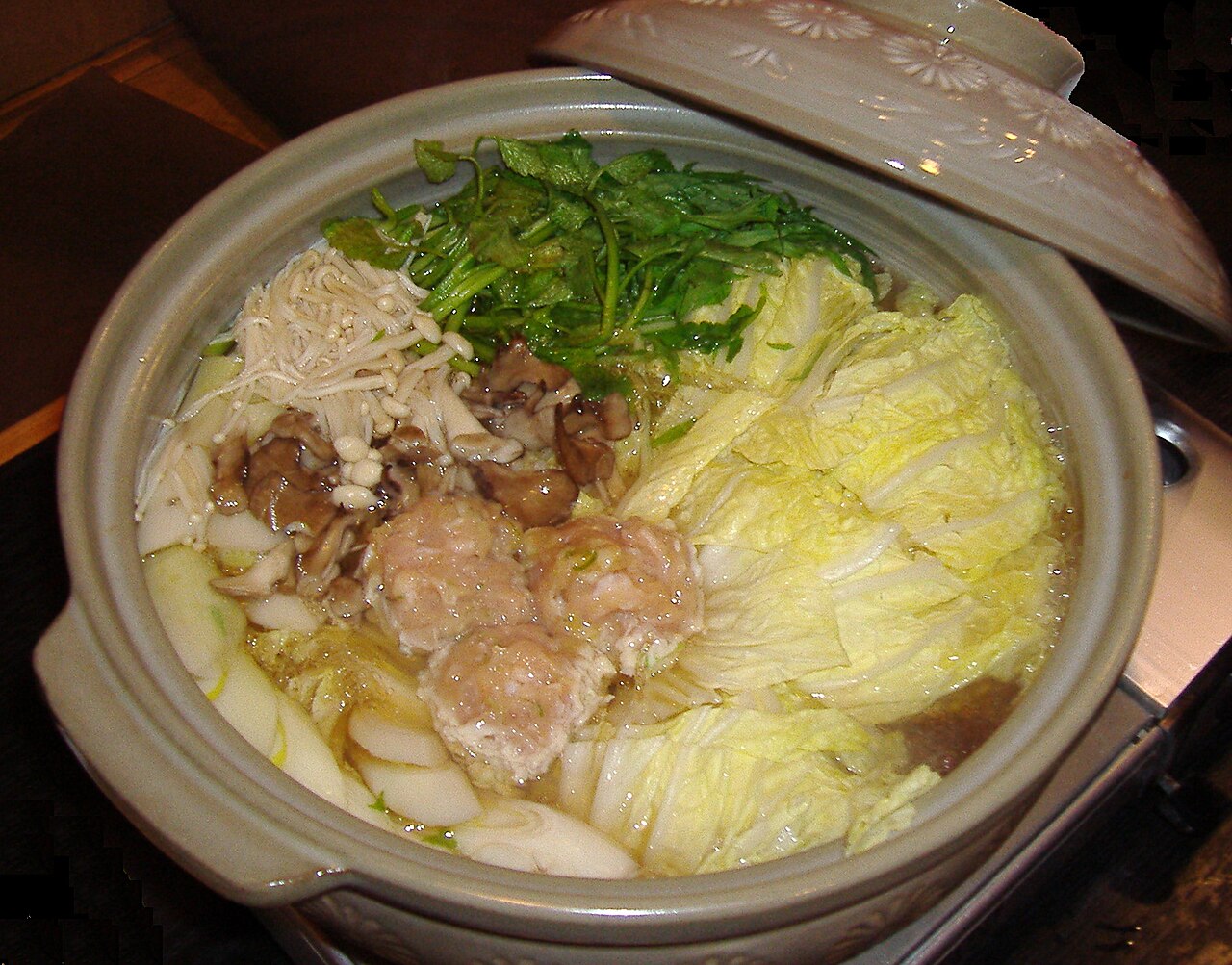
Yosenabe means something like "gathered-together pot", and it's the most relaxed of Japan's hot pots: a pot of lightly seasoned broth on a burner in the middle of the table, platters of chicken, fish, shellfish, tofu and vegetables around it, and everyone helping themselves as things cook. There's no fixed list of ingredients. What matters is the broth, and the order things go in.
The broth here is kombu (dried kelp) dashi seasoned with soy sauce, mirin (sweet rice wine), sake (rice wine) and salt. It's kept lighter than a noodle soup because you'll be drinking it, and because everything you cook in it makes it richer. By the end it tastes of all of it, which is why the finale, the shime, is the best part: rice simmered in what's left and set with egg to make zosui, a soft, savoury rice porridge.
The mistake to avoid is putting everything in at once. Add ingredients in order of how long they take, in small batches, and keep the pot at a lively simmer rather than a boil, so the fish stays whole, the tofu silky and the broth clear.
Ingredients
Broth
For the pot
Zosui
At the table
Method
Tap a step's number to tick it off, and a time to start a timer.
Make the broth
Wipe the kombu with a damp cloth and put it in a saucepan with the water. Leave to soak for at least 30 minutes, or overnight in the fridge.
Heat over medium-low until small bubbles cling to the kombu, 10–15 minutes, and lift it out just before the water boils; boiled kombu turns slimy and strong-tasting. Stir in the soy sauce, mirin, sake and salt and simmer for 1 minute. Taste: it should be a little lighter than a soup you'd drink on its own, because it concentrates as it cooks and gathers flavour from everything you add. You'll have about 1.6 l.
Prepare the platters
Sprinkle the fish with the 1/2 tsp salt and leave for 10 minutes. Put the fish and chicken in separate colanders in the sink and pour boiling water over them until the surfaces just turn white, then rinse in cold water and pat dry. This quick scald, called shimofuri, washes away fishiness and scum so the broth stays clear.
Devein the prawns by sliding a toothpick under the dark vein through the back of the shell and pulling it out, leaving the shells on. If using clams, rub the shells together under cold running water and throw away any that are cracked or stay open when tapped.
Cut the thick white stems of the napa cabbage away from the leaves; slice the stems into 4 cm pieces and cut the leaves into larger pieces. Cut a shallow cross into each shiitake cap, the traditional decoration. Arrange the vegetables and tofu on one platter and the chicken and seafood on another, then refrigerate until you sit down.
Cook at the table
Set up a portable burner on a stable, heatproof surface in a well-ventilated room. Pour about 1.2 l of the broth into a donabe (clay hot pot) or a wide casserole, keeping the rest warm on the stove for topping up, and bring it to a boil on the hob before moving it to the burner.
Start with the slowest things: add the carrot, cabbage stems, shiitake and chicken, bring back to a lively simmer over medium heat and skim off any foam. Cook for 6 minutes.
Add the clams, fish, prawns, tofu, leek and cabbage leaves, tucking each into its own patch so they're easy to find. Simmer until the clams have opened, the prawns are pink and curled and the fish is opaque and just flaking, 4–5 minutes; by now the chicken should be cooked through, with no pink at the centre of a cut piece. Throw away any clams that stay shut.
Push the enoki and shungiku under the broth and cook for 1 minute, just until wilted. Everyone helps themselves into small bowls with a little broth, with shichimi on the table.
Cook the rest in rounds as you eat, in the same order, keeping the pot at a lively simmer rather than a rolling boil. Skim as you go and top up with the reserved broth when the level drops.
Finish with zosui
When most of the ingredients have been eaten, scoop out any last bits and skim the broth. You want about 800 ml left in the pot, so top up with water or reserved broth if needed, and taste: it should be well seasoned but not salty, because it reduces further as the rice cooks.
Put the rice in a sieve and rinse it under cold water to wash off its surface starch, which keeps the porridge loose rather than gluey (the thicker, unrinsed version is called ojiya). Add it to the simmering broth and cook until the grains have swelled and taken on the broth, 3–4 minutes, then season with salt if it needs it.
Pour the beaten egg over the surface in a thin circle, cover and cook over low heat for 1 minute, then turn off the heat and leave covered until the egg has just set, 1–2 minutes. Scatter with the spring onion and ladle into small bowls.
Swaps
Cooking for coeliac disease or an allergy? Check every label: the notes below say which ones matter.
Gluten-free
- Use tamari labelled gluten-free instead of the soy sauce: start with 3 tbsp and add more to taste, as it's often a little stronger. Check the mirin, sake and shichimi labels too.
- Finish with the zosui rather than the udon shime, since udon is wheat. The chicken tsukune in the Variations contain no gluten ingredients; check the potato starch label.
Plant-based
- The kombu broth and its seasoning are already plant-based. Soak 4 dried shiitake with the kombu for a deeper kombu-shiitake dashi, to stand in for the flavour the chicken and seafood would add.
- Leave out the chicken, fish, prawns and clams. Use two blocks of firm tofu instead of one, and add a block of atsuage (thick deep-fried tofu, about 200 g, cut into 8) and 200 g shimeji or maitake mushrooms with the first round. It becomes a gentler tofu-and-vegetable nabe.
- Make the zosui without egg, or stir in 150 g silken tofu, broken into pieces, in its place.
High-protein
- It's already high in protein: roughly 50 g per person over the whole meal, from the chicken, fish, prawns, tofu and egg.
- Add the chicken tsukune from the Variations: about 14 g more per person.
- Add a second 400 g block of firm tofu: about 12 g more per person.
Tips
- Go in order, in small batches. Hard vegetables and chicken first, delicate seafood and greens last. A crowded pot drops off the simmer, so the first things overcook while the last are still raw.
- Simmer, don't boil. A rolling boil breaks up the tofu, shreds the fish and clouds the broth. Keep it lively but gentle, and skim off foam as it rises.
- Keep raw food on its own chopsticks. Use a pair of serving chopsticks or tongs only for adding raw chicken and seafood, and never eat with them or add raw food with your own.
- Use the burner safely. With a cassette gas burner, choose a pot that doesn't overhang the gas canister compartment, which can overheat the canister, and keep the room ventilated. An induction plate with an induction-safe casserole is a good alternative.
- Purge the clams if they need it. Most shop-bought clams have already been purged of sand. If yours haven't, soak them for 1 hour in salted water (about 1 tbsp salt to 500 ml), covered and somewhere dark, so they spit it out.
- Substitutes. Shungiku is sold at many Asian grocers, sometimes as tong ho; spinach or watercress also work. Any firm white fish will do, and napa cabbage is easy to find almost everywhere.
Make ahead and storage
- Make the kombu dashi the night before by leaving the kombu to soak in the water in the fridge, then heat and season it as in step 2. Unseasoned kombu dashi keeps for 2 days in the fridge.
- The platters can be prepared up to 4 hours ahead. Cover them and refrigerate, keeping the raw chicken and seafood on their own plate below the vegetables.
- Leftover broth that has cooked chicken and seafood should be cooled and refrigerated within 2 hours and used within 1 day; bring it to a boil before using it. Don't leave the pot sitting warm on the table for hours after the meal.
- If you make the zosui with leftover rice, it should have been cooled quickly and kept in the fridge for no more than 1 day.
Variations
- Udon shime. Instead of zosui, simmer 2 portions frozen udon (about 400 g) in the remaining broth for 2–3 minutes, topping up with water if it tastes too salty, and finish with spring onion and shichimi.
- Pork instead of chicken. Thinly sliced pork belly cooks in 2–3 minutes, so add it with the fish rather than at the start.
- Chicken meatballs (tsukune). Mix 300 g minced chicken with 1 tbsp potato starch, 1 tsp grated ginger and 1/2 tsp salt, and drop spoonfuls into the broth with the first round. Simmer until firm and cooked through, 6–8 minutes.
Your notes
Keep your cooking notes private in your account. Save what you changed and what you'd do next time.
Reviews & cooks' tips
Reviews and tips from people who've cooked this appear here.