
Japan · Noodle soups
Tantanmen (sesame and chilli ramen)
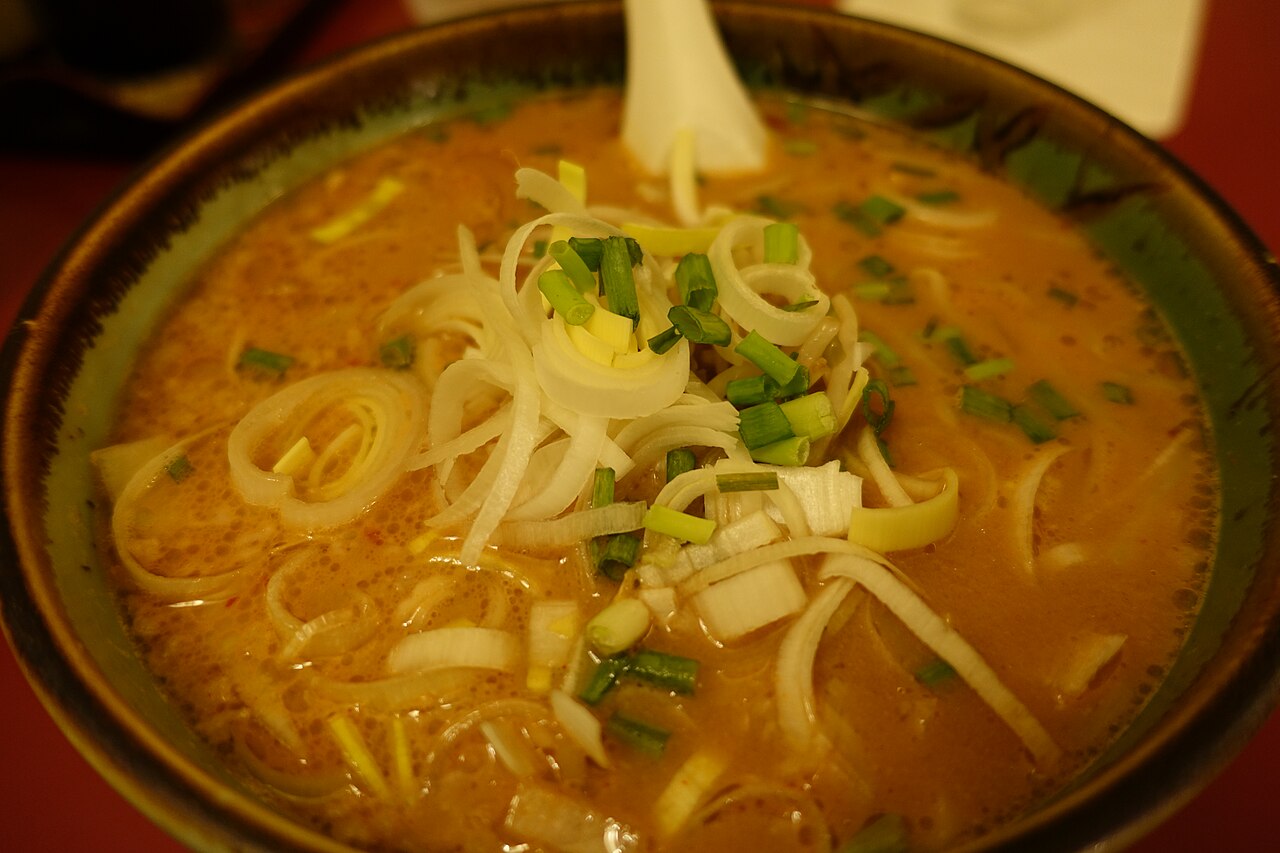
Japanese-style tantanmen: chicken stock made creamy with toasted sesame paste and ringed with chilli oil, sweet-savoury spiced pork, bok choy and toasted sesame.
- Prep
- 20 min
- Cook
- 2 hr 40 min
- Total
- 3 hr
- Effort
- Takes some care
- Serves
- 4
Ratings by the Soupmap Culinary Team, not readers.
Tantanmen is the Japanese descendant of dandanmian (担担面), a Sichuan street snack named after the shoulder pole, dan, that vendors once used to carry their noodles and cooking gear. The Sichuan original has little or no soup: just noodles in a few spoonfuls of sauce built on chilli oil, soy and Sichuan pepper, topped with savoury fried pork. The soup version is widely credited to Chen Kenmin, a Sichuan-born chef who adapted it for Japanese diners in the 1950s.
The Japanese bowl is gentler and richer. Chicken stock is whisked into toasted sesame paste until it turns creamy and pale, rayu (chilli oil) floats on top in a red ring, and a spoonful of pork fried with doubanjiang (fermented chilli bean paste) and tianmianjiang (a sweet, dark fermented wheat-flour paste, often sold as sweet bean sauce) sits in the middle with a few leaves of bok choy.
The thing that trips people up is the sesame. Pour all the hot stock onto the paste at once and it goes lumpy. Loosen it with a little stock first, then whisk in the rest.
Ingredients
Chicken stock
Spiced pork
Sesame tare
To serve
Method
Tap a step's number to tick it off, and a time to start a timer.
Make the stock
Put the wings in a large pot, cover with cold water and bring to a boil over high heat. Boil for 3 minutes, then drain, rinse the wings under cold running water and wash the pot.
Return the wings to the pot with the 2 l cold water, the ginger and the spring onions. Bring slowly to a simmer over medium heat, skimming off the foam, then turn the heat down and simmer gently, uncovered, for 2 hours.
Strain the stock. You should have about 1.6 l, and you need 350 ml per bowl.
Fry the pork (while the stock simmers)
Heat the oil in a frying pan or wok over medium-high heat. Add the pork and fry, breaking it into small crumbs, 5–7 minutes. It will release water and look grey at first; keep going until the water has gone, the pork is sizzling in its own fat and the bits are browning.
Add the garlic and ginger and stir-fry for 30 seconds. Push the pork to one side, add the doubanjiang to the fat and fry for 1 minute, until the oil turns red and smells rich. Add the tianmianjiang, sake, soy sauce and sugar and stir-fry for 1–2 minutes, until the pork is glossy and there's no liquid pooling in the pan. Set aside; the pork is fully cooked and can be reheated in the pan just before serving.
Make the sesame tare
In a bowl, stir the sesame paste with the sugar, garlic and Sichuan pepper, then gradually stir in the soy sauce, followed by the vinegar. The paste will tighten at first, then loosen into a smooth, thick sauce.
Toast the sesame seeds in a dry pan over medium-low heat, shaking the pan, until golden and starting to pop, 2–3 minutes. Tip them onto a plate to stop them cooking.
Assemble
Bring a large pot of unsalted water to a rolling boil, fill the bowls with hot water to warm them, and bring the stock back to a simmer. Reheat the pork if it has cooled.
Blanch the bok choy in the boiling water until the stems are just tender, 1–2 minutes, and lift it out with a slotted spoon.
Empty the bowls and divide the sesame tare among them, about 4 tbsp each. Whisk about 100 ml hot stock into each bowl until smooth, then whisk in another 250 ml.
Cook the noodles in the same boiling water as the packet says, usually 1 1/2–2 1/2 minutes, two portions at a time unless your pot is very large. Drain them well, shaking hard, and add them to the bowls.
Top each bowl with the pork and bok choy. Spoon about 1 1/2 tbsp chilli oil over each so it pools in a red ring, then scatter over the toasted sesame and spring onions. Serve at once, with more chilli oil on the table, and stir the pork into the soup as you eat.
Swaps
Cooking for coeliac disease or an allergy? Check every label: the notes below say which ones matter.
Gluten-free
- Not gluten-free as written: the ramen noodles, soy sauce and tianmianjiang (made from wheat flour) all contain gluten, and most doubanjiang does too. Use ramen-style noodles labelled gluten-free (usually rice-based, softer and less springy), tamari labelled gluten-free for the soy sauce, sake rather than Shaoxing wine, and rice vinegar rather than Chinese black vinegar, which usually contains wheat.
- For the tianmianjiang, use 1 tbsp rice miso labelled gluten-free plus 1 tsp sugar (many miso contain barley or wheat). Use a doubanjiang and chilli oil labelled gluten-free, or leave the doubanjiang out and add an extra spoonful of chilli oil to the pork.
Plant-based
- Not vegan as written (chicken stock and pork). For the soup, use unsweetened soy milk and kombu-shiitake dashi or vegetable stock half and half, warmed together gently without boiling (see the soy milk variation). Instead of the pork, fry 250 g finely chopped shiitake with 200 g crumbled firm tofu until browned and dry, then season it the same way.
- Check the noodles (some ramen contains egg) and the chilli oil (some contain dried shrimp or fish). The sesame does most of the work, so the bowl stays creamy and satisfying, if a little less savoury.
High-protein
- Double the pork to 500 g, with its seasoning doubled too: about 11 g more protein per bowl.
- Add an egg: a halved soft-boiled egg on each bowl adds about 6 g.
- Soy milk: replace a third of the stock with unsweetened soy milk (see Variations): about 4 g more per bowl.
Tips
- Choosing sesame paste. Japanese neri goma and Chinese sesame paste are both made from deeply toasted seeds and give the soup its nutty depth. Tahini works, but it's made from lightly toasted or raw seeds and tastes milder, so add 1/2 tsp toasted sesame oil to each bowl. Stir the jar well first, because the oil separates.
- Fry the pork until it sizzles. The first few minutes are just the pork steaming in its own water. The flavour comes after that, once it's frying in its fat and browning at the edges.
- No tianmianjiang? Use 1 tbsp red miso plus 1 tsp sugar for every 1 1/2 tbsp. Doubanjiang is widely sold in Chinese and Japanese grocers, sometimes labelled tobanjan.
- Add the chilli oil last. Floating it on top gives the bowl its red ring and lets everyone control their own heat. 1 1/2 tbsp per bowl is a medium heat, so taste your oil and adjust.
- Tune the tingle. Japanese tantanmen keeps Sichuan pepper gentle. For more of the numbing buzz of the Sichuan original, double it, or sprinkle extra over each bowl.
Make ahead and storage
- The stock keeps for 3 days in the fridge or 3 months in the freezer. Cool it quickly and refrigerate within 2 hours.
- The spiced pork keeps for 3 days in the fridge. Reheat it in a pan until sizzling.
- The sesame tare keeps for a week in a sealed container in the fridge. Stir it well before using.
Variations
- Shirunashi (soupless) tantanmen: Closer to the Sichuan original. Toss each portion of drained noodles in its bowl with 3 tbsp sesame tare, 2 tbsp hot stock, 1 tbsp chilli oil and a big pinch of Sichuan pepper, then top with the pork and bok choy and mix thoroughly before eating.
- Soy milk tantanmen: For an even creamier soup, a style popular in Japan, replace a third of the stock with unsweetened soy milk. Warm the two together gently and don't let them boil, or the soy milk may split.
- More Sichuan: Stir 2 tbsp chopped ya cai (Sichuan preserved mustard greens) into the pork with the tianmianjiang.
- Shortcut stock: Use good unsalted chicken stock, 350 ml per bowl. Everything else comes together in about 30 minutes.
Don't feel like cooking?
Places serving tantanmen in Japan
From the Soupmap catalog: places whose names point to the style, picked across cities. Listings, not reviews; check before you go.
- Daimei Tantanmen Hakozaki 大明担担麺箱崎店 Fukuoka Map
- Noko Tantanmen Hibana Meishi Arimatsu 濃厚担々麺 ひばな名四 有松店 Nagoya, Aichi Map
- 175 Deno Tantanmen Honten 175°Deno 担担麺 本店 Sapporo, Hokkaido Map
- Tantanmen Piriri Kanda 担担麺ピリリ 神田店 Chiyoda, Tokyo Map
- Funaba Tantanmen 船場担担麺 Osaka Map
- Tantanmen Asa Baba Tofu Takumi Jan 担担麺・麻婆豆腐匠ジャン Yokohama, Kanagawa Map
See them on the map Tantanmen in every city
City guidesTantanmen in Fukuoka 21Tantanmen in Nagoya 17Tantanmen in Sapporo 11Tantanmen in Chiyoda 10Tantanmen in Osaka 10Tantanmen in Yokohama 8
Your notes
Keep your cooking notes private in your account. Save what you changed and what you'd do next time.
Reviews & cooks' tips
Reviews and tips from people who've cooked this appear here.