
India · Clear & light
Tomato rasam
A thin, sour, peppery South Indian soup of tamarind and tomato, seasoned with freshly ground spices and finished with a sizzling tadka of mustard seed, cumin and curry leaves.
- Prep
- 10 min
- Cook
- 18 min
- Total
- 30 min
- Effort
- Easy
- Serves
- 4
Ratings by the Soupmap Culinary Team, not readers.
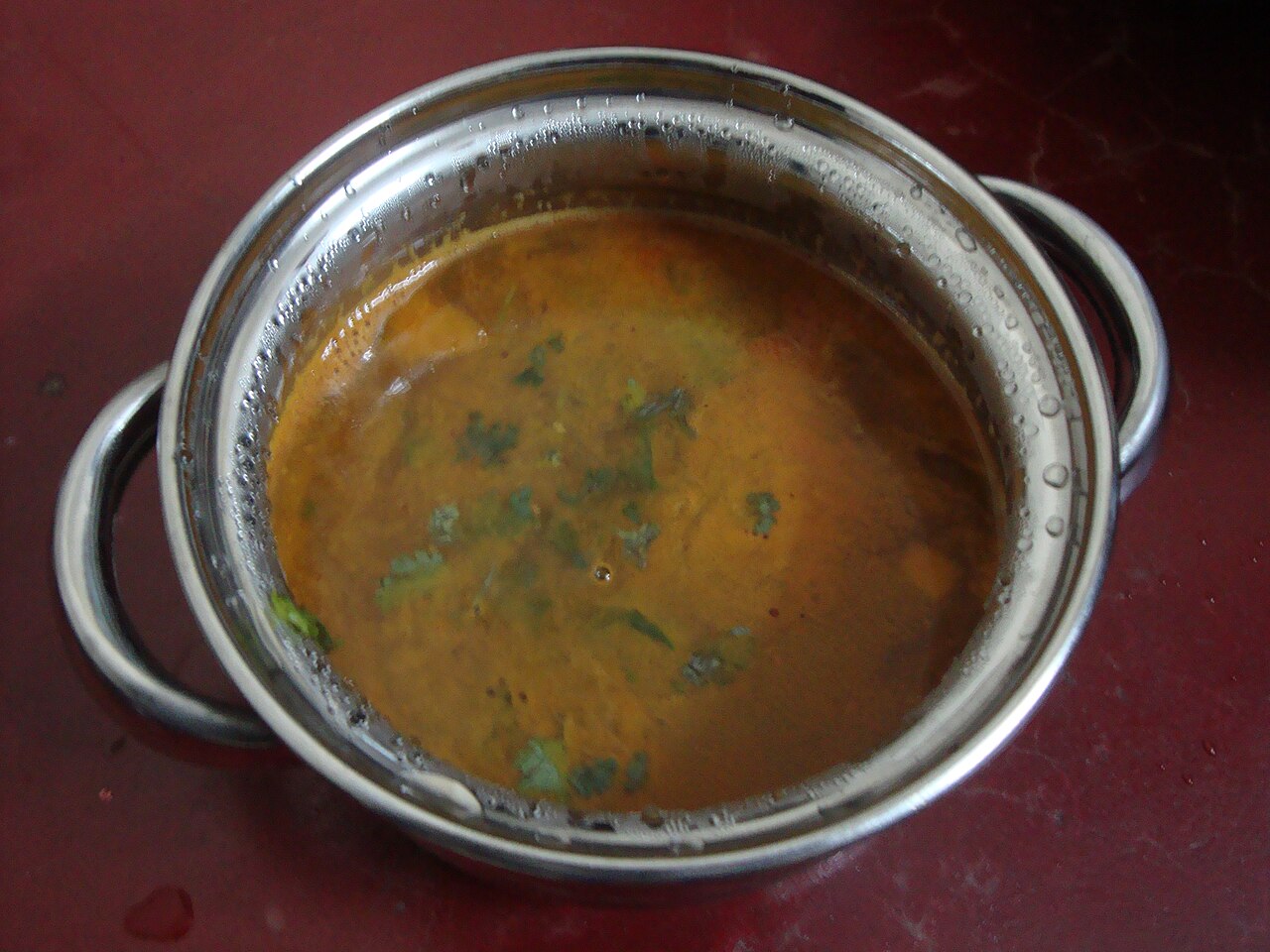
Rasam is the thin, sour, peppery soup of South India, made in some form across Tamil Nadu, Kerala, Karnataka (where it's called saaru) and Andhra Pradesh (chaaru). It's usually mixed into rice as one course of a meal, after sambar (a thicker lentil and vegetable stew), but it's just as good sipped hot from a cup. The Anglo-Indian mulligatawny takes its name from the Tamil milagu thanni, "pepper water", a close relation.
This is thakkali rasam, tomato rasam (thakkali is Tamil for tomato). Tamarind water and tomatoes simmer with turmeric, garlic and curry leaves, then a quickly toasted and ground rasam powder of coriander seed, cumin, black pepper and dried chilli goes in. To finish, there's a tadka (whole spices sizzled in hot oil and poured over the pot, also called tempering) of mustard seed, cumin, curry leaves and hing (asafoetida, a pungent dried plant resin).
The one rule: once the ground spices are in, don't let the rasam boil hard. Heat it until froth rises and covers the surface, then turn it off. A rolling boil drives off the aroma of fresh-ground pepper and cumin, and that aroma is the point.
Ingredients
Rasam powder
Rasam
Tadka
Method
Tap a step's number to tick it off, and a time to start a timer.
Soak the tamarind and make the powder
Put the tamarind in a bowl, pour over the 250 ml just-boiled water and leave it to soften for 10 minutes.
Meanwhile, put the coriander seeds, cumin seeds, peppercorns and 2 chillies in a small dry frying pan over medium-low heat. Toast, shaking the pan, until the coriander turns a shade darker, the cumin starts to crackle and the kitchen smells warm and toasty, 2–3 minutes. Tip onto a plate to cool for 2 minutes, then grind to a coarse powder in a spice grinder or with a mortar and pestle. Chop the tomatoes and crush the garlic while the tamarind finishes soaking.
Squeeze and mash the softened tamarind in its water with your fingers until the pulp comes away from the fibres, then pour it through a sieve into a saucepan, pressing on the pulp. Pour a splash of the 600 ml water over what's left in the sieve, press again and discard the fibres.
Simmer
Add the tomatoes, garlic, 10 curry leaves, turmeric and salt to the tamarind water. Bring to a boil over medium-high heat, then simmer briskly over medium heat, mashing the tomatoes with a spoon now and then, until they've collapsed and the sharp, raw smell of the tamarind has mellowed, 6–8 minutes.
Pour in the rest of the 600 ml water and stir in the rasam powder. Warm over medium heat, without letting it boil, until a layer of froth rises and covers the surface, 3–5 minutes, then turn off the heat as soon as it starts to bubble at the edges. Taste: it should be sour, peppery and well salted, with the tomato rounding it out. Add more salt if it needs it.
Temper and serve
Heat the oil in a small pan over medium-high heat. Add the mustard seeds and, when they start to pop, after about 30 seconds, add the cumin seeds, broken chilli and 10 curry leaves; stand back, as the leaves spit. Stir for a few seconds until the cumin darkens slightly, add the asafoetida, then pour the sizzling tadka straight over the rasam.
Scatter over the coriander leaves, cover the pan and leave it for 1 minute so the aroma stays in the pot. Serve hot, in cups or ladled over plain rice.
Swaps
Cooking for coeliac disease or an allergy? Check every label: the notes below say which ones matter.
Gluten-free
- Already gluten-free as written, as long as the asafoetida is labelled gluten-free: compounded hing is often cut with wheat flour (see Tips). If you use a bought rasam powder, check its label too, since many blends contain asafoetida.
Plant-based
- Already vegan as written. The ghee tadka in the Variations isn't, so keep to oil.
High-protein
- Rasam is meant to be thin and sharp, so most of the protein belongs beside it rather than in it. Stirring 200 g cooked, mashed toor dal (split pigeon peas) into the pot in step 5 makes a thicker paruppu rasam and adds about 3–4 g per bowl.
- Serve it over rice alongside a dal or sambar, or with chickpea sundal (boiled chickpeas tempered with mustard seed and curry leaves) on the side: 100 g cooked chickpeas per person adds about 9 g.
Tips
- Check your asafoetida. Most asafoetida powder is "compounded": the resin is ground with flour so it can be measured, and that flour is very often wheat. Buy one labelled gluten-free (cut with rice flour or another gluten-free starch). The rasam is gluten-free only if your asafoetida is. Without it, the soup loses some of its savoury, oniony depth but is still good.
- Bought rasam powder: use 1 1/2–2 tsp in step 5 instead of making your own, starting with less, as bought blends are often stronger. Read the label: many contain asafoetida, which may be cut with wheat.
- Tamarind: a block of seedless pulp is the classic choice. With tamarind concentrate or paste, stir 1 tsp into 250 ml warm water and skip the soaking and straining; strengths vary a lot, so taste and add more only if the rasam isn't sour enough.
- Toast gently. Coriander and cumin go from fragrant to bitter quickly. Take the pan off the heat as soon as they smell toasty and have darkened a shade.
- Fresh curry leaves are worth finding. They're sold in Indian and South Asian grocers and freeze well in a bag. Dried ones have little flavour; there's no real substitute, so leave them out rather than use dried.
Make ahead and storage
- Rasam keeps for 2 days in the fridge, or 1 month in the freezer. Reheat until just steaming, not boiling. I think it's even better the next day, once the spices have settled in; a fresh tadka brings back the brightness.
- Make a larger batch of rasam powder and keep it in an airtight jar for up to 1 month. It slowly loses aroma, so taste and use a little more as it ages.
Variations
- Ghee tadka: fry the tadka in 1 tbsp ghee instead of oil for a rounder, nuttier finish. It's no longer vegan or dairy-free, but still vegetarian and gluten-free.
- Paruppu rasam (with dal): stir 4–5 tbsp well-cooked, mashed toor dal (split pigeon peas) into the pot with the water in step 5. It makes a slightly thicker, gentler rasam. Cook the dal ahead, as it takes longer than this recipe.
- Pepper-forward: for a hotter, more peppery rasam, increase the black peppercorns to 2 tsp and leave out the dried chillies in the powder.
Your notes
Keep your cooking notes private in your account. Save what you changed and what you'd do next time.
Reviews & cooks' tips
Reviews and tips from people who've cooked this appear here.