
Japan · Clear & light
Kakitamajiru (Japanese egg-drop soup)
A clear dashi seasoned with light soy, salt and mirin, barely thickened so beaten egg sets in soft, floating clouds. A gentle Japanese soup, in the bowl in 25 minutes.
- Prep
- 5 min
- Cook
- 18 min
- Total
- 25 min
- Effort
- Easy
- Serves
- 4
Ratings by the Soupmap Culinary Team, not readers.
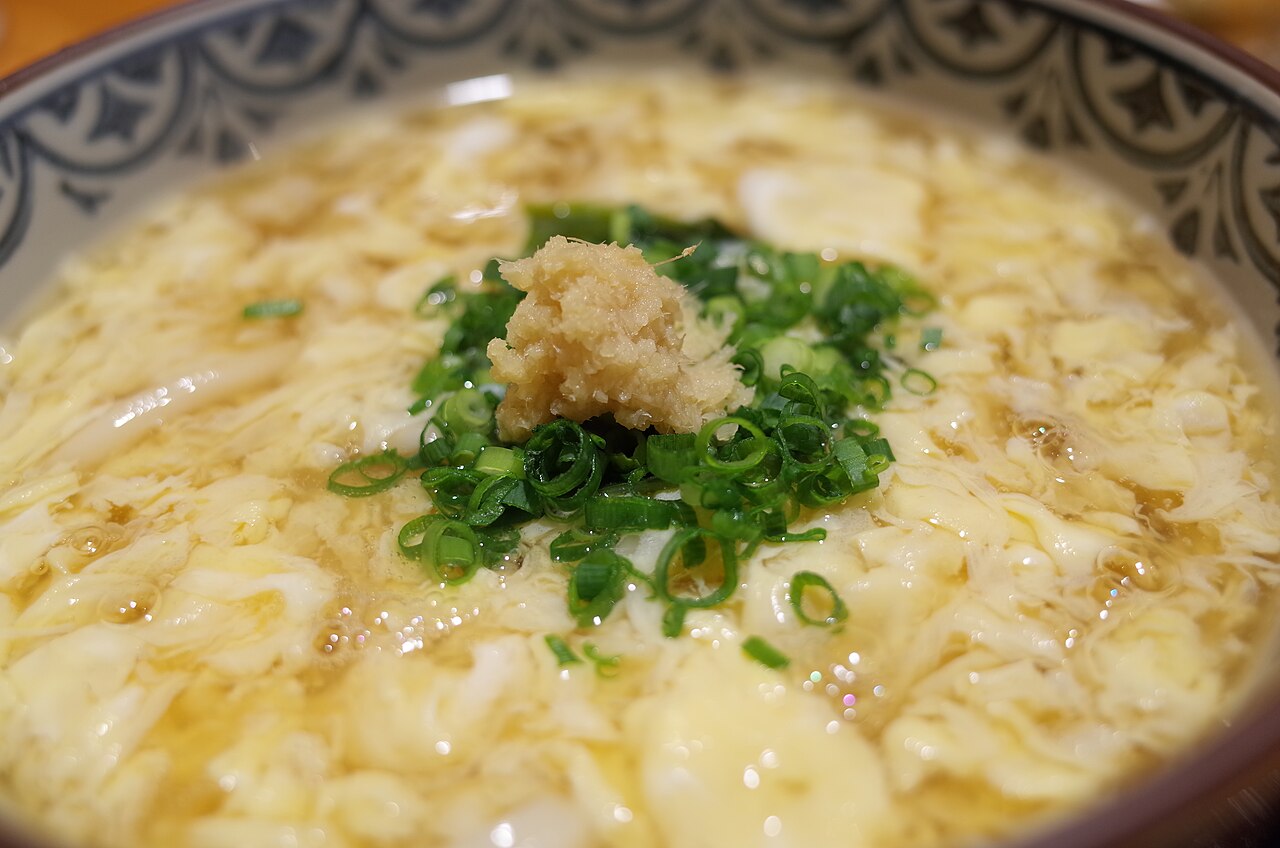
Kakitamajiru is the soup Japanese home cooks make when there's dashi, a few eggs and not much else in the house. The name means roughly "stirred-egg soup": beaten egg is poured in a thin stream into hot, seasoned dashi (the light stock of kombu, dried kelp, and katsuobushi, smoked and dried skipjack tuna shaved into flakes), where it sets into pale yellow clouds. It's a sumashi-jiru, a clear soup seasoned with salt and soy sauce rather than miso, so the broth stays pale and the egg keeps its colour.
The dashi here is a quick version that honestly fits the time. Instead of soaking the kombu for 30 minutes first, you heat it slowly from cold for about 10 minutes, then steep the flakes for 2. It's a shade lighter than the fully soaked dashi in our miso soup, and a little extra katsuobushi makes up most of the difference.
The usual mistake is pouring egg into thin, plain broth, where it sinks and breaks into small, tight curds. A spoonful of katakuriko (potato starch) gives the soup just enough body to hold the egg up, so it floats and stays soft. Pour it into a steady simmer, then leave it alone.
Ingredients
Quick dashi
Soup
Method
Tap a step's number to tick it off, and a time to start a timer.
Make the quick dashi
Wipe the kombu lightly with a damp cloth, leaving the white bloom on its surface: that's flavour, not dirt. Put it in a saucepan with the 1 l cold water and set it over medium-low heat. Heat slowly until small bubbles cling to the kombu and the surface starts to tremble, 10–12 minutes, then lift the kombu out before the water boils.
While the water heats, beat the eggs in a jug with chopsticks or a fork, cutting through the whites, until no stringy clumps of white remain, about 30 seconds. Cut the mitsuba stems and leaves into 2–3 cm lengths (or slice the spring onions thinly). Stir the katakuriko into the 2 tbsp cold water in a small cup.
Once the kombu is out, turn the heat to medium and bring the water to the boil, then turn off the heat. Scatter in the katsuobushi all at once and leave it alone, without stirring, until the flakes have sunk, about 2 minutes.
Strain through a fine sieve lined with a damp paper towel and let it drip through for a minute or so without pressing the flakes. You'll have about 850 ml of clear, pale gold dashi.
Make the soup
Measure 800 ml of the dashi into a clean saucepan and bring it to a simmer over medium heat. Add the salt, usukuchi soy and mirin, then taste: it should be lightly but clearly seasoned, with the sea and smoke of the dashi coming through. Add a pinch more salt if it tastes thin.
Stir the starch mixture again, since it settles in seconds, and pour it into the simmering soup in a thin stream, stirring all the time. Keep stirring gently until the soup turns clear again and very slightly glossy, about 1 minute. It should feel only a little silkier than water, not thick.
Keep the soup at a steady simmer over medium heat, with small bubbles across the surface. Pour in the egg in a thin stream, moving in a wide circle, ideally down the side of a chopstick or through the tines of a fork to keep the stream fine. Don't stir. Wait until the egg rises and puffs into soft, opaque clouds, 20–30 seconds, then draw a spoon slowly through the soup once and check that no runny egg is left; if there is, give it a few seconds more.
Turn off the heat, stir in the mitsuba or spring onion so it just wilts, ladle into bowls and serve at once.
Swaps
Cooking for coeliac disease or an allergy? Check every label: the notes below say which ones matter.
Gluten-free
- Replace the usukuchi soy sauce, which contains wheat, with 1 tsp tamari labelled gluten-free and an extra pinch of salt; tamari is darker, so the broth will be a shade browner. Or season with salt alone.
- Katakuriko (potato starch), kombu and katsuobushi are gluten-free. Check the mirin, and the label of any dashi packs or instant granules if you use the shortcut, as some contain wheat.
Plant-based
- The vegetarian Variation's kombu-shiitake dashi takes care of the stock, but the egg is the dish, so there's no vegan kakitamajiru.
- For a vegan clear soup in the same style, warm 150 g silken tofu, cut into small cubes, in the seasoned, lightly thickened broth and finish with the mitsuba.
High-protein
- About 5 g protein a bowl as written. Use 5 eggs instead of 3 (about 3 g more per bowl), pouring in two passes and letting the simmer recover in between so the clouds stay soft.
- Or slice 250 g chicken breast thinly, dust it with katakuriko and simmer it in the seasoned dashi until white all the way through, 2–3 minutes, before thickening (about 14 g more per bowl). Use a little less of the starch mixture, as the coating thickens the soup too.
- Or warm 100 g cubed soft tofu per bowl in the broth before the egg goes in (about 5 g).
Tips
- Thicken before the egg goes in. The starch is what holds the egg up in soft clouds. Use too much, though, and you have ankake (a thick, glossy, sauce-like broth) rather than a clear soup: 1 tbsp to 800 ml is the light touch you want.
- Add the egg soon after thickening. Katakuriko thickens almost instantly but loses body if it boils for long or is stirred hard afterwards, so finish the soup promptly. Cornstarch works in its place: use the same amount and simmer it for 1–2 minutes, until it no longer tastes raw.
- Beat the eggs well enough to break up the whites. Stringy white sets into rubbery pieces among the soft clouds. Chopsticks drawn back and forth through the egg, rather than whisked in circles, do this without whipping in much air.
- Usukuchi soy is saltier than regular soy, not milder. "Light" refers to its colour, which keeps the broth pale. With regular (koikuchi) soy sauce, use 1 tsp and an extra pinch of salt; the soup will be a little darker and taste more of soy.
- Substitutes: mitsuba tastes like a cross between celery leaf and flat-leaf parsley. Spring onion is the everyday swap; a few celery leaves are closest in flavour. There's more on stock-making in our dashi guide.
Make ahead and storage
- Make the dashi up to 2 days ahead and keep it covered in the fridge, or freeze it for 1 month. With dashi ready, the soup takes 5 minutes.
- Kakitamajiru is best eaten as soon as it's made. Leftovers keep for 1 day in the fridge: reheat gently just until steaming. The broth will be thinner and the egg firmer. Don't freeze it.
Variations
- Ginger: a few drops of fresh ginger juice in each bowl (grate a 2 cm piece and squeeze it) is a classic finish, especially in winter.
- Fillings: simmer a few sliced shiitake, a little enoki or some finely cut spinach in the seasoned dashi for 1–2 minutes before you thicken it, or warm small cubes of soft tofu through.
- Weeknight shortcut: dashi packs (tea-bag style) or instant dashi granules make a perfectly good everyday version. Many are already salted, so taste before adding the salt.
- Vegetarian: use the kombu and shiitake dashi from the vegan variation of our miso soup. It needs a soak of at least 5 hours, so plan ahead; everything else stays the same.
Your notes
Keep your cooking notes private in your account. Save what you changed and what you'd do next time.
Reviews & cooks' tips
Reviews and tips from people who've cooked this appear here.