
Japan · Clear & light
Hamaguri ushiojiru (clear clam soup)
Clams started in cold water with kombu and seasoned with little more than salt, sake and a drop of light soy. A pale, sea-sweet broth, and the traditional soup for the Doll Festival.
- Prep
- 10 min
- Cook
- 15 min
- Total
- 2 hr 25 min
- Effort
- Easy
- Serves
- 4
The total includes 2 hr of soaking, resting or chilling.
Ratings by the Soupmap Culinary Team, not readers.
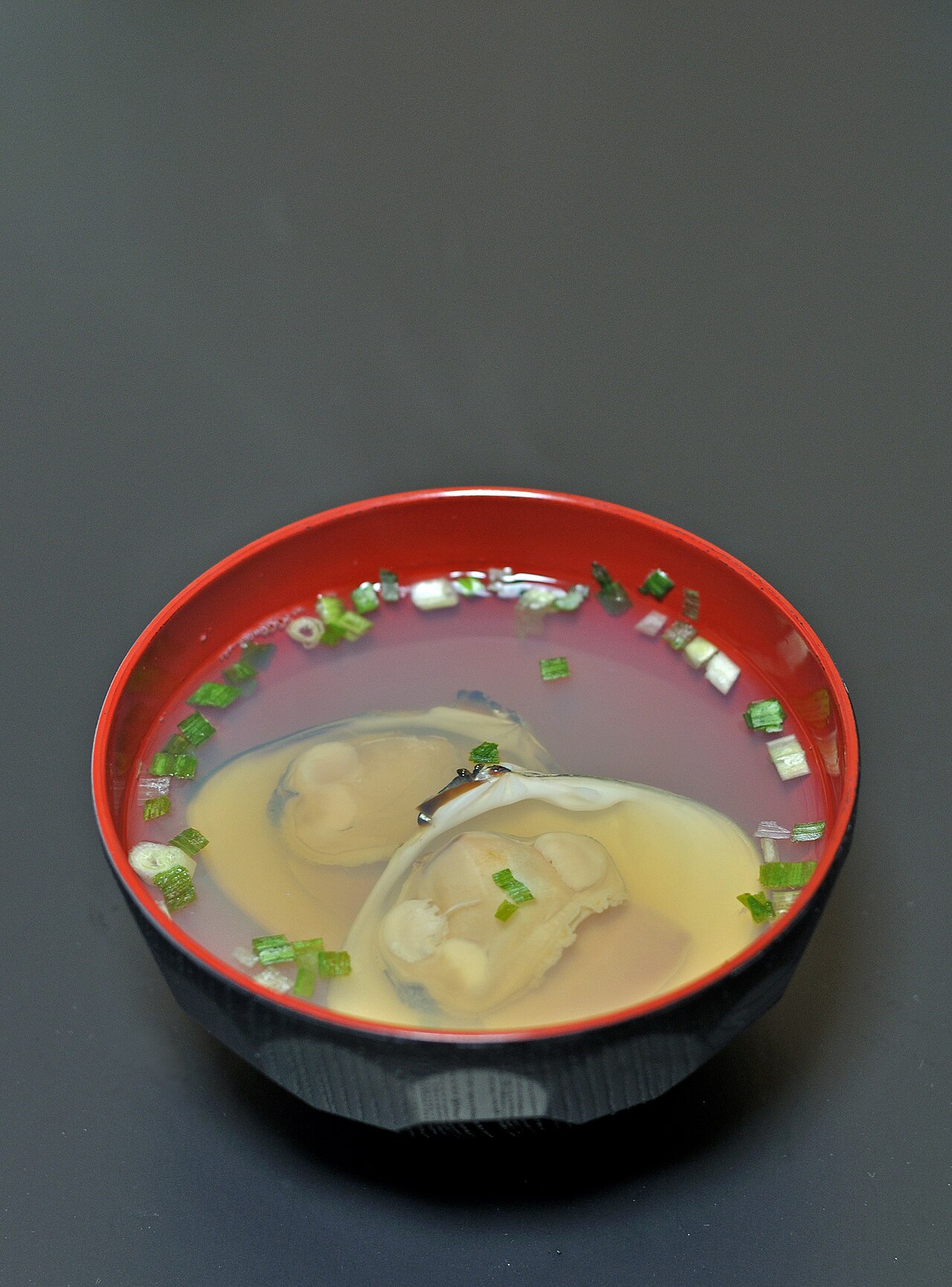
Ushiojiru means something like "tide soup", and it's one of the simplest clear soups in the Japanese kitchen: clams, water and a piece of kombu (dried kelp), with very little else. The clams make the stock. As the water warms slowly they open and give up their juices, and you end up with a broth that's pale, briny and quietly sweet. There's no katsuobushi (bonito flakes) here; the clams don't need it.
Hamaguri are large, smooth-shelled hard clams, and a bowl of hamaguri ushiojiru is the traditional soup for Hinamatsuri, the Doll Festival on 3 March. Because the two halves of a clam shell fit only each other, the soup carries a wish for a happy marriage. Any good hard-shell clam works if you can't find hamaguri.
What goes wrong is usually grit or salt. Clams live in sand, so they need a proper soak in salted water before cooking, and the finished broth gets a final strain. They also bring plenty of salt of their own, so taste before you season. For more on Japanese clear soups, see our suimono essay.
Ingredients
To purge the clams
Soup
Method
Tap a step's number to tick it off, and a time to start a timer.
Purge the clams
Stir the salt into the 1 l cold water until dissolved; at about 3% salt, it's roughly as salty as the sea. Rinse the clams, lay them in a single layer in a wide, shallow dish and pour over just enough salt water to cover them; they need air, so don't drown them deep. Cover with a tea towel or a loose sheet of foil to keep them in the dark and leave in a cool place, or the fridge if your kitchen is warm, for 2–3 hours. They'll open slightly and spit out sand.
While the clams purge, wipe the kombu with a damp cloth and put it to soak in the 800 ml cold water in the saucepan you'll cook in.
Lift the clams out of their water, leaving the sand behind. Throw away any with cracked shells, and any that are open and don't close when you tap them. Knock pairs of clams together: live ones make a clear, high clink, while a dull thud usually means a dead one. Scrub the shells by rubbing them together under cold running water.
Make the soup
Add the clams and sake to the pan with the kombu and its soaking water and set it over medium heat. When the water is steaming and small bubbles cling to the kombu, after 8–10 minutes, lift the kombu out before the water boils.
Turn the heat to medium-low so the pot stays just below a boil and skim off the white foam as it rises. As each clam opens, lift it out with tongs into a bowl; they'll open over 3–5 minutes. Discard any that stay firmly shut once the others have opened.
Strain the broth through a fine sieve lined with a damp paper towel into a clean pan, to catch any last sand. Warm it over low heat and add the usukuchi soy sauce. Taste, then add salt a pinch at a time only if it needs it: the broth should taste of the sea, gently rounded, not salty.
If using mitsuba, dip the stems into the hot broth for a few seconds to soften them and tie each sprig into a loose knot. Return the clams to the broth for 30 seconds to rewarm, then divide clams and broth among 4 bowls, 2 clams each. Add the mitsuba or spring onion and serve at once.
Swaps
Cooking for coeliac disease or an allergy? Check every label: the notes below say which ones matter.
Gluten-free
- The usukuchi soy sauce is the only gluten: it's brewed with wheat. Ushiojiru is at heart a salt-seasoned soup, so you can simply leave it out and season with salt, or use 1/4 tsp tamari labelled gluten-free; tamari is darker, so the broth will be a shade deeper.
- Sake is brewed from rice. Use a plain drinking sake, and check the label of any "cooking sake", which often has added salt and other ingredients.
Plant-based
- There's no plant-based ushiojiru: the clams are the stock. For a vegan clear soup in the same spirit, make the kombu-shiitake dashi from our miso soup, season it with salt and a few drops of usukuchi, and warm cubes of soft tofu and a little soaked wakame in it before topping with mitsuba.
High-protein
- This is a light soup by design, at around 4 g protein a bowl. Doubling the clams to 4 per bowl (about 1 kg in all) roughly doubles that and deepens the broth; use a wider pan and taste before adding any salt.
- Warm 100 g cubed soft tofu per bowl in the broth just before serving (about 5 g).
Tips
- Purge them like the sea. Shallow, about 3% salt, dark and cool is what makes clams open up and spit out their sand. Fresh water or a deep bowl of salt water stresses or suffocates them.
- Start cold and heat gently. A slow rise in temperature coaxes the clams' juices into the broth and suits the kombu too. Dropped into boiling water, the clams seize and give up less flavour.
- Lift each clam out the moment it opens. Overcooked hamaguri shrink and go rubbery, so take them out as they open and rewarm them briefly at the end.
- Taste before you salt. Clams vary in saltiness, and their juices may season the broth almost on their own. The usukuchi soy sauce is there for aroma: it's paler than regular soy sauce but saltier, so a few drops season without darkening the broth.
- Keep the clams alive and cold. Buy from a fishmonger with a busy counter and cook them the day you buy them. Keep them in the fridge in a bowl covered with a damp cloth, never in an airtight bag or under fresh water.
- If you can't find hamaguri, use large littleneck or other hard-shell clams. Smaller Manila clams (asari) work too: use about 400 g and expect them to open sooner.
Make ahead and storage
- This soup is best within minutes of making it, so don't cook the clams ahead. You can purge them and soak the kombu a few hours in advance; keep the purged clams in the fridge, covered with a damp cloth.
- Leftover broth, without the clams, keeps for 1 day in the fridge. It makes a lovely base for miso soup or for cooking rice.
Variations
- Spring garnish: in place of mitsuba, a leaf of kinome (young sansho pepper leaf), slapped between your palms to wake up its aroma, or a thin curl of peel from yuzu, a fragrant Japanese citrus.
- More in the bowl: a few cubes of soft tofu, or a couple of stems of blanched nanohana (rapeseed shoots), warmed in the broth before serving.
- Clam miso soup: dissolve miso into the strained broth over low heat, off the boil. The clam juices are salty, so start with about 3 tbsp for 800 ml and leave out the soy sauce and salt.
Your notes
Keep your cooking notes private in your account. Save what you changed and what you'd do next time.
Reviews & cooks' tips
Reviews and tips from people who've cooked this appear here.