
Japan · Clear & light
Ozoni (Kanto-style New Year soup)
Grilled square mochi in a clear dashi seasoned with soy and salt, with chicken, greens, carrot and kamaboko. The Tokyo-area bowl for the first morning of the year.
- Prep
- 20 min
- Cook
- 35 min
- Total
- 1 hr 15 min
- Effort
- Takes some care
- Serves
- 4
The total includes 20 min of soaking, resting or chilling.
Ratings by the Soupmap Culinary Team, not readers.
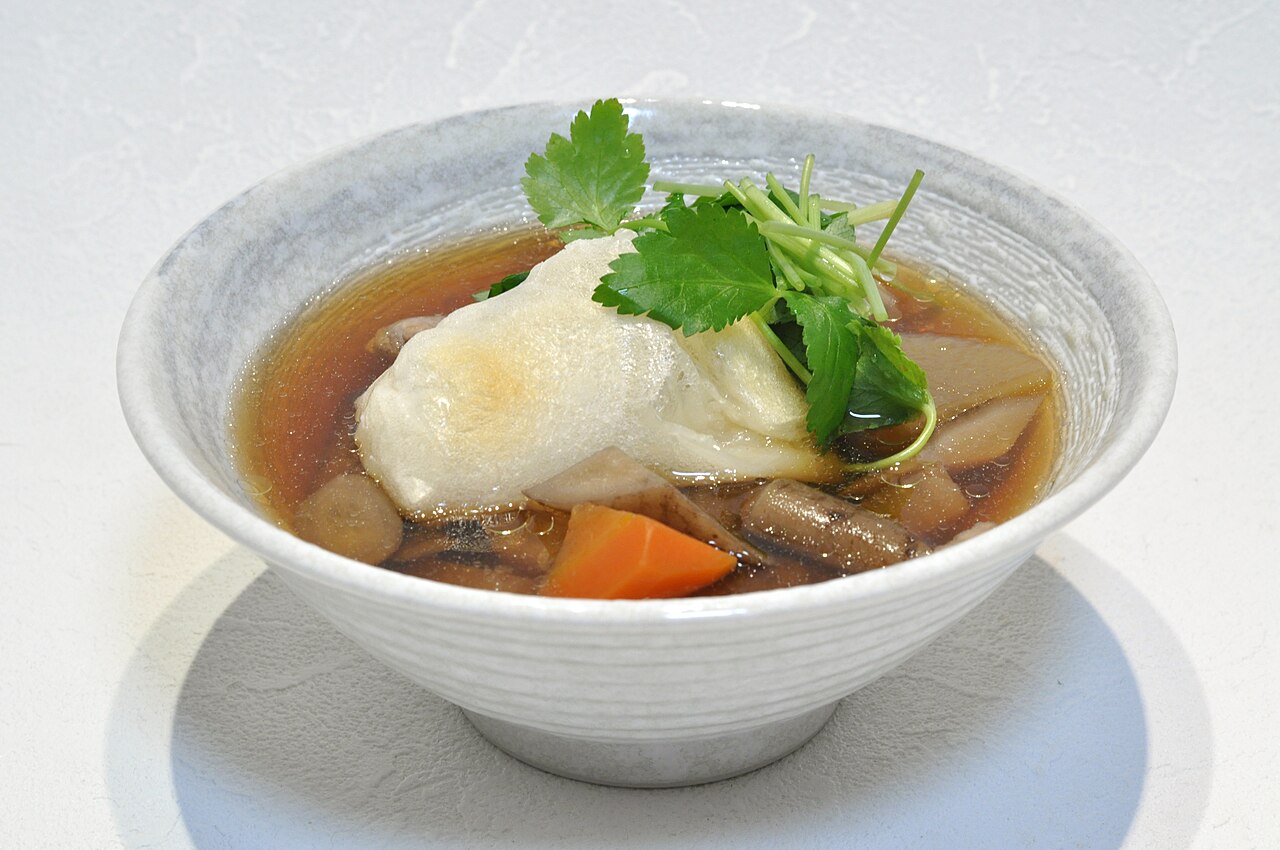
Ozoni is the soup of the Japanese New Year, eaten in the first days of January and above all on New Year's morning. Every region makes it differently, and very nearly every family does too. The constant is mochi, cakes of steamed and pounded glutinous rice. In the Kanto region around Tokyo, the mochi is square and grilled until it puffs, then set in a clear dashi seasoned with soy sauce and salt, alongside a few pieces of chicken, a leafy green, carrot and a slice or two of kamaboko (steamed fish cake). In Kansai, around Kyoto and Osaka, the broth is usually made with sweet white miso and the mochi is round and boiled. Our ozoni essay tours the regional styles.
The Kanto version stands or falls on its broth, so make a proper ichiban dashi, the first and most fragrant steeping of kombu (dried kelp) and katsuobushi (smoked, dried bonito flakes), and blanch the greens in a separate pan so the soup stays clear.
Grill the mochi rather than simmering it in the pot, or it slumps into the broth and clouds it. And please read the mochi safety note in the Tips before serving: it's a genuine choking hazard.
Ingredients
Dashi
Soup
Method
Tap a step's number to tick it off, and a time to start a timer.
Make the dashi
Wipe the kombu with a damp cloth, put it in a saucepan with the cold water and leave to soak for 30 minutes. Do step 4 while it soaks.
Warm the pan over low heat for 10–15 minutes. When small bubbles cling to the kombu and the surface trembles, lift the kombu out, before the water boils.
Bring the water just to the boil over medium heat, turn off the heat and scatter in the katsuobushi. Leave until the flakes sink, about 2 minutes, then strain through a sieve lined with a damp paper towel without pressing. You'll have about 850 ml of clear, pale gold dashi.
Prepare the fillings
Bring a medium pan of water to the boil with a big pinch of salt. Add the komatsuna stems first for 30 seconds, then push in the leaves for 30 seconds more, until bright green and just tender (spinach needs only 30 seconds in all). Lift into a bowl of cold water, then squeeze dry and cut into 4 cm lengths.
Once the dashi is made, bring the blanching water back to the boil and drop in the chicken for 30 seconds, just until the outside turns white, then drain and go straight on to the next step. This rinses off the proteins that would otherwise cloud the broth; the chicken finishes cooking in the dashi.
Cook the broth and grill the mochi
Measure 800 ml of the dashi into a saucepan, add the chicken, carrot and sake and bring to a gentle simmer over medium heat, skimming off any foam. Simmer until the chicken is cooked through, with no pink in the middle of a cut piece, and the carrot is tender, 8–10 minutes.
Meanwhile, cut each mochi square in half (see the safety note in the Tips) and grill the pieces under a hot grill, in a toaster oven, or on a lightly oiled rack or dry non-stick pan over medium-low heat, turning once, until puffed and golden with brown freckles, 6–10 minutes. Leave space between the pieces, because they swell and stick to each other, and watch closely: mochi goes from puffed to scorched quickly.
Season the broth with the soy sauce and salt, then taste. It should be a little stronger than a soup you'd sip on its own, because the mochi is plain. Add the kamaboko and komatsuna and warm for 30 seconds.
Put the mochi in warmed bowls and arrange the chicken, carrot, kamaboko and greens around it. Ladle the hot broth over, top with mitsuba or yuzu peel and serve at once, before the mochi softens too much.
Swaps
Cooking for coeliac disease or an allergy? Check every label: the notes below say which ones matter.
Gluten-free
- Use tamari labelled gluten-free instead of the soy sauce, in the same amount. It's a little darker and rounder, so the broth comes out a shade deeper in colour. The dashi, chicken, vegetables and salt are gluten-free as written; plain sake (rice, koji and water) is too, but cooking sake can contain additives, so check its label.
- Check the kamaboko: many fish cakes contain wheat starch, so use one labelled gluten-free or leave it out. Kiri mochi is made from glutinous rice, which despite its name contains no gluten, but check the packet for added ingredients and "may contain" warnings.
Plant-based
- Make a kombu-shiitake dashi: soak the kombu with 4 dried shiitake in the cold water for at least 3 hours (or overnight in the fridge), heat it as in step 2, lifting out both the kombu and the shiitake, and leave out the katsuobushi. It's softer and earthier, without the smoky depth of bonito.
- Leave out the chicken and kamaboko. Slice the soaked shiitake and simmer them with the carrot instead, with cubes of firm tofu or a few thin rounds of daikon (white radish). With both swaps the bowl is vegan.
High-protein
- Double the chicken to 400 g and cook it exactly as in steps 5 and 6: roughly 10 g more protein per bowl.
- Add 2 peeled prawns per bowl for the last 2–3 minutes, as in the Variations (about 5–8 g), or 100 g firm tofu per bowl, cubed and warmed with the greens (roughly 8–12 g, depending on how firm it is).
Tips
- Mochi is a real choking hazard, so please take care. It's soft, sticky and dense, and every New Year in Japan there are serious choking accidents, most of them among older people. Cut each square in half before grilling (smaller still for anyone who has trouble chewing or swallowing), sip some broth first to moisten the throat, take small bites and chew thoroughly, and keep tea or water within reach. Don't eat mochi alone; supervise young children and older relatives throughout. I wouldn't give it to toddlers at all.
- Grill, don't boil. Grilled mochi keeps its shape and gets a thin, toasty crust. Raw mochi simmered in the pot slumps, and turns a clear broth cloudy and gluey. Put it in the bowl and pour the broth over.
- Keep the broth clear. Blanch the greens and chicken separately, skim as the chicken simmers, and never let the broth boil hard. A clear, bright broth is the whole point of the Kanto style.
- Shopping: kiri mochi (cut, square mochi) is sold vacuum-packed at Japanese and Asian grocers, especially from December, and kamaboko is in the chilled or frozen section. Korean sliced rice cakes are made from non-glutinous rice and won't puff or stretch the same way. If you can't find kamaboko, use another plain steamed fish cake or leave it out.
- Komatsuna substitutes: spinach, or pak choi blanched until the stems are just tender.
Make ahead and storage
- The dashi keeps for 2 days in the fridge, and the broth with the chicken and carrot can be made the day before: cool it quickly, refrigerate, and bring it back to a simmer before seasoning and serving.
- Blanch the greens and grill the mochi on the day. Don't store mochi in the broth; it turns soft and gluey.
Variations
- Kansai style: make the broth with shiro miso (sweet white miso) instead of soy and salt. It's mild and low in salt, so you need much more than for miso soup: about 150 g for 800 ml of dashi, dissolved off the boil. Use round mochi boiled in water until soft, 5–8 minutes. Boiled mochi is softer and stickier, so the safety advice above matters even more.
- Other additions: a few slices of shiitake or thin rounds of daikon (white radish), simmered in the broth with the chicken, or a peeled prawn per bowl, added for the last 2–3 minutes until pink and opaque all the way through.
- For New Year flair, cut the carrot slices into plum-blossom shapes with a small cutter before simmering.
Your notes
Keep your cooking notes private in your account. Save what you changed and what you'd do next time.
Reviews & cooks' tips
Reviews and tips from people who've cooked this appear here.