
Japan · Clear & light
Miso soup
Tofu and wakame in a freshly made kombu-and-katsuobushi dashi, with the miso stirred in off the boil. The everyday Japanese soup, made properly.
- Prep
- 5 min
- Cook
- 20 min
- Total
- 1 hr
- Effort
- Easy
- Serves
- 4
The total includes 35 min of soaking, resting or chilling.
Ratings by the Soupmap Culinary Team, not readers.
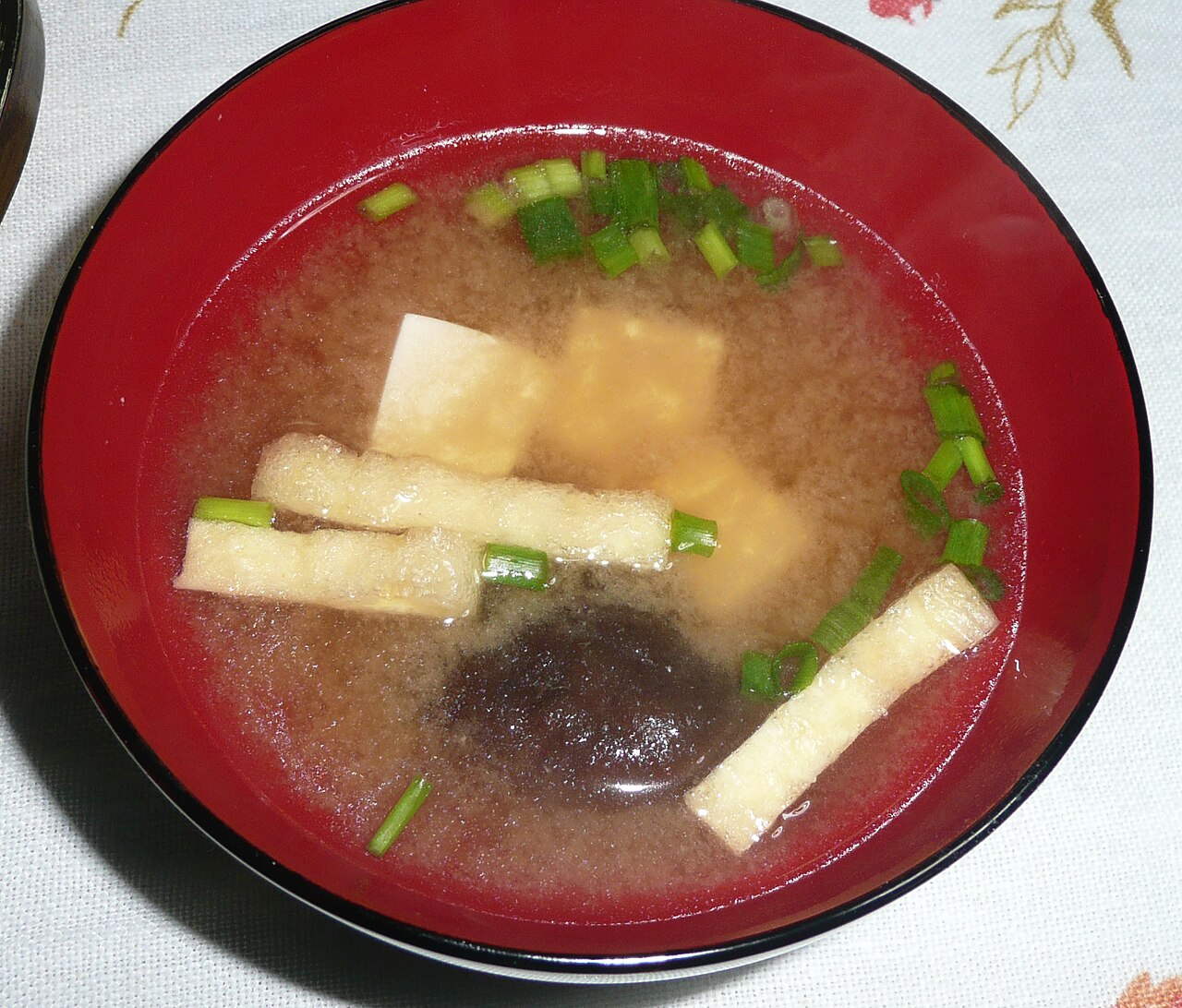
Miso soup comes with almost every kind of Japanese meal, and it's one of the easiest soups in the world to make well. It has two parts. The first is dashi, a light stock steeped from kombu (dried kelp) and katsuobushi (skipjack tuna that has been simmered, smoked and dried, then shaved into flakes). The second is miso, the fermented soybean paste that seasons it. Everything else is filling.
This version starts with ichiban dashi, the "first dashi": the kombu is warmed slowly and lifted out before the water boils, then the flakes steep for a couple of minutes and are strained without squeezing. It takes about 45 minutes, most of it waiting, and I think it's the difference between a soup that tastes mainly of salt and one that tastes of the sea, with a wisp of smoke.
The usual mistake is boiling the soup after the miso goes in. Much of miso's appeal is its aroma, and a rolling boil drives it off and leaves the bowl flat. Dissolve the miso over low heat, bring the pot to the edge of a simmer and serve straight away. There's more on the soup's place at the table in our miso soup essay.
Ingredients
Dashi
Soup
Method
Tap a step's number to tick it off, and a time to start a timer.
Make the dashi
Wipe the kombu lightly with a damp cloth, leaving the white bloom on its surface: that's flavour, not dirt. Put it in a saucepan with the cold water and leave it to soak for 30 minutes. (Or use the cold-soak method: soak it in the fridge for 8 hours or overnight, lift out the kombu and go straight to step 3.)
Set the pan over low heat and warm it slowly, so it takes 10–15 minutes to approach a simmer. When small bubbles cling to the kombu and the surface starts to tremble, lift the kombu out, before the water boils.
Turn the heat to medium and bring the water just to the boil, then turn off the heat. Scatter in the katsuobushi all at once and leave it alone, without stirring, until the flakes have sunk, about 2 minutes.
Strain through a fine sieve lined with a damp paper towel or thin cloth, and let it drip through for a minute or two without pressing the flakes. You'll have about 850 ml of clear, pale gold dashi that smells of the sea and faintly of smoke.
Make the soup
Measure 800 ml of the dashi into a clean saucepan and bring it to a gentle simmer over medium heat. Meanwhile, soak the wakame in a bowl of cold water until soft and bright green, about 5 minutes, then drain and squeeze it lightly.
Slide the tofu into the simmering dashi and let it warm through for 2 minutes.
Turn the heat to low. Put about three-quarters of the miso in a ladle or a small sieve, lower it into the pot and stir it with chopsticks or a spoon until it has dissolved with no lumps. Taste, then add more miso a little at a time until the soup tastes savoury and rounded rather than sharp or salty.
Add the wakame and keep the heat low until the soup is just about to bubble, with steam rising and the surface shivering, about 1 minute. Turn off the heat before it boils, ladle into bowls, scatter over the spring onion and serve at once.
Swaps
Cooking for coeliac disease or an allergy? Check every label: the notes below say which ones matter.
Gluten-free
- Choose a miso labelled gluten-free. Barley (mugi) miso contains gluten, and some rice misos are made alongside it. The kombu, katsuobushi, wakame and plain tofu contain none, so with the right miso the soup is gluten-free.
- Check dashi packs and granules if you take the shortcut in Variations: some contain wheat or soy sauce.
Plant-based
- Make the kombu-shiitake dashi in Variations and use a plain miso, not dashi-iri. The wakame, tofu and spring onion are plant-based, so the soup is then vegan. It's earthier and rounder, without the smoky, sea-like edge of bonito.
- Skip instant dashi for this version unless it's labelled vegan; even kombu-flavoured ones can contain fish extract.
High-protein
- Double the tofu to 300 g: about 4 g more protein per bowl with firm tofu, roughly half that with silken.
- Poach an egg per bowl: before the miso goes in, slip 4 eggs into the simmering dashi and cook gently until the whites are set, 3–4 minutes, then turn the heat to low and carry on from step 7. About 6 g per bowl.
- Add aburaage (thin fried tofu): one sheet (about 20 g) per bowl, rinsed with boiling water, cut into strips and simmered for 1 minute before the miso. About 5 g per bowl.
Tips
- Keep it off the boil once the miso is in. The aroma is the first thing to go, and a boiled miso soup tastes flat and slightly grainy. Japanese cooks call the moment just before boiling niebana, and it's when the soup is at its best.
- Take the kombu out before the water boils. Boiled hard, kombu turns the stock slippery and gives it a strong, seaweedy edge that crowds out the katsuobushi. There's more on why in our piece on kombu.
- Don't squeeze the flakes. Pressing katsuobushi pushes cloudy, bitter, overly fishy flavours into the dashi. If you don't want to waste them, simmer the used kombu and flakes in 500 ml fresh water for 10 minutes to make niban dashi (second dashi), a sturdier stock for simmered vegetables.
- Season by taste, not by the spoon. Misos range from sweet, pale shiro (white) miso to salty, dark aka (red) miso, so 1 tbsp per 200 ml of dashi is only a starting point. Blending two misos is common and very good. Our guide to miso types helps you choose.
- Make it just before you eat. Reheated miso soup loses its fragrance. Don't keep the dashi or the finished soup warm on the stove for hours either: cool what's left and refrigerate it.
Make ahead and storage
- Make the dashi ahead: it keeps for 2 days in a covered container in the fridge, or 1 month in the freezer. With dashi ready, the soup takes 10 minutes.
- Leftover soup keeps for 1 day in the fridge. Reheat it gently and stop before it boils; the tofu and wakame will be softer and the aroma milder.
Variations
- Vegan miso soup: make a kombu and shiitake dashi instead. Soak 10 g kombu and 3 dried shiitake (about 10 g) in 1 l cold water in the fridge for at least 5 hours or overnight, then warm it slowly and lift out the kombu before it boils; strain, and slice the softened shiitake into the soup. Use a plain miso, not one labelled dashi-iri (with added dashi), which usually contains fish.
- Follow the seasons. In spring, try new onion, bamboo shoot or clams (purge them and start them in cold water with kombu instead of dashi, as in our clam soup). In summer, aubergine, okra or myoga (Japanese ginger buds). In autumn, mushrooms such as nameko, shimeji or enoki, or sweet potato. In winter, daikon (white radish) with aburaage (thin fried tofu), napa cabbage, or spinach blanched in a separate pan first.
- Timing the fillings: firm vegetables go into the dashi first and simmer until tender before the miso; leafy greens, tofu and seaweed go in at the end and need only to warm through.
- Weeknight shortcut: dashi packs (tea-bag style) or instant granules make a perfectly good everyday soup. Follow the packet, then taste before adding all the miso, since many are already salted.
Your notes
Keep your cooking notes private in your account. Save what you changed and what you'd do next time.
Reviews & cooks' tips
Reviews and tips from people who've cooked this appear here.