
United States · Noodle soups
Chicken noodle soup
A whole chicken simmered gently into real stock, soft carrots and celery, egg noodles cooked on the side and lemon at the end. The American classic, done properly.
- Prep
- 20 min
- Cook
- 3 hr 10 min
- Total
- 3 hr 35 min
- Effort
- Takes some care
- Serves
- 6
Ratings by the Soupmap Culinary Team, not readers.
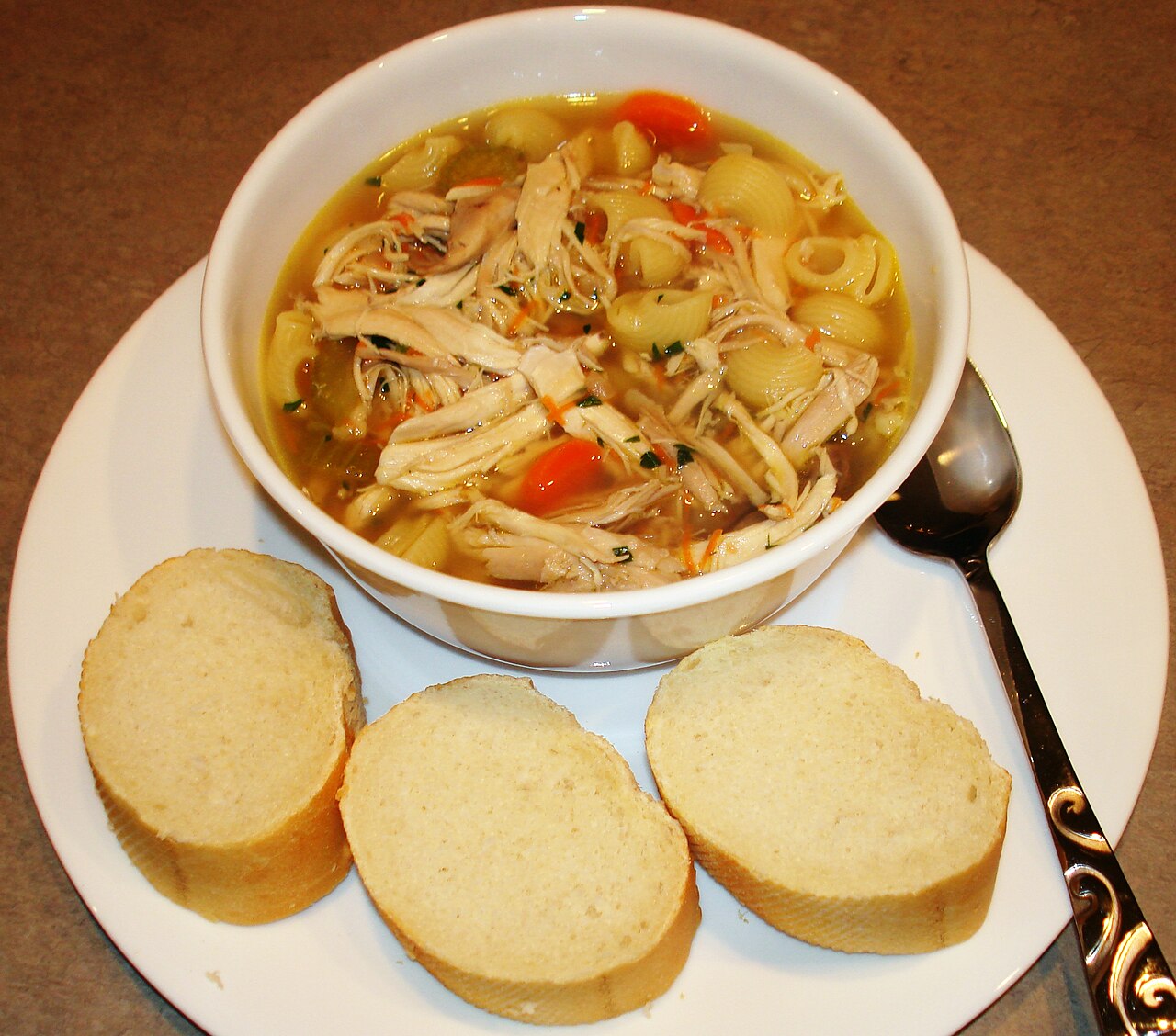
Chicken noodle soup is so familiar that it's easy to forget how good it is when the broth is real. Here a whole chicken (or a tray of bone-in thighs) starts in cold water and spends the afternoon at the gentlest simmer. The meat comes out after an hour, while it's still juicy, and the bones go back in to keep giving. What you end up with is a golden, clean-tasting stock with enough body to coat a spoon.
The thing that usually goes wrong is the boil. A hard, rolling boil churns fat and proteins back into the liquid, leaving it cloudy and greasy, and it tightens the meat until it's stringy. Keep the pot trembling, not bubbling.
The other is the noodles. Cooked in the pot, they drink up broth and shed starch, and by the next day they're bloated and the soup has turned to porridge. Cook them separately and add them bowl by bowl. Dill, parsley and a squeeze of lemon, stirred in off the heat, wake everything up. For chicken soup's many cousins around the world, see our journal piece.
Ingredients
Stock
Soup
Noodles and to finish
Method
Tap a step's number to tick it off, and a time to start a timer.
Make the stock
Put the chicken in a large pot (7–8 l), breast side up, and pour in the cold water; it should just cover the bird, so add a little more if it doesn't. Set the pot over medium heat and bring it up slowly until the surface starts to tremble, 20–30 minutes, skimming off the grey foam as it gathers.
Add the onion, carrot, celery, parsley stalks, thyme, bay leaves, peppercorns and salt. Turn the heat to low so that only a bubble or two breaks the surface every second, set the lid ajar and cook until the chicken is cooked through, about 1 hour for a whole bird or 40–45 minutes for thighs. The juices from the thickest part of the thigh should run clear, and a thermometer there should read at least 74 °C (165 °F).
Lift the chicken onto a tray with tongs and a large slotted spoon, tipping it so the hot liquid in the cavity runs back into the pot, and leave the pot on its low simmer. When the chicken is cool enough to handle, about 15 minutes, pull the meat off in large pieces, cover it and refrigerate it. Put the skin and bones back in the pot.
Keep the stock at the same lazy simmer for another 1–1 1/2 hours, until it tastes rich and rounded. Strain it through a fine sieve into a large bowl or jug and discard the solids; you should have about 2.5–3 l.
Let the stock settle for 5 minutes, then spoon the fat off the surface, keeping 2 tbsp for the soup.
Make the soup
Tear or cut the chicken into bite-sized pieces. You'll have 600–800 g: use it all for a hearty pot, or keep some back for sandwiches.
Rinse out the pot, add the 2 tbsp chicken fat and warm it over medium heat. Add the onion, carrots, celery and a pinch of salt and cook, stirring now and then, until the onion is soft and translucent but not browned, 8–10 minutes. Stir in the garlic for the last minute.
Pour in the strained stock, bring it to a simmer and cook until the carrots are just tender to the tip of a knife, 12–15 minutes.
Cook the noodles
While the vegetables simmer, bring a separate large pan of water to a rolling boil and salt it well. Cook the noodles until just tender, usually 6–8 minutes (check the packet). Drain them and toss with a spoonful of the hot stock so they don't stick together.
Finish and serve
Add the chicken to the soup and let it heat through at a gentle simmer, 3–5 minutes. Turn off the heat and stir in the parsley, dill and the juice of half the lemon (about 1 1/2 tbsp).
Taste and season with salt and pepper. Unsalted homemade stock needs more than you'd think, so start with 2 tsp and add more a pinch at a time until the chicken flavour comes into focus, with a few more drops of lemon if it still tastes flat. Cut the rest of the lemon into wedges.
Divide the noodles between warm bowls, ladle the soup over and serve with the lemon wedges.
Swaps
Cooking for coeliac disease or an allergy? Check every label: the notes below say which ones matter.
Gluten-free
- Swap the egg noodles for rice noodles or a pasta labelled gluten-free, cooked separately as in step 9. Gluten-free egg-style pasta is closest in bite; rice noodles are softer and more slippery. Everything else in the pot is already free of gluten.
- If you take the weeknight shortcut, choose a chicken stock labelled gluten-free.
Plant-based
- Without the chicken it becomes a vegetable noodle soup rather than chicken noodle soup, but a good one. Use 2.5 l well-flavoured vegetable stock (check the label, as some contain milk), olive oil instead of chicken fat and egg-free dried pasta instead of egg noodles, and add a drained 400 g tin of white beans or chickpeas with the carrots for substance.
High-protein
- Use all the chicken in the pot rather than keeping some back: that's roughly 35 g protein a bowl.
- Poach 2 boneless, skinless chicken breasts (about 400 g) in the stock for the last 20–25 minutes of step 4, until they reach 74 °C (165 °F), and add them with the rest of the meat: about 15 g more a bowl.
- Add a halved boiled egg to each bowl (about 6 g), or swap the egg noodles for a chickpea or lentil pasta (about 4 g more a bowl; many are also gluten-free, but check the label).
Tips
- Never let it boil hard. A bare simmer keeps the stock clear and the meat tender. If the surface starts rolling, turn the heat down or slide the pot half off the burner.
- Start cold and skim early. As the water heats slowly, proteins from the chicken set into a grey foam that floats to the top. Lifting it off in the first half hour is most of what keeps the stock clear.
- Season at the end. The stock reduces as it simmers, so most of the salt goes in once you know the final volume. Taste a spoonful on its own: properly seasoned, it tastes distinctly of chicken, not of hot water and vegetables.
- Why the noodles go in separately. Egg noodles keep absorbing liquid and releasing starch for as long as they sit in broth. Cooked on the side, they stay springy, the soup stays clear and the leftovers keep. If you'll finish the whole pot in one sitting, you can simmer them in the soup for the last 6–8 minutes instead; they'll taste more of chicken, but have an extra 250 ml of stock or water ready, because they'll drink some of it.
- Lemon and herbs go in off the heat. Lemon juice and dill lose their fresh edge when they boil. Added at the end, they sharpen the whole bowl without making it taste of lemon.
Make ahead and storage
- To make the stock ahead, cool it quickly: divide it into shallow containers and refrigerate within 2 hours. The fat sets on top and lifts off easily. It keeps for 3–4 days in the fridge or 3 months in the freezer.
- Store the soup and the noodles separately. The soup keeps for 3 days in the fridge; reheat it until it's simmering throughout, then drop the noodles in for a minute to warm through.
- Freeze the soup without noodles for up to 3 months, and cook fresh noodles when you serve it.
Variations
- Weeknight shortcut: skip the stock and poach 800 g bone-in chicken thighs in 2.5 l good low-salt chicken stock for 40–45 minutes, until cooked through. Shred the meat, strain the stock and carry on from step 7, using olive oil instead of chicken fat. Lighter, but still good.
- Gluten-free: swap the egg noodles for rice noodles or gluten-free pasta, cooked separately. Everything else in the pot is already free of wheat.
- Chicken and rice: cook 200 g long-grain white rice separately and use it instead of the noodles.
- Sweeter stock: add a peeled parsnip to the stock pot with the other vegetables.
Your notes
Keep your cooking notes private in your account. Save what you changed and what you'd do next time.
Reviews & cooks' tips
Reviews and tips from people who've cooked this appear here.