
Malaysia · Noodle soups
Curry laksa (Malaysian coconut curry noodle soup)
A from-scratch spice paste fried until its oil splits, simmered with chicken-and-prawn stock and coconut milk, then poured over two kinds of noodles with tofu puffs and sambal.
- Prep
- 35 min
- Cook
- 1 hr 10 min
- Total
- 1 hr 45 min
- Effort
- Takes some care
- Serves
- 4
Ratings by the Soupmap Culinary Team, not readers.
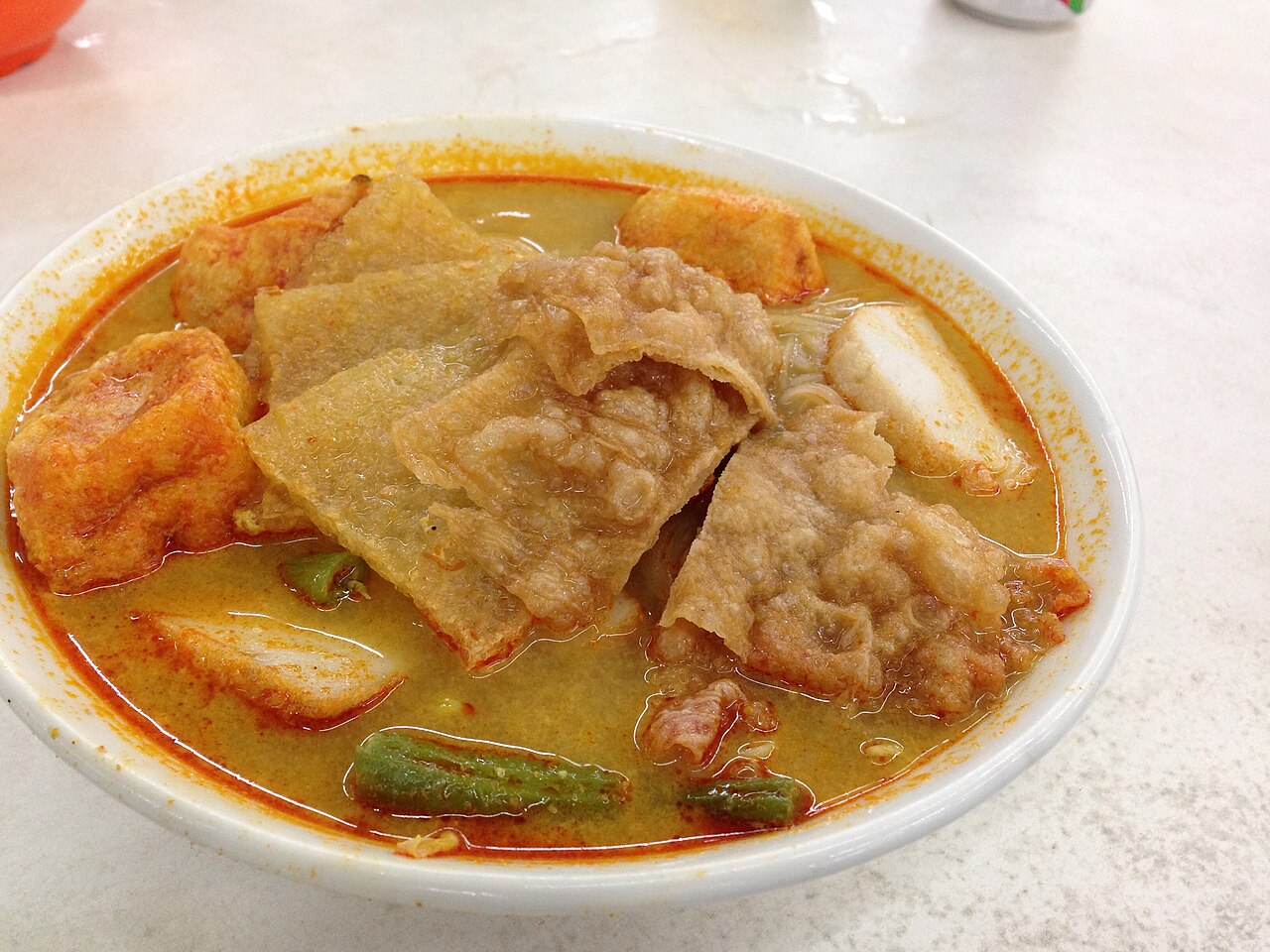
Curry laksa is the rich, coconut-curry branch of the laksa family: a spicy orange broth over noodles, with tofu puffs that soak it up like sponges. In parts of Malaysia the same bowl goes by curry mee, and it's a fixture of hawker stalls and coffee shops.
Everything rests on the rempah, the spice paste. Here it's made from scratch with dried chillies, shallots, lemongrass, galangal, candlenuts, turmeric, coriander seed and toasted belacan (fermented shrimp paste), then fried slowly in plenty of oil. The stock does its share too: chicken thighs and prawn shells simmered together give it both sweetness and depth.
The mistake nearly everyone makes is under-frying the paste. Raw shallot and chilli taste harsh and grassy, and no amount of simmering fixes it later. Keep going until the paste darkens, smells sweet and toasty, and the oil separates out. There's more on the whole family in our laksa essay.
Ingredients
Stock
Spice paste (rempah)
Broth
To serve
Method
Tap a step's number to tick it off, and a time to start a timer.
Start the stock
Peel and devein the prawns, keeping the heads and shells, and refrigerate the meat. Heat the 1 tbsp oil in a large pot over medium-high heat and fry the heads and shells, stirring and pressing, until bright pink and fragrant, 3 minutes.
Add the chicken stock and chicken thighs, bring to a boil, then lower to a gentle simmer and skim off any foam. Cook until the chicken is tender and reads 74°C (165°F) next to the bone, 25–30 minutes.
Make the spice paste
While the stock simmers, snip the chillies into 2 cm pieces with scissors and shake out as many seeds as you can for a milder paste, or keep some for more heat. Cover with boiling water and soak until soft, 20 minutes, soaking the dried shrimp in warm water alongside if you're using them.
Wrap the belacan in foil, flatten it to about 5 mm thick and toast it in a dry frying pan over medium heat until it smells strongly and turns dry and crumbly, 2–3 minutes per side. Open a window. Toast the coriander seeds in the same pan until fragrant, 1–2 minutes, then grind them finely.
Drain the chillies and shrimp and put them in a blender with the belacan, ground coriander, shallots, garlic, lemongrass, galangal, turmeric, candlenuts and a few spoonfuls of the oil. Blend to a very smooth, thick paste, 2–3 minutes, scraping down the sides and adding a splash of water only if the blades stall.
Finish the stock
Lift out the chicken and strain the stock into a jug, pressing hard on the shells; you should have about 1.4 l. When the chicken is cool enough to handle, shred it, discarding the skin and bones.
Fry the paste and build the broth
Wipe out the pot, add the rest of the oil and set it over medium heat. Add the paste (it will spit), then lower the heat to medium-low and fry, stirring often and scraping the bottom, until it darkens to a deep brick red, smells sweet and toasty rather than raw, and the oil separates and pools around it, 12–15 minutes. Malaysian cooks call this stage pecah minyak, "the oil splits".
Pour in the strained stock, stirring to loosen the paste, bring to a boil and simmer for 10 minutes. Stir in the coconut milk, tofu puffs, sugar and salt, and keep at a gentle simmer for 5 minutes, without letting it boil hard, so the tofu puffs soak up the broth.
Taste and adjust the salt and sugar. Add the prawns and simmer gently until pink and opaque all the way through, 2–3 minutes, then turn the heat to its lowest to keep the broth hot.
Cook the noodles and assemble
While the broth simmers, bring a large pan of water to a boil. Cook the rice vermicelli until just tender, 2–3 minutes (or as the packet says), lift it out with a sieve and drain. Dip the yellow noodles in the same water for 30–60 seconds to loosen and warm them, drain, and finally blanch the bean sprouts for 1 minute (or 10 seconds if they're labelled ready to eat).
Divide both kinds of noodles between deep bowls and top with the bean sprouts and shredded chicken. Ladle over the hot broth, about 400 ml per bowl, sharing out the prawns and tofu puffs.
Scatter with laksa leaf and serve with lime wedges and sambal (chilli relish) on the side, to stir in a little at a time.
Swaps
Cooking for coeliac disease or an allergy? Check every label: the notes below say which ones matter.
Gluten-free
- Skip the yellow noodles, which are wheat and egg, and use 250 g rice vermicelli for four, as in Variations.
- Check the labels on the belacan, dried shrimp, tofu puffs, chicken stock and sambal, and choose ones labelled gluten-free; some contain wheat or soy sauce. Fish cake, if you add it as a topping, often contains wheat starch too.
Plant-based
- Leave out the belacan, dried shrimp, prawns and chicken, and make the broth with 1.4 l vegetable stock (check the label, as some contain milk) simmered with 4 dried shiitake for 20 minutes. Fry 1 tbsp white miso with the paste for some of the lost savouriness, checking that it isn't made with fish-based dashi.
- Use rice vermicelli only (the yellow noodles contain egg), add extra tofu puffs and some fried tofu or oyster mushrooms, and choose a sambal made without shrimp paste. Honestly, without the belacan it's a very good coconut curry noodle soup rather than quite laksa.
High-protein
- Double the prawns to 800 g shell-on: about 12 g more protein a bowl, on top of the roughly 35 g the chicken, prawns and tofu already give.
- Add a halved hard-boiled egg to each bowl, a common laksa topping, for about 6 g more.
- Add 100 g cubed firm tofu per bowl, fried until golden: about 12 g more.
Tips
- Fry the paste low and long. The water in the shallots and lemongrass has to cook off before the paste can really fry, and that frying is what builds the colour and depth. If it starts to catch, add a spoonful of oil, not water, and turn the heat down.
- Toast the belacan. Raw shrimp paste tastes harsh; toasted, it turns deeply savoury. The foil parcel keeps the smell (which is strong) in check. Thai shrimp paste works the same way if that's what you can find.
- Candlenuts are always cooked. They thicken and enrich the paste, but they're mildly toxic raw, so never snack on them; the long frying takes care of it. Macadamias are the usual substitute and behave the same.
- Blend it really smooth. A coarse paste stays gritty in the broth. A mortar and pestle is the traditional tool, but a blender with enough oil to keep things moving does the job.
- Find laksa leaf if you can. Vietnamese coriander is sharp, peppery and a little citrusy, and it's the smell many people associate with laksa. Southeast Asian grocers often stock it; mint is the closest everyday substitute.
Make ahead and storage
- Make a double batch of paste: it keeps for 4 days in the fridge or 3 months in the freezer. Fried or not, store it covered and chilled, never at room temperature.
- The finished broth, without noodles or prawns, keeps for 3 days in the fridge once cooled quickly. Bring it back to a simmer and cook fresh prawns in it before serving.
- Keep the noodles, bean sprouts and herbs separate, and cook the noodles fresh.
Variations
- Gluten-free bowl: skip the yellow noodles and use 250 g rice vermicelli, and check the labels on the belacan, dried shrimp, tofu puffs and stock.
- More toppings: halved hard-boiled eggs, sliced fish cake and extra fried tofu are all common additions.
- Shortcut paste: a jar of bought laksa paste saves about 30 minutes. Use as much as the jar suggests for this volume of liquid, and still fry it until fragrant and the oil starts to separate, about 5 minutes.
Your notes
Keep your cooking notes private in your account. Save what you changed and what you'd do next time.
Reviews & cooks' tips
Reviews and tips from people who've cooked this appear here.