
France · Chilled
Vichyssoise (chilled leek and potato soup)
Leeks softened in butter without colour, simmered with potato, blended silky and sieved, then finished with cream and chilled until properly cold. Chives on top.
- Prep
- 25 min
- Cook
- 50 min
- Total
- 5 hr 55 min
- Effort
- Takes some care
- Serves
- 6
The total includes 4 hr 40 min of soaking, resting or chilling.
Ratings by the Soupmap Culinary Team, not readers.
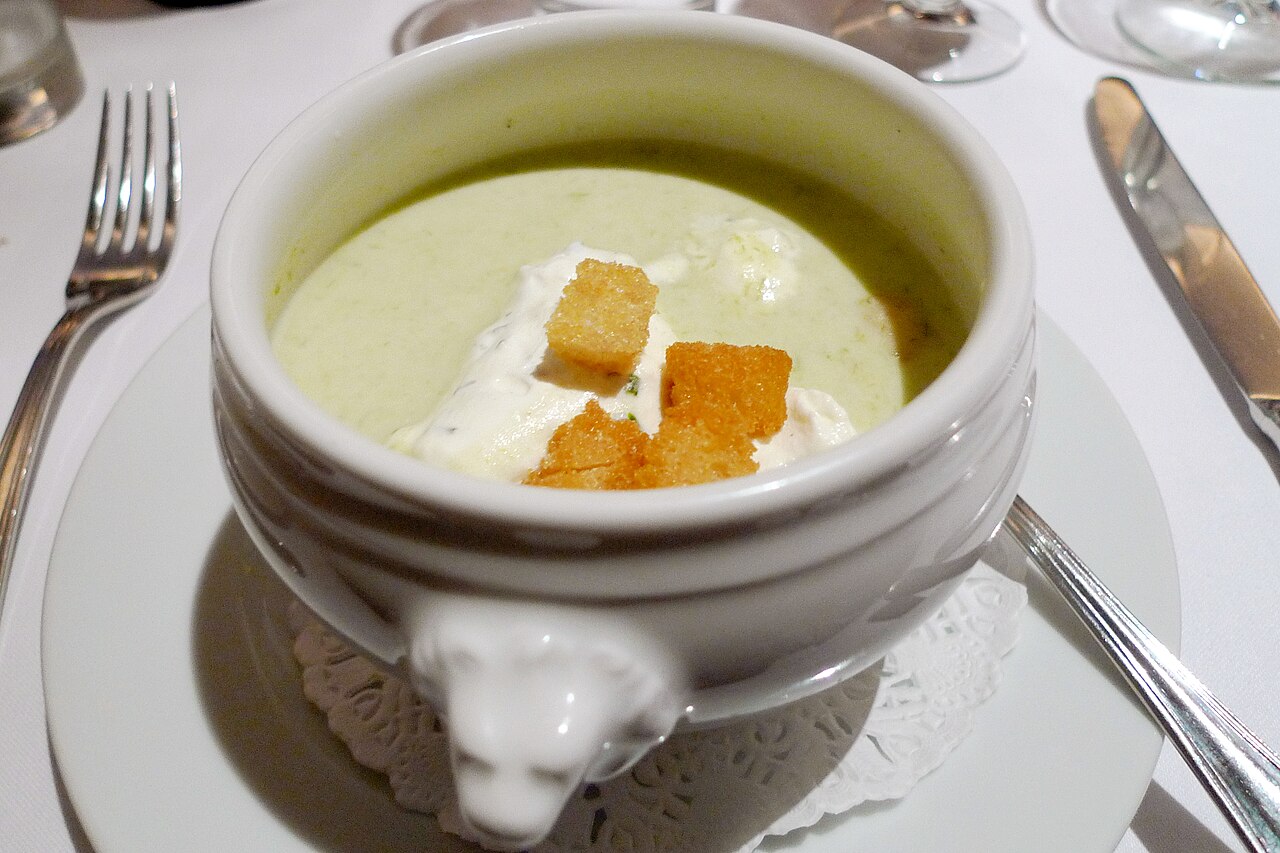
Vichyssoise (say "vee-shee-SWAHZ") is leek and potato soup made elegant: blended until silky, passed through a sieve, enriched with cream and served cold. The name means "of Vichy", the spa town in central France, but the dish most likely took shape in New York. It's usually credited to Louis Diat, the French-born chef of the Ritz-Carlton there, who is generally said to have created it around 1917 by chilling the hot leek and potato soup he grew up with in the countryside near Vichy. Some French writers point to older cold leek soups, so the story is best taken as likely rather than settled.
The colour tells you how well it was made. The leeks should cook gently in butter until completely soft but never browned, so the soup stays pale ivory and tastes sweet and clean. Any colour on the leeks turns it beige and adds a caramel note that doesn't belong.
Two more things matter. Cold dulls flavour, so season it again once it's chilled, more than you'd think. And treat it like any cream soup: cool it fast, keep it in the fridge and serve it straight from cold.
Ingredients
Soup
To finish
Method
Tap a step's number to tick it off, and a time to start a timer.
Soften the leeks
Put the sliced leeks in a large bowl of cold water and swish them around to loosen any grit. Lift them out with your hands, leaving the grit behind in the bowl, and drain well.
Melt the butter in a large, heavy saucepan over medium-low heat. Add the leeks and salt, stir to coat, then cover and cook gently for 15–20 minutes, stirring every few minutes, until the leeks have collapsed and are completely soft and sweet, with no colour at all. If they start to turn golden, lower the heat and add a splash of water.
Simmer and blend
Add the potatoes and stock and bring to a boil. Lower the heat and simmer, partly covered, for 20–25 minutes, until the potato slices fall apart when pressed against the side of the pan.
Blend in batches in a jug blender until completely smooth, about 1 minute per batch. Fill the jar no more than half full and hold the lid down with a folded tea towel, as hot liquid expands. Don't blend for longer than you need to: overworked potato can turn gluey.
Push the purée through a fine sieve into a wide bowl with the back of a ladle, to catch any stringy leek fibres.
Chill
Set the bowl in a larger bowl or a sink of iced water and stir every few minutes until the soup is cool to the touch, about 30 minutes. Stir in the cream, cover and refrigerate for at least 4 hours, until thoroughly cold. Put the serving bowls in the fridge too, if you have room.
Serve
Stir the soup well. It thickens as it chills, so loosen it with a little cold milk or stock until it flows like pouring cream. Taste and season assertively with salt and white pepper.
Ladle into the chilled bowls, scatter with chives and serve at once. Put the rest straight back in the fridge.
Swaps
Cooking for coeliac disease or an allergy? Check every label: the notes below say which ones matter.
Gluten-free
- Gluten-free as written, as long as the stock is. Many bought stocks and stock cubes contain wheat or barley, so choose one labelled gluten-free, including any you use to loosen the soup.
Plant-based
- Soften the leeks in 3 tbsp mild olive oil or a plant-based butter instead of butter, and use a light vegetable stock labelled vegan (and gluten-free if you need it).
- Replace the cream with 250 ml unsweetened plain soy or oat cream, or with cashew cream (100 g raw cashews soaked for 2 hours, drained and blended with 200 ml water until smooth), and loosen with unsweetened soy or oat milk. Cashew gives the closest body. It's a tree nut, and oat products need a gluten-free label for anyone with coeliac disease.
High-protein
- As written a bowl has only about 5 g protein. Stir 250 g strained Greek yoghurt into the cold soup in place of half the cream: about 4 g more per bowl, with a gentle tang.
- Simmer 400 g drained cooked white beans (cannellini or haricot) with the potatoes and blend them in: about 4 g more per bowl. The soup stays pale but tastes a little earthier.
- Top each bowl with 50 g cooked white crab meat or chopped cooked prawns: about 9–12 g more.
Tips
- Use only the white parts of the leeks for that ivory colour and clean flavour. Save the green tops for making stock.
- Sweat the leeks under a lid. The trapped steam keeps them stewing in their own juices rather than frying, which is what keeps them pale.
- Choose a light, mild stock. A dark or salty one swamps the leek and greys the colour, and with the soup reseasoned once cold, a salty stock leaves you no room.
- Blend briefly, then sieve. The blender gives smoothness and the sieve gives silkiness; a stick blender alone won't get it as fine.
- Keep it cold. Don't leave the soup out of the fridge for more than 2 hours in total, or 1 hour on a hot day above 32°C. For a buffet or a long lunch outdoors, set the serving bowl in a larger bowl of ice.
Make ahead and storage
- Vichyssoise is at its best made the day before, so it's thoroughly cold. Keep it covered in the fridge for up to 2 days.
- To freeze, stop before adding the cream and freeze for up to 3 months. Potato can turn slightly grainy in the freezer, so thaw it in the fridge, blend it briefly again, then stir in the cream and chill.
Variations
- Vegetable stock: use a light vegetable stock, one that isn't heavy on carrot or tomato, and the soup is vegetarian.
- Lighter: replace half the cream with whole milk.
- Served hot: skip the chilling and serve it warm, and you have something close to France's potage Parmentier, the puréed leek and potato soup named after Antoine-Augustin Parmentier, the eighteenth-century champion of the potato.
Your notes
Keep your cooking notes private in your account. Save what you changed and what you'd do next time.
Reviews & cooks' tips
Reviews and tips from people who've cooked this appear here.