
Spain · Chilled
Andalusian gazpacho
The cold soup of southern Spain. Ripe tomatoes, cucumber, green pepper and garlic blended with bread, sherry vinegar and olive oil until silky, then chilled until icy.
- Prep
- 20 min
- Cook
- 5 min
- Total
- 4 hr 30 min
- Effort
- Easy
- Serves
- 4
The total includes 4 hr 5 min of soaking, resting or chilling.
Ratings by the Soupmap Culinary Team, not readers.
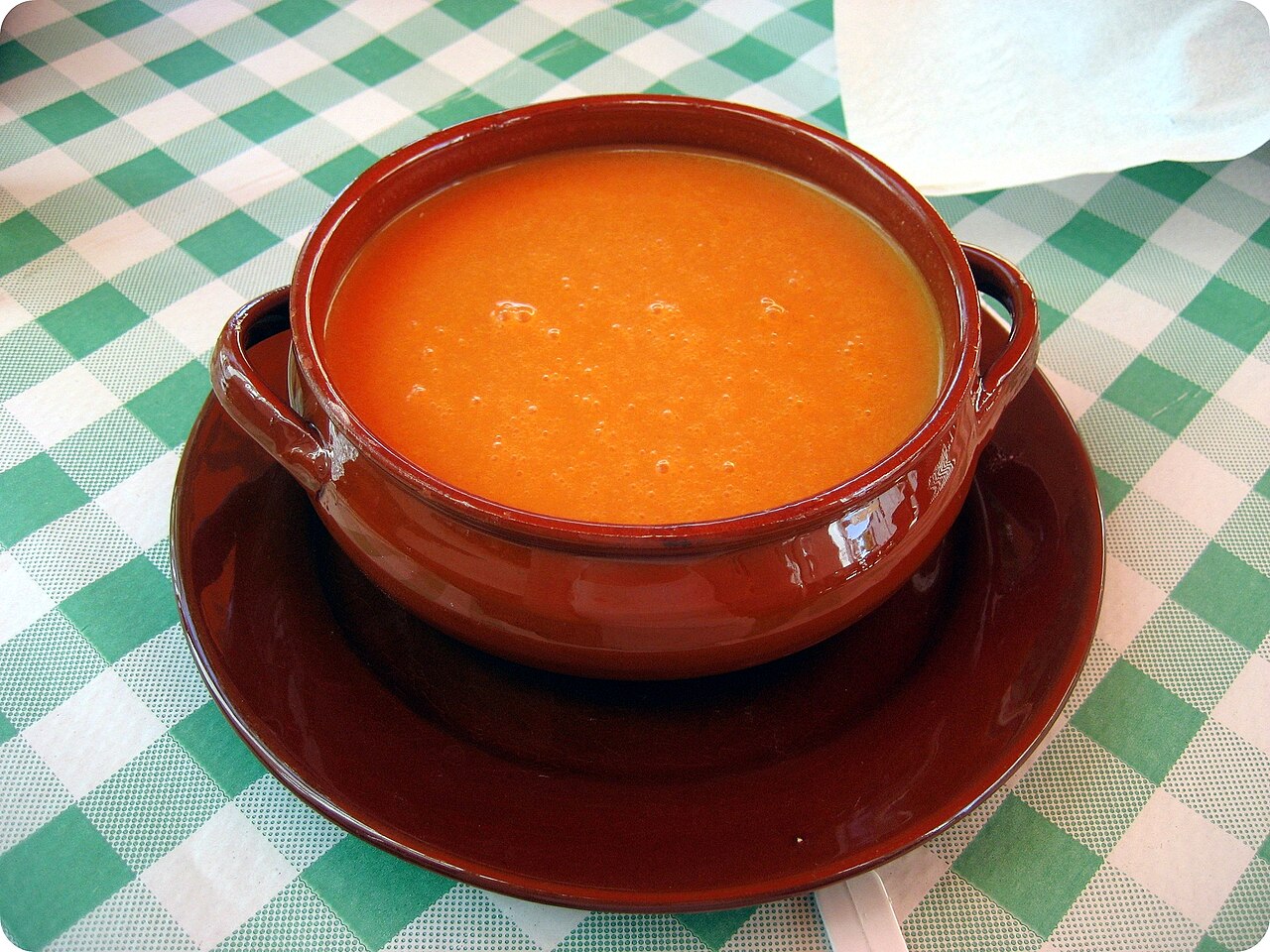
Gazpacho is a soup made with a blender and a fridge, not a stove. Raw ripe tomatoes, cucumber, green pepper and a little garlic are blended with day-old bread, sherry vinegar and plenty of olive oil, then chilled until properly cold. In Andalusia, the hot south of Spain, it's the everyday soup of summer, served in a bowl at lunch or poured into a glass in the afternoon.
Two things make it great. The first is the tomatoes: deep red, heavy and smelling of tomato at the stem. Nothing is cooked, so a pale tomato has nowhere to hide. The second is emulsifying the oil. Poured slowly into the running blender, it breaks into tiny droplets held in suspension by the bread and tomato pulp. The soup turns from bright red to a softer, creamy coral and feels silky rather than watery with oil floating on top.
The common mistake is serving it cool rather than cold. Chill it for at least 4 hours, then taste it again: cold mutes salt and acidity, so seasoning that seemed right at room temperature can taste flat straight from the fridge.
Ingredients
Gazpacho
To garnish
Method
Tap a step's number to tick it off, and a time to start a timer.
Blend
Tear the bread into a bowl, cover it with cold water and leave it to soften for 10 minutes. Lift it out and squeeze gently, so it's soft but not dripping.
Put the tomatoes, cucumber, green pepper, garlic, soaked bread, salt and vinegar in a blender (in two batches if your blender is small). Blend on high until completely smooth, 1–2 minutes.
With the blender running on medium, pour in the olive oil in a slow, thin stream over about 1 minute, then blend for 30 seconds more. Watch the colour: as the oil emulsifies, the soup turns from bright red to a creamy orange-pink and thickens slightly.
Strain and chill
For the classic silky texture, press the gazpacho through a fine sieve with the back of a ladle and discard the seeds and skin left behind. (A powerful blender leaves very little; skip this if you like it a little rustic.) Taste: it should be bright, well salted and gently sharp. If it's thicker than you'd like, stir in cold water a few tablespoons at a time.
Cover and refrigerate until thoroughly cold, at least 4 hours. Chill your bowls or glasses too if you have room.
Garnish and serve
Shortly before serving, make the croutons. Toss the bread cubes with 1 tbsp olive oil in a frying pan over medium heat and fry, tossing often, until golden and crisp, 4–5 minutes. Tip onto kitchen paper to cool.
Stir the chilled gazpacho well, since it can separate slightly as it sits, and taste it again. It will probably want another pinch of salt or a few drops of vinegar now that it's cold.
Pour into the chilled bowls or glasses. Scatter over the diced cucumber, pepper and onion and the croutons, and finish with a thread of olive oil.
Swaps
Cooking for coeliac disease or an allergy? Check every label: the notes below say which ones matter.
Gluten-free
- The bread is the only gluten. Use the same weight of a white loaf labelled gluten-free, crusts removed and soaked the same way; if you also need it vegan, check its label for egg and milk, which some gluten-free breads contain.
- Or leave the bread out, as in Variations: the soup is thinner and less creamy, so add the oil especially slowly.
- Make the croutons from the gluten-free bread in a clean pan, or skip them. Sherry vinegar is gluten-free.
Plant-based
- Already vegan as written, as long as the bread is a plain loaf of flour, water, yeast and salt, with no milk, butter, egg or honey. Only the salmorejo variation's egg and ham toppings aren't.
High-protein
- Gazpacho is light, at roughly 5 g protein a bowl. Top each bowl with a chopped hard-boiled egg (about 6 g) and 30 g diced jamón or other cured ham (about 9 g), the salmorejo toppings.
- Or scatter 80–100 g cooked, peeled prawns per bowl, well chilled, over the soup with the garnishes: about 20 g.
- For a plant-based boost, swap the croutons for 30 g crisp roasted chickpeas per bowl (about 6 g).
Tips
- Let the tomatoes ripen. Keep them at room temperature, never in the fridge, and use them when they give slightly to a gentle press. Plum and vine tomatoes are reliable; out of season, gazpacho is rarely worth making.
- Don't skip the bread or the oil. Together they give gazpacho its body and its creamy texture; the bread's starch helps hold the oil in suspension. Without them you have cold tomato juice.
- Go easy on the garlic. Raw garlic is powerful, and it lingers. One small clove is plenty for a kilo of tomatoes.
- Sherry vinegar is worth finding. Its rounded, slightly nutty sharpness is the Andalusian flavour. If you can't get it, good red or white wine vinegar works; start with the same amount and adjust after chilling.
- Use an Italian frying pepper if you can. Spanish cooks typically use the long, thin-skinned green pepper sold there as pimiento italiano, and Italian frying peppers are a close match. Green bell peppers are more bitter and assertive, which is why only half of one goes in.
Make ahead and storage
- Gazpacho keeps for 2 days, covered, in the fridge. Stir it well and re-season before serving. It doesn't freeze well: the emulsion splits and the texture turns grainy.
- Make the croutons up to a day ahead and keep them in an airtight container.
Variations
- Gluten-free: leave out the bread and the croutons. The soup will be thinner and a little less creamy; add the oil especially slowly so it emulsifies.
- To drink: thin the gazpacho with cold water until it pours easily, skip the garnishes and serve it in tall glasses.
- Salmorejo (not vegetarian or vegan with the classic toppings): Córdoba's thicker cousin is made with tomatoes, bread, garlic and olive oil, but no cucumber or pepper. Use about 200 g soaked bread and 150 ml olive oil for 1 kg tomatoes, blend until it's thick enough to hold a spoon, and top it with chopped hard-boiled egg and jamón (Spanish cured ham).
Your notes
Keep your cooking notes private in your account. Save what you changed and what you'd do next time.
Reviews & cooks' tips
Reviews and tips from people who've cooked this appear here.