
Bulgaria · Chilled
Tarator (Bulgarian cold cucumber and yoghurt soup)
Tangy yoghurt thinned with iced water, crisp cucumber, garlic, dill, walnuts and a thread of sunflower oil. Bulgaria's summer soup, made in 15 minutes without a stove.
- Prep
- 15 min
- Cook
- No cooking
- Total
- 15 min
- Effort
- Easy
- Serves
- 4
Ratings by the Soupmap Culinary Team, not readers.
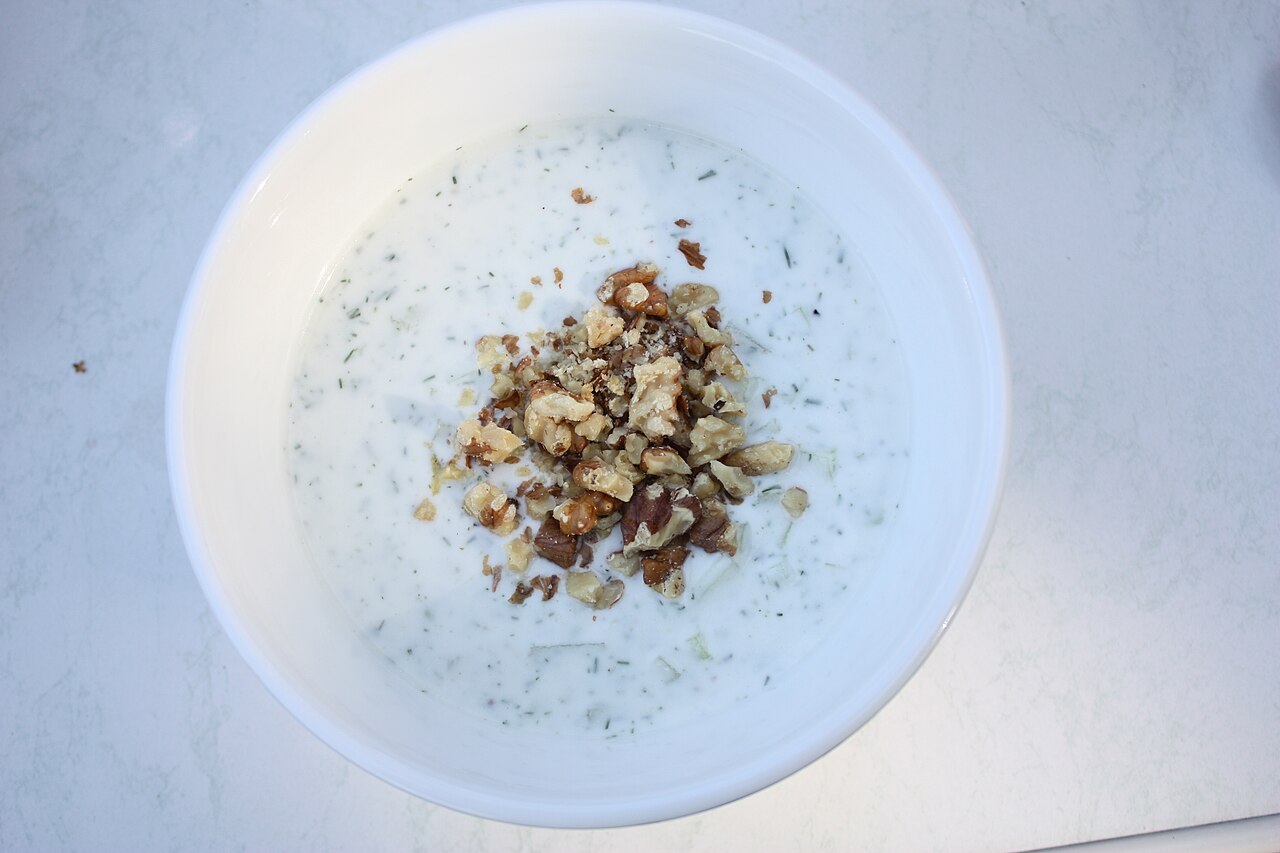
Tarator is the soup of a Bulgarian summer: plain yoghurt whisked with cold water until it pours, then filled with finely diced cucumber, crushed garlic, plenty of fresh dill, chopped walnuts and a little sunflower oil. It's eaten at lunch, often as a first course, and on the hottest days it's common to drop an ice cube into each bowl. There's no cooking at all, so it's ready in about the time it takes to dice a cucumber.
Bulgarians are proud of their yoghurt, kiselo mlyako ("sour milk"), and with reason: one of the two bacteria behind most of the world's yoghurt, Lactobacillus bulgaricus, is named after the country. Bulgarian yoghurt is tangy and fairly loose, so use a plain, full-fat, unstrained yoghurt. A thick strained (Greek-style) yoghurt works too, but needs more water.
The thing to get right is the temperature. Tarator should be properly cold, not merely cool. Use yoghurt and cucumber straight from the fridge and iced water to thin it, and it's ready to eat the moment it's mixed. If your ingredients started out at room temperature, chill the soup for an hour before serving.
Ingredients
Method
Tap a step's number to tick it off, and a time to start a timer.
Peel the cucumber, or peel it in stripes if the skin is thin and tender. Cut it into small dice, about 5 mm.
Crush the garlic with a pinch of the salt to a smooth paste, using a mortar and pestle or the flat of a knife. Finely chop the dill, discarding any thick stalks, and finely chop the walnuts.
Put the yoghurt in a large bowl and whisk until smooth. Whisk in the garlic paste, the rest of the salt and the oil, then whisk in 300 ml iced water a little at a time, until the yoghurt pours like single (light) cream. Add up to 100 ml more water if you like it thinner.
Stir in the cucumber and most of the dill and walnuts. Taste: it should be tangy, garlicky and clearly salted. Cold food needs a little more salt than you'd expect, so add a pinch more if it tastes flat.
Ladle into bowls, scatter over the remaining dill and walnuts, add a few drops of oil and an ice cube or two if you like, and serve at once.
Swaps
Cooking for coeliac disease or an allergy? Check every label: the notes below say which ones matter.
Gluten-free
- Already gluten-free as written. Use a plain yoghurt whose label lists only milk and cultures, and if you're coeliac, check the walnuts for "may contain" warnings.
Plant-based
- Vegetarian as written, not vegan. For a vegan tarator, use an unsweetened plain soy yoghurt (see Variations) and a squeeze of lemon juice, since it tastes milder. Plant yoghurts vary in thickness, so add the water gradually.
- If you also need it gluten-free, avoid oat-based yoghurts unless they're labelled gluten-free.
High-protein
- Strained yoghurt: use strained (Greek-style) yoghurt for all 600 g and thin it with more iced water until it pours (see Tips): about 9 g more protein per bowl.
- More walnuts: double them to 100 g: about 2 g more per bowl, and a richer soup.
Tips
- Start cold and stay cold. Put a jug of water in the fridge (or float ice in it and strain it) before you start, and chill the bowls if you have room. Tarator that has warmed up tastes sour and heavy.
- Choose a plain, unstrained yoghurt. With strained (Greek-style) yoghurt, use the same weight and keep adding water until it pours; you may need nearly twice as much. For gluten-free, use a yoghurt whose label lists only milk and cultures: plain yoghurt is naturally gluten-free, but some thickened ones have added starches.
- Go by taste with the garlic. Raw garlic spreads through the yoghurt as it stands and tastes stronger after a few hours, so use the smaller amount if you're making it ahead.
- Use fresh dill and fresh walnuts. Dried dill tastes of hay here, and walnuts go rancid quickly, so taste one before it goes in. Some cooks pound the walnuts with the garlic for a richer, creamier soup.
- Sunflower oil is the usual Bulgarian choice. Its mild flavour lets the dill and garlic lead. Olive oil works too, but gives a greener, more peppery taste.
Make ahead and storage
- Tarator keeps, covered, for 1 day in the fridge. The cucumber softens and releases water and the garlic grows stronger; stir well and re-season before serving. Keep the walnuts separate if you're making it ahead, as they soften.
- Don't leave it out in the heat for more than 2 hours, and don't freeze it: the yoghurt separates.
Variations
- Grated cucumber: coarsely grate the cucumber instead of dicing it, for a softer, more even texture.
- Snezhanka (thick, as a salad): the same ingredients with strained yoghurt and no water make snezhanka ("Snow White"), a Bulgarian salad served alongside a meal rather than as a soup.
- Vegan: use an unsweetened plain soy yoghurt. The tags change to vegan and dairy-free; the flavour is milder, so add a squeeze of lemon juice.
- Nut-free: leave out the walnuts. The soup is lighter and a little less rich, but still very good.
Your notes
Keep your cooking notes private in your account. Save what you changed and what you'd do next time.
Reviews & cooks' tips
Reviews and tips from people who've cooked this appear here.