
Spain · Hearty & chunky
Sopa de ajo (Castilian garlic soup)
Sliced garlic and stale bread fried in olive oil, reddened with smoked pimentón and simmered into a rustic broth, with an egg poached in each bowl. Ready in 30 minutes.
- Prep
- 8 min
- Cook
- 22 min
- Total
- 30 min
- Effort
- Easy
- Serves
- 4
Ratings by the Soupmap Culinary Team, not readers.
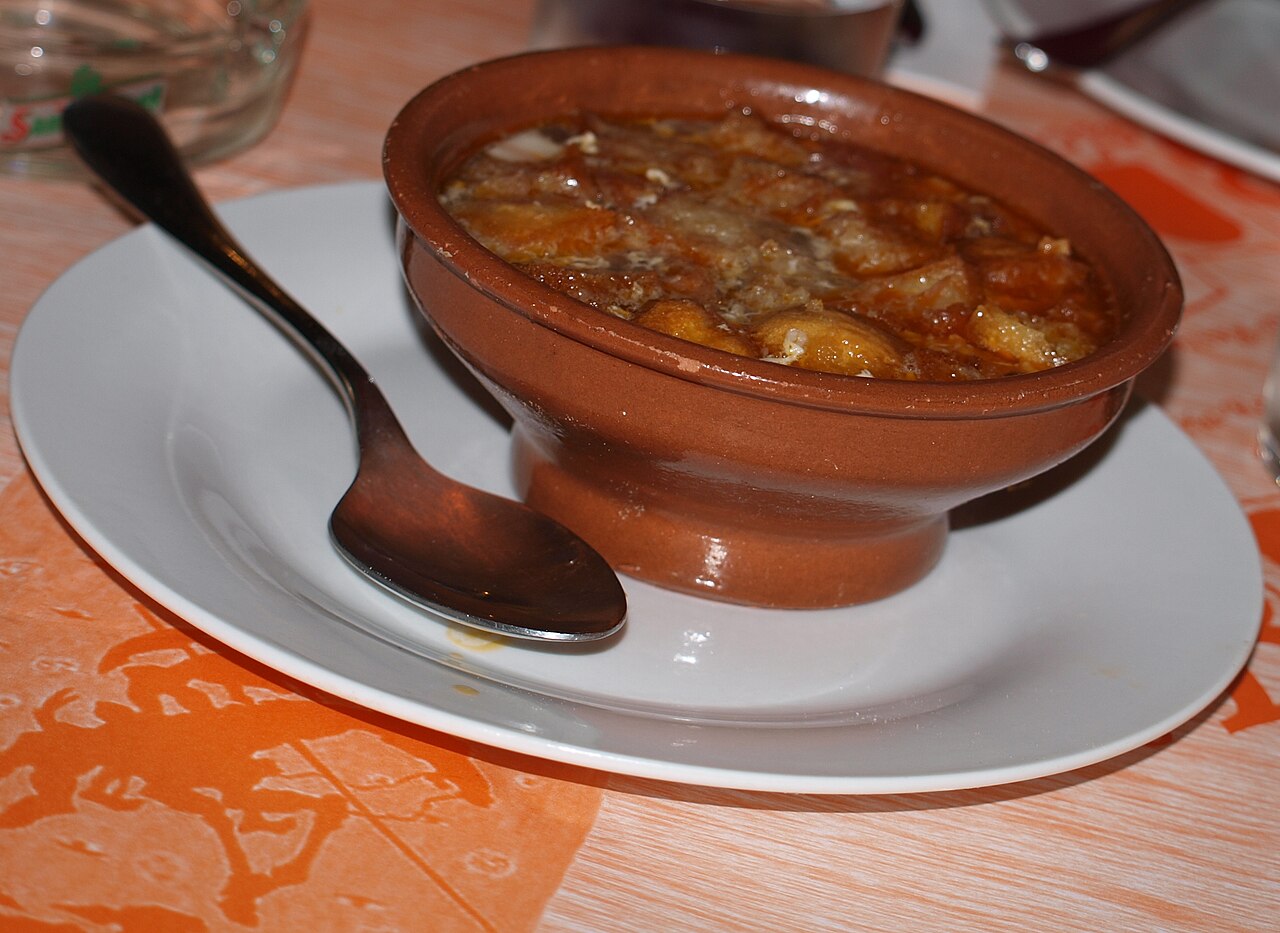
Sopa de ajo, garlic soup, also known as sopa castellana, is the winter soup of Castile, the high, cold plateau at the centre of Spain. It's made from what every kitchen there had to hand: olive oil, a good handful of garlic, yesterday's bread and pimentón (Spanish paprika, here the smoked kind). The bread drinks up the broth and half dissolves, turning it thick and rustic, and an egg poached on top makes it a meal.
It's often made with jamón (Spanish cured ham) or a meat stock. This version keeps it vegetarian, with water or vegetable stock, and I don't think it loses much: the fried garlic and smoky pimentón carry the flavour. If you want the ham, it's in Variations, and it changes the diet tag.
The two things to watch are both about heat. Fry the garlic gently, only to pale gold: browned garlic turns bitter, and so does the whole pot. And take the pot off the heat before the pimentón goes in. It's ground so fine that it scorches in seconds in hot oil, and burnt pimentón tastes acrid.
Ingredients
Method
Tap a step's number to tick it off, and a time to start a timer.
Fry the garlic and bread
Put the water or vegetable stock in a saucepan, cover and set it over medium heat so it's hot when you need it. Slice the garlic and bread while it heats.
Heat the oil in a wide, heavy pot over medium-low heat. Add the garlic and cook, stirring often, until it's soft, fragrant and pale gold at the edges, 2–3 minutes. Don't let it brown.
Add the bread and turn it in the oil until it has soaked most of it up and is lightly toasted in places, 2–3 minutes. If the garlic is colouring too fast, turn the heat down.
Take the pot off the heat. Sprinkle in the pimentón and stir for a few seconds, just until everything turns brick red, then pour in the hot water or stock straight away. It will hiss.
Simmer
Return the pot to medium heat, add the salt and bring to a simmer. Simmer gently, partly covered, until the bread has softened and started to break up and the soup has thickened slightly, 8–10 minutes. Stir now and then, breaking up the bread with the spoon as much as you like: in soft pieces or almost smooth. Taste and add more salt if needed; a salted stock may need none.
Poach the eggs
Turn the heat down so the soup is barely bubbling. Crack each egg into a cup and slide it gently onto the surface of the soup, spacing them apart. Cover and cook until the whites are completely set and opaque and the yolks are still soft, 4–5 minutes. (For firm yolks, see Tips.)
Ladle the soup into warm bowls with an egg in each, scatter over the parsley if using, add a few drops of olive oil and serve straight away.
Swaps
Cooking for coeliac disease or an allergy? Check every label: the notes below say which ones matter.
Gluten-free
- Not gluten-free as written: the bread is wheat. Use a firm gluten-free white loaf, a day or two old, toasting the slices lightly first if it's soft. Gluten-free bread tends to break down faster, so the soup comes out smoother and a little less rustic.
- Use water, or a vegetable stock labelled gluten-free.
Plant-based
- Vegetarian as written, not vegan: the eggs are the only animal product, as long as you use water or vegetable stock and a plain loaf made only with flour, water, yeast and salt (some breads contain milk or butter).
- For a vegan bowl, leave out the eggs and stir a drained 400 g tin of chickpeas into the soup with the hot liquid. Without the egg it's no longer the classic, more a garlic and chickpea soup, but the fried garlic and pimentón still carry it.
High-protein
- Two eggs per bowl: poach 8 eggs instead of 4, in a wide pot so they don't touch: about 6 g more protein per bowl.
- Jamón: fry 100 g diced jamón serrano before the garlic (see Variations): about 7 g more per bowl. It's no longer vegetarian.
- Chickpeas: add a drained 400 g tin with the hot liquid: about 4 g more per bowl.
Tips
- Slice the garlic thinly and evenly. Even slices cook at the same rate, so none burn while others stay raw. If the garlic does brown, start again: it's cheap, and its bitterness will run through the whole soup.
- Off the heat for the pimentón. Only a few seconds in the hot oil releases its colour and smoky flavour; any longer, over a flame, and it burns. Have the hot liquid ready before you add it.
- Use properly stale bread. Dense, crusty white bread a day or two old holds together as it softens; fresh, soft bread turns to paste. If yours is fresh, toast the slices lightly before frying them.
- Find smoked pimentón if you can. Pimentón de la Vera, from Extremadura in western Spain, is made from peppers dried over oak fires, and its smokiness is the backbone of this soup. It comes dulce (sweet), agridulce (bittersweet) and picante (hot). Unsmoked sweet paprika works, but the soup is flatter.
- Soft yolks aren't fully cooked. If you're serving anyone who should avoid runny eggs (during pregnancy, very young children, older people or anyone with weakened immunity), cover and cook until the yolks are firm, 8–10 minutes, which adds about 5 minutes to the total. Or stir the eggs in as ribbons (see Variations), which keeps it within 30 minutes.
Make ahead and storage
- Make the soup up to the end of step 5 and keep it covered in the fridge for up to 2 days. It thickens as it stands, so add a splash of water when you reheat it to a simmer, then poach the eggs just before serving.
- Don't store soup with poached eggs in it. Eat the eggs freshly cooked, and don't freeze the soup: the bread turns grainy.
Variations
- With jamón (not vegetarian): fry 60 g diced jamón serrano in the oil for 1 minute before adding the garlic, or use chicken or ham stock. Either way, the soup is no longer vegetarian.
- Ribboned eggs: beat the eggs, pour them into the simmering soup in a thin stream while stirring gently and simmer for 1 minute, until set into soft ribbons. They're fully cooked, and it's a common way to serve it too.
- Baked in earthenware: ladle the soup into individual ovenproof bowls (in Spain, cazuelas of glazed clay), crack an egg into each and bake at 220°C (200°C fan) until the whites are set, 6–8 minutes. Heat the oven while the soup simmers; it adds about 10 minutes.
- Gluten-free: use a firm gluten-free white loaf, a day or two old, and check that your stock is gluten-free.
Your notes
Keep your cooking notes private in your account. Save what you changed and what you'd do next time.
Reviews & cooks' tips
Reviews and tips from people who've cooked this appear here.