
Italy · Hearty & chunky
Minestrone
Italy's big vegetable soup. A slow soffritto, the season's vegetables added in order of cooking time, beans, a little pasta and a parmesan rind simmered in for depth.
- Prep
- 20 min
- Cook
- 1 hr
- Total
- 1 hr 25 min
- Effort
- Easy
- Serves
- 6
Ratings by the Soupmap Culinary Team, not readers.
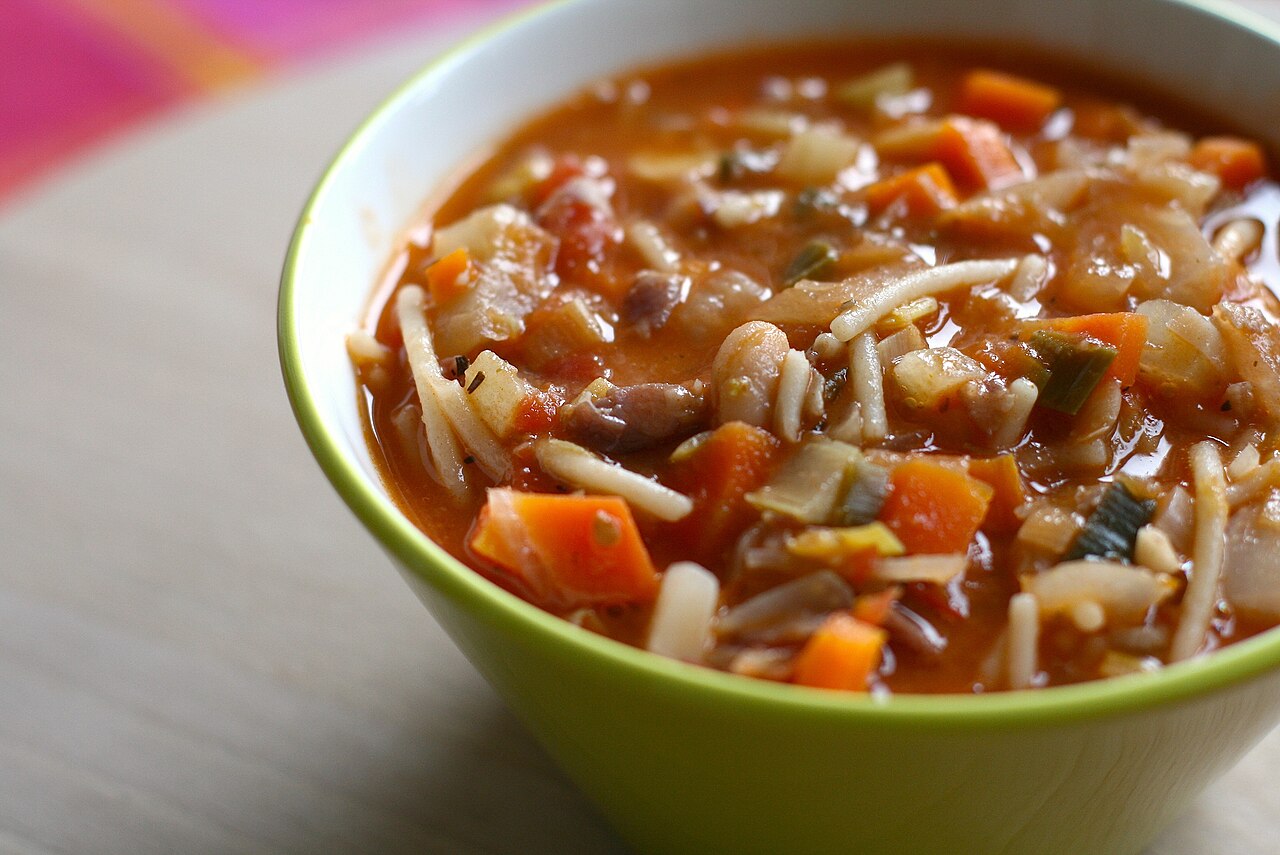
Minestrone is less a fixed recipe than a method. The name means roughly "big soup", from minestra, the everyday Italian word for soup, and a pot made in July looks nothing like one made in January. You start with a soffritto (onion, carrot and celery chopped fine and softened slowly in olive oil), add whatever vegetables the season offers, then beans, a little pasta or rice and some greens.
This version is built for autumn, with potato, squash, courgette and cavolo nero (Tuscan black kale), but the method works all year, and the Variations give a spring and a summer line-up. Three things make it taste of something rather than vegetable water: a soffritto cooked long enough to turn sweet, a parmesan rind simmered in the pot for savoury depth, and vegetables added in order of how long they take, so the potato melts into the broth while the greens stay green.
The usual mistake is boiling everything together for an hour until it's all one khaki colour. Take your time at the start and pay attention at the end.
Ingredients
Soffritto
Soup
To serve
Method
Tap a step's number to tick it off, and a time to start a timer.
Make the soffritto
Warm the olive oil in a large pot (at least 5 l) over medium-low heat. Add the onion, carrots, celery and a pinch of the salt, and cook gently, stirring now and then, until very soft, sweet-smelling and just turning golden at the edges, 15 minutes. Keep the heat low enough that the vegetables soften rather than fry.
Stir in the garlic and cook for 1 minute, until fragrant. Add the tomatoes and cook, stirring, until they thicken and darken slightly, 5 minutes.
Add the vegetables in order
Add the potato and squash, the slowest-cooking vegetables, and stir to coat them in the soffritto. Pour in the water, add the parmesan rind, bay leaf and the rest of the 2 tsp salt, and bring to a boil over high heat. Lower the heat and simmer, partly covered, for 15 minutes.
Tip half the beans into a bowl and mash them roughly with a fork. Add the mashed and whole beans to the pot and simmer for 10 minutes more, so they take on the flavour of the broth; the mashed ones thicken it.
Stir in the courgette, the pasta (or rice) and the cavolo nero. Simmer, stirring often so nothing sticks to the bottom, until the pasta is tender, the courgette is soft and the greens are tender but still dark, 10–12 minutes for pasta or 15–18 minutes for rice. If the soup gets thicker than you'd like, add a splash of hot water: it should be thick but still easy to spoon.
Finish
Turn off the heat and remove the bay leaf and parmesan rind (the softened rind is chewy and good, a cook's treat). Taste and season with pepper and more salt; it will probably need another 1/2–1 tsp.
Let the soup rest for 5–10 minutes. Minestrone tastes better hot than scalding, and in summer it is often eaten just warm.
Ladle into bowls and finish each with a generous thread of olive oil and a spoonful of grated parmesan.
Swaps
Cooking for coeliac disease or an allergy? Check every label: the notes below say which ones matter.
Gluten-free
- Use the risotto rice, or gluten-free pasta. Arborio is naturally gluten-free. For pasta, choose a small shape labelled gluten-free and cook it separately, adding it to each bowl, since it softens and breaks up faster than wheat pasta in the pot.
- Everything else is naturally gluten-free, parmesan included, but check the labels on the tinned tomatoes and beans if you're cooking for someone with coeliac disease.
Plant-based
- Leave out the rind and the grated parmesan (it's made with animal rennet, so it isn't vegetarian either) and finish with plenty of good olive oil. Without it the broth is lighter and sweeter; using 1.75 l vegetable stock instead of water brings back some depth. Check the stock label, as some cubes contain milk.
- Use eggless dried pasta: most dried ditalini is just durum wheat and water, but check the label, or use the rice. For the Genoese variation, use a pesto made without cheese.
High-protein
- Double the beans: add two more 400 g tins (480 g drained) and a little more water, for about 6 g more protein per bowl.
- Be generous with the cheese: an extra 15 g grated parmesan per bowl adds about 5 g protein.
Tips
- Add vegetables by cooking time, not all at once. As a rough guide for 1.5 cm pieces: potatoes, squash and other roots 25–30 minutes; courgette, green beans and fennel 10–15 minutes; peas, spinach and chard leaves 3–5 minutes.
- Take the soffritto slowly. Fifteen gentle minutes turns the onion, carrot and celery sweet and mellow, and that sweetness is the backbone of the broth. Rush it and the whole pot tastes of boiled vegetables.
- Keep parmesan rinds. Store them in the freezer. One in the pot gives water the savoury depth of a stock. No rind? Stir an extra spoonful of grated parmesan into the pot at the end.
- Dried beans are worth it when you have time. Soak 200 g dried beans overnight, then simmer them in fresh unsalted water until creamy, 45–90 minutes depending on their age. Use them in place of the tinned beans and some of their cooking liquid in place of the water.
- Cut everything about the same size, so each spoonful gets a bit of everything and the pieces cook evenly.
Make ahead and storage
- Minestrone is good the next day, but pasta keeps drinking the broth. If you're cooking for leftovers, cook the pasta separately and add it to each bowl.
- Without pasta or rice, the soup keeps for 4 days in the fridge and freezes well for 3 months. Cool it quickly, in a wide container, before chilling.
- If the soup contains rice, cool it quickly, refrigerate it within an hour and eat it within a day: rice left warm lets bacteria make toxins that reheating won't destroy.
- Reheat until steaming hot throughout, thinning with a little water.
Variations
- Spring: soften a sliced leek with the soffritto; use new potatoes instead of squash and courgette; add asparagus pieces, peas and broad beans for the last 5 minutes; use spinach instead of cavolo nero, added for the last 2 minutes.
- Summer: use 300 g ripe fresh tomatoes, chopped, instead of the tinned; replace the squash with green beans (add them with the courgette); finish with torn basil. Fresh borlotti, if you find them, can go in with the potato and need about 30 minutes.
- Genoese style (alla genovese): finish each bowl with a spoonful of pesto (the Ligurian sauce of basil, pine nuts, garlic, hard cheese and olive oil) in place of the grated parmesan. Stir it in off the heat, since boiling dulls the basil.
- With pancetta: cook 80 g diced pancetta (Italian cured pork belly) in the oil until its fat runs, then add the soffritto vegetables.
- Vegetarian or vegan: Parmigiano Reggiano is made with animal rennet. For a vegetarian pot, leave out the rind and use a vegetarian hard cheese; for a vegan one, skip the cheese and be generous with good olive oil at the end.
Your notes
Keep your cooking notes private in your account. Save what you changed and what you'd do next time.
Reviews & cooks' tips
Reviews and tips from people who've cooked this appear here.