
Italy · Hearty & chunky
Ribollita (Tuscan bean and bread soup)
A thick Tuscan soup of cannellini beans, cavolo nero and stale bread, made one day and reboiled the next. Finished at the table with a generous pour of olive oil.
- Prep
- 35 min
- Cook
- 3 hr 10 min
- Total
- 20 hr
- Effort
- Takes some care
- Serves
- 6
The total includes 16 hr 15 min of soaking, resting or chilling.
Ratings by the Soupmap Culinary Team, not readers.
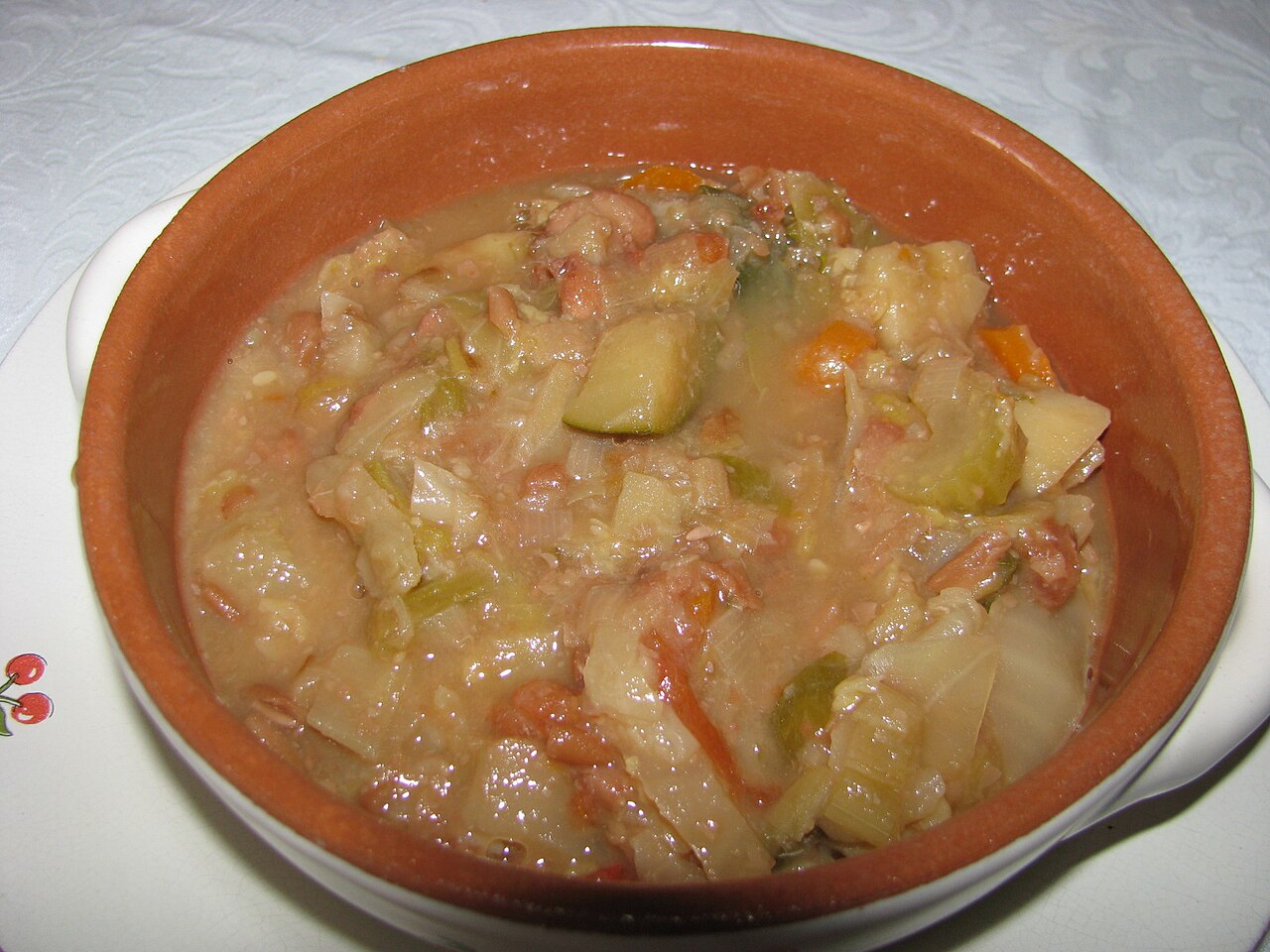
Ribollita means "reboiled", and the name is the recipe. It's a Tuscan peasant soup of white beans, cavolo nero (the long, dark, crinkled kale also sold as Tuscan or lacinato kale) and other vegetables, layered with stale bread, left overnight and brought back to the boil the next day. On the first day you have a good bean and bread soup. After reboiling, the bread melts into the beans and greens and the whole pot turns so thick you could almost eat it with a fork.
It's a dish of thrift: bread too hard to eat on its own, a pot of beans, and the hardy greens of a Tuscan winter. Tuscan bread is traditionally baked without salt, which is part of why the soup takes so much seasoning and so much olive oil.
The most common mistake is rushing the soffritto, the base of onion, carrot and celery cooked slowly in olive oil. Give it a full 20 minutes over gentle heat, until it's soft, sweet and golden, and the soup has a foundation. The second mistake is skipping the second day. It's worth the wait.
Ingredients
Beans
Soup
To finish
Method
Tap a step's number to tick it off, and a time to start a timer.
The day before: soak the beans
Put the beans in a large bowl, cover with at least three times their volume of cold water and leave to soak for 8–12 hours. Drain and rinse.
Cook the beans
Put the beans in a pot with the 2 l water, the sage and the crushed garlic. Bring to a boil, skim off any foam, then lower the heat until the water barely trembles. Simmer, partly covered, for 60–90 minutes, adding the salt after 30 minutes, until the beans are creamy all the way through. Top up with hot water if they start to poke above the surface.
Discard the sage and garlic. Scoop out half the beans with about 250 ml of their cooking liquid and blend or mash them to a smooth purée. Keep the rest of the beans in their liquid.
Make the soup
In a large, heavy pot (at least 5 l), warm the 5 tbsp olive oil over medium-low heat. Add the onion, carrots and celery with a pinch of salt and cook gently for 20 minutes, stirring every few minutes, until very soft, sweet-smelling and pale gold. Add the sliced garlic and thyme and cook for 2 minutes more.
Add the tomatoes and cook for 5 minutes, until they've thickened and darkened slightly. Add the potato, then the cavolo nero a handful at a time, stirring until each batch wilts, about 5 minutes in all.
Add the bean purée, the whole beans with all their cooking liquid, the 500 ml water and the salt. Bring to a boil, then lower the heat and simmer, partly covered, for 45 minutes, stirring now and then, until the cavolo nero is silky and completely tender and the potato is falling apart. The soup should be thick but still brothy; add a little water if it looks dry. Fish out the thyme stems, season with pepper and taste for salt.
Layer and rest
Spread a ladleful of soup over the base of a large pot or deep dish and cover it with a layer of bread slices. Repeat, finishing with a layer of soup, then leave for 15 minutes, until the bread has drunk up the liquid.
Let it cool, uncovered, until it stops steaming, then cover and refrigerate within 2 hours. A wide, shallow dish cools fastest. Leave it in the fridge overnight, at least 8 hours.
Reboil and serve
The next day, put the soup in a heavy pot with a splash of water, 100–200 ml, and set it over medium-low heat. Bring it slowly back to the boil for 15–20 minutes, stirring and breaking up the bread with a wooden spoon, until the soup is bubbling hot all the way through and so thick a spoon nearly stands up in it. Let it bubble gently for 5 minutes more, stirring so it doesn't catch.
Take it off the heat and rest for 5 minutes. Ladle into bowls, pour a thread of olive oil over each, grind over some pepper and serve with the raw onion on the side, if using.
Swaps
Cooking for coeliac disease or an allergy? Check every label: the notes below say which ones matter.
Gluten-free
- The bread is the only gluten in the pot; the beans, vegetables, tomatoes and oil are naturally gluten-free. A sturdy gluten-free loaf, dried hard in the oven as in the Tips, can stand in, but most turn pasty or gummy rather than melting into the soup, so the texture changes. Many also contain egg or milk, so check the label if you want the soup to stay vegan.
- Or leave the bread out and purée two-thirds of the beans in step 3 instead of half, for body: a very good Tuscan bean and cavolo nero soup, but honestly not ribollita any more.
Plant-based
- Already vegan as written, provided the bread is made without milk, butter or honey (see Tips). The parmesan rind in the Variations makes it neither vegan nor vegetarian.
High-protein
- Stir a drained 400 g can of cannellini or borlotti beans into the pot with the whole beans in step 6: about 3 g more protein per bowl.
- Top each bowl with a poached or fried egg (about 6 g), or grate 20 g parmesan or pecorino over at the table (about 5–7 g). Either makes it no longer vegan, and traditional parmesan and pecorino are made with animal rennet, so the cheese isn't vegetarian either.
Tips
- The bread must be properly stale: two or three days old, dry and hard. Fresh bread turns to paste. If yours is fresh, dry the slices in a 120°C (100°C fan) oven for 20–30 minutes until crisp but not coloured.
- If your bread is salted, as most bread outside Tuscany is, hold back some of the salt and season at the end. To keep the soup vegan, choose a loaf made without milk, butter or honey.
- Cavolo nero is at its best in the cold months. Out of season, curly kale or savoy cabbage is the closest swap; strip out the tough stems either way.
- Stir often while it reboils. The bread and puréed beans settle and scorch on the bottom of the pot faster than you'd expect.
- Save your best extra-virgin olive oil for the end. A generous pour of raw oil over each bowl is part of the dish, not a garnish; new-season oil, olio nuovo, is prized for it in Tuscany in late autumn.
Make ahead and storage
- Ribollita keeps for 4 days in the fridge and thickens every day. Reheat only as much as you'll eat, with a splash of water, and bring it to a full boil.
- To freeze, stop after step 6: cool the soup and freeze it, without the bread, for up to 3 months. Thaw it in the fridge, bring it to the boil, then carry on from step 7.
Variations
- Canned beans (shortcut): skip steps 1–3. Drain and rinse 3 × 400 g cans of cannellini beans, blend half of them with 250 ml water, and add the purée and whole beans in step 6 with 1.25 l water instead of the bean liquid and 500 ml water. You'll still need the overnight rest.
- Parmesan rind: simmer a piece of parmesan rind in the soup in step 6 and lift it out before layering. It adds a savoury depth, but the soup is then neither vegan nor dairy-free, and not strictly vegetarian either, since Parmigiano Reggiano is made with animal rennet.
- More greens: many Tuscan cooks add other vegetables alongside the cavolo nero, such as a few leaves of chard or savoy cabbage, a courgette or a handful of green beans. Add them with the cavolo nero.
- Baked finish: after reboiling, some cooks spread the soup in an ovenproof dish, cover it with thinly sliced red onion and a drizzle of oil, and bake it at 200°C (180°C fan) for 20–25 minutes, until the onion is soft and the edges are crusty.
Your notes
Keep your cooking notes private in your account. Save what you changed and what you'd do next time.
Reviews & cooks' tips
Reviews and tips from people who've cooked this appear here.