
Ghana · Hearty & chunky
West African peanut soup
Browned chicken simmered in a tomato, ginger and scotch bonnet broth, thickened with peanut butter until its red oil rises. Rich and fiery, with soft rice balls alongside.
- Prep
- 20 min
- Cook
- 1 hr 40 min
- Total
- 2 hr 5 min
- Effort
- Takes some care
- Serves
- 6
Ratings by the Soupmap Culinary Team, not readers.
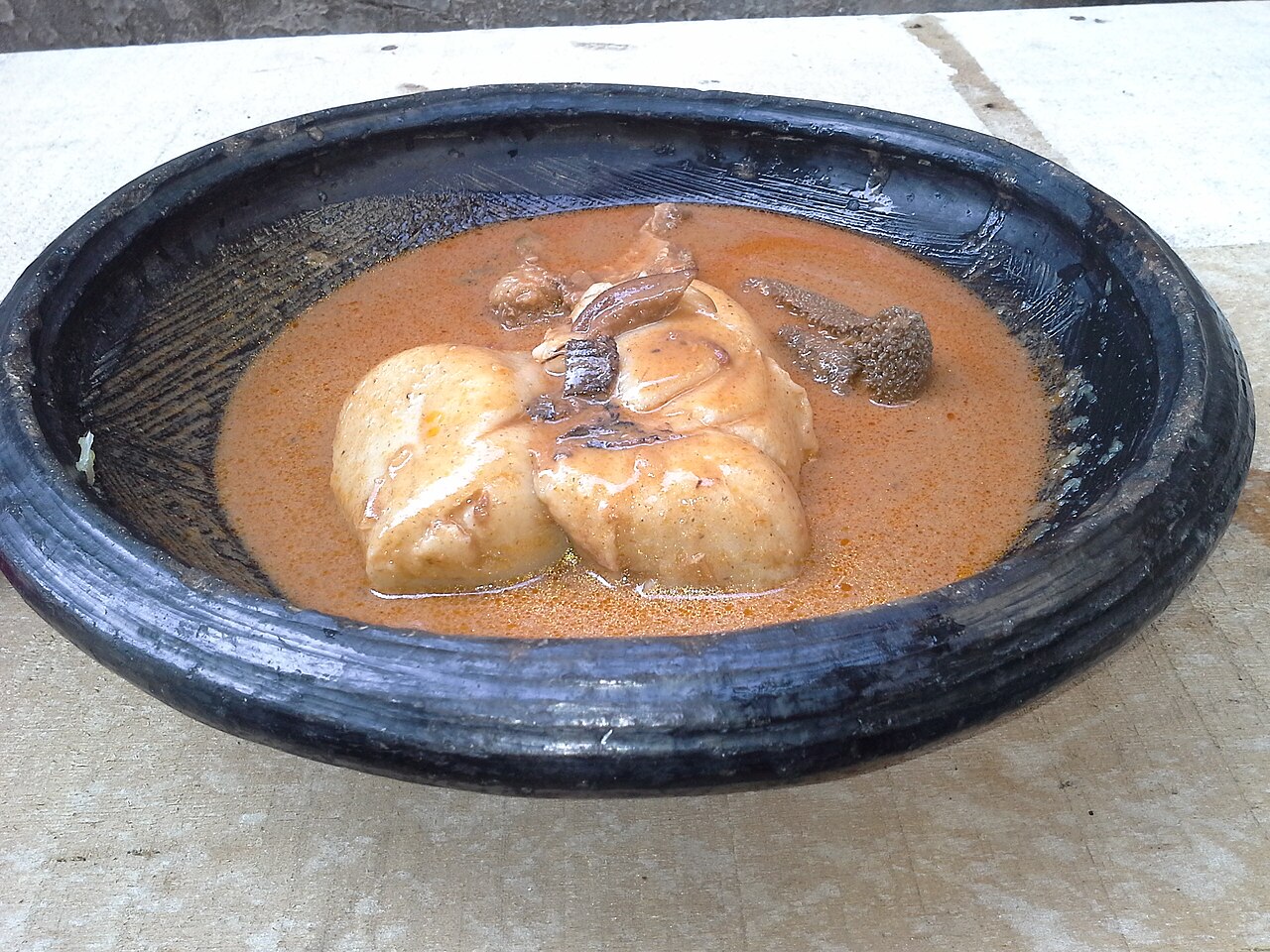
Groundnut soup, as peanut soup is usually called in West Africa, is cooked right across the region, from Senegal and The Gambia to Nigeria, with a different name and a different balance in many places. In Ghana it's nkatenkwan (in Twi, one of Ghana's main languages, nkate means groundnuts and nkwan means soup), and that's the style this recipe follows: chicken in a tomato-red broth with ginger, garlic and scotch bonnet, thickened with ground peanuts rather than cream or flour.
The peanuts need real cooking. Peanut butter stirred into broth and served straight away tastes flat and pasty. Simmered for the best part of an hour, it loses that rawness, the soup deepens to orange, and a slick of reddish oil rises to the surface. That oil is the traditional sign the soup is ready, and it's the cue to watch for here.
The two common mistakes are using sweetened peanut butter, which makes the soup cloying, and cooking it down as thick as a stew. It should stay a soup: pourable and generous with broth, for scooping up with omo tuo (soft, mashed rice balls) or fufu (a smooth, stretchy dough of pounded cassava and plantain).
Ingredients
Soup
Rice balls (omo tuo)
Method
Tap a step's number to tick it off, and a time to start a timer.
Brown the chicken
Pat the chicken dry and season it all over with 1 tsp of the salt. Heat the oil in a large, heavy pot (at least 5 l) over medium-high heat and brown the chicken in two batches, 4–5 minutes per side, until golden. It doesn't need to be cooked through yet. Move it to a plate.
Lower the heat to medium. Add the chopped onion and cook for 5–6 minutes, stirring and scraping up the browned bits, until soft. Add the ginger and garlic and cook for 1 minute, until fragrant, then stir in the tomato paste and cook for 2 minutes, until it darkens to brick red.
Make the broth
Return the chicken and its juices to the pot. Add the whole tomatoes, the quartered onion, the scotch bonnets left whole and unbroken, 1.5 l of the stock and the remaining 1/2 tsp salt. Bring to a boil, then simmer, partly covered, for 15 minutes, until the tomato skins split and the tomatoes are soft.
Carefully lift out the tomatoes, onion and chillies with a slotted spoon, taking care not to burst the chillies. Blend the tomatoes and onion until smooth, adding as much scotch bonnet as you want: none for gentle warmth, half of one for a proper kick, all of it for serious heat. Pour the purée back into the pot through a sieve, pressing it through with a spoon and discarding the seeds and skins.
Add the peanuts
Warm the remaining 500 ml stock. Put the peanut butter in a bowl and whisk in the warm stock a ladleful at a time until you have a smooth, pourable paste with no lumps, then stir it into the pot.
Simmer gently, partly covered, for 40–50 minutes, stirring and scraping the bottom every 5–10 minutes, as peanut scorches easily. It's ready when the soup has turned deep orange, a film of reddish oil has risen to the surface, and the chicken is cooked through and coming away from the bone. Taste for salt. If it has thickened beyond a pourable soup, add a little hot water.
Make the rice balls
While the soup simmers, put the rice, water and salt in a heavy saucepan and bring to a boil. Stir once, cover tightly and cook over the lowest heat for 20–25 minutes, until the water has been absorbed and the rice is very soft, softer than you'd normally cook it.
While the rice is still hot, mash it hard against the side of the pan with a sturdy wooden spoon or potato masher for 2–3 minutes, until it's sticky and mostly smooth, with some grains still visible. Wet a small bowl with water, put in a portion of rice and swirl it around until it rounds into a ball. Keep the balls covered and serve them within the hour.
Serve
Put a rice ball in each wide bowl and ladle the soup and chicken around it.
Swaps
Cooking for coeliac disease or an allergy? Check every label: the notes below say which ones matter.
Gluten-free
- Gluten-free as written. Check that the chicken stock is labelled gluten-free (many stocks and cubes contain wheat or barley) and that the peanut butter is just peanuts and salt. If you serve it with fufu, check the fufu flour label too.
Plant-based
- Without the chicken it's a different, lighter soup, closer to the sweet potato and peanut stews often made outside West Africa than to nkatenkwan. Use vegetable stock labelled vegan (and gluten-free if you need it) and start at step 2, cooking the onion in the oil.
- Add 600 g sweet potato in 3 cm chunks and 400 g cooked chickpeas or black-eyed peas for the last 25 minutes of the peanut simmer, until the sweet potato is tender.
High-protein
- It's already generous: roughly 40 g protein per bowl from the chicken and peanuts, before the rice.
- Add 400 g cooked black-eyed peas with the peanut paste: about 5 g more per bowl.
- Simmer a peeled hard-boiled egg per person in the soup for the last 10 minutes: about 6 g each.
Tips
- Scotch bonnets are among the hottest chillies sold in most shops. Wear gloves to handle them, and if you're unsure, add the blended chilli a little at a time, tasting as you go: you can always add heat, never take it away. Habanero is the closest substitute; a milder fresh red chilli makes a gentler soup.
- Use peanut butter whose only ingredients are peanuts, and perhaps salt, with its separated oil stirred back in. Sweetened spreads made with sugar or palm oil make the soup sickly. To make your own paste, grind roasted unsalted peanuts in a food processor for 3–5 minutes, scraping down the sides, until they turn from crumbs to a runny paste.
- Once the peanut is in, stir often and right down to the bottom. A scorched layer gives the whole pot a burnt taste that can't be fixed.
- Allergy: this soup is built on peanuts and isn't safe for anyone with a peanut allergy. Tell everyone at the table what's in it before serving, because once the peanut has melted into the broth there's no way to see it, and wash the pot, blender and spoons thoroughly afterwards.
Make ahead and storage
- The soup is even better the next day. Cool it quickly and refrigerate within 2 hours; it keeps for 3 days, or 3 months frozen. The oil sets on top when cold: stir it back in as you reheat, and bring the soup to a full simmer before serving.
- Rice balls are best freshly made. Cool any leftover rice within 1 hour, keep it in the fridge, eat it within 24 hours and reheat it until steaming hot all the way through.
Variations
- With fufu: serve with fufu instead of rice balls. Fufu flour made from cassava and plantain is widely sold; mix and cook it following the packet instructions.
- With goat: bone-in goat, cut into chunks, is a popular alternative to chicken. It needs longer: after browning, simmer it in 1.5 l of the stock for about 1 hour before adding the tomatoes, onion and chilli in step 3, and check that it's tender before the peanut goes in.
Your notes
Keep your cooking notes private in your account. Save what you changed and what you'd do next time.
Reviews & cooks' tips
Reviews and tips from people who've cooked this appear here.