
Japan · Hearty & chunky
Tonjiru (pork and vegetable miso soup)
Thin pork belly and a basket of root vegetables fried in sesame oil, simmered in dashi and finished with miso. The winter miso soup that eats like a meal.
- Prep
- 25 min
- Cook
- 55 min
- Total
- 1 hr 25 min
- Effort
- Easy
- Serves
- 4
Ratings by the Soupmap Culinary Team, not readers.
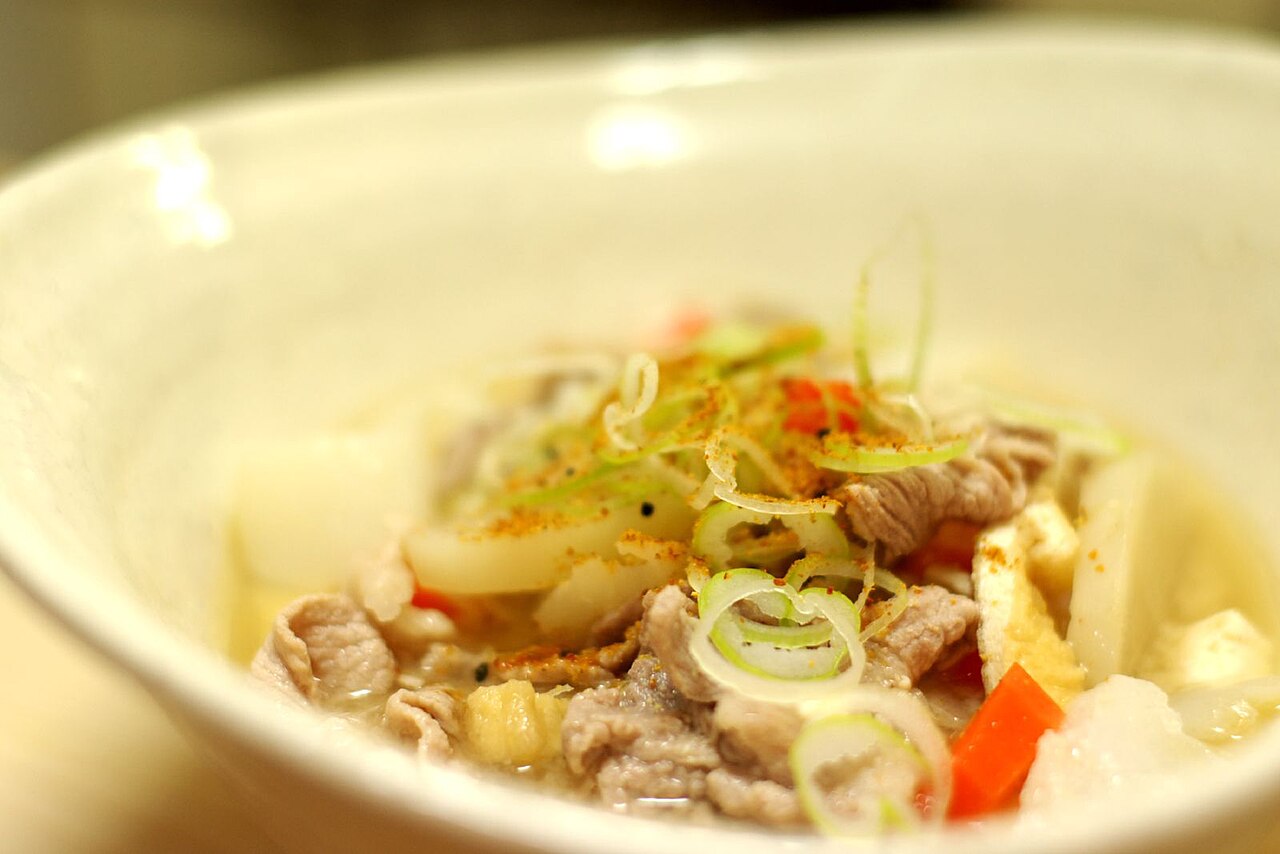
Tonjiru (the same characters are also read butajiru) is miso soup with a full larder behind it: pork belly, daikon (white radish), carrot, gobo (burdock root), konnyaku (a firm, bouncy jelly made from the konjac plant) and satoimo (taro), all simmered in dashi, the light Japanese stock, until soft and sweet. With a bowl of rice and a pickle, it's dinner.
The flavour is set in the first five minutes. The pork goes into a hot pot with sesame oil so its fat starts to render, and the vegetables are turned in that fat before any liquid goes in. That toasty, rounded richness carries the whole pot. Burdock matters almost as much: its earthy, woodsy smell is the soup's signature, so it's worth a trip to a Japanese or Korean grocer.
The usual mistake is the one every miso soup invites: boiling it hard after the miso goes in. Simmer the vegetables until tender first, then add the miso over low heat and stop just before it bubbles. There's more about the dish in our tonjiru essay.
Ingredients
Dashi
Soup
Method
Tap a step's number to tick it off, and a time to start a timer.
Make the dashi
Wipe the kombu with a damp cloth, put it in a saucepan with the cold water and leave to soak for 30 minutes while you prepare the vegetables.
Set the pan over low heat and warm it slowly for 10–15 minutes. When small bubbles cling to the kombu and the surface starts to tremble, lift the kombu out, before the water boils.
Bring the water just to the boil over medium heat, turn off the heat and scatter in the katsuobushi. Leave it until the flakes sink, 2–3 minutes, then strain through a sieve lined with a damp paper towel without pressing. You'll have about 1 l.
Prepare the vegetables
Peel the daikon and cut it into 5 mm quarter-moons: halve it lengthways, halve again, then slice. Peel or scrub the carrot and cut it the same way.
Scrub the burdock with a stiff brush or scrape it with the back of a knife rather than peeling it, since much of the aroma sits just under the skin. Shave it into thin slivers, turning it as if you were sharpening a pencil, or slice it thinly on the diagonal, dropping the pieces into a bowl of cold water as you go. Soak for 5 minutes, then drain.
Peel the taro with dry hands (wet, its slippery skin can make some people's hands itch) and cut it into 2–3 cm chunks. Rub with a pinch of salt and rinse off the slime. If you're using potatoes, peel them, cut them the same size and keep them in cold water.
Tear the konnyaku into bite-sized pieces with a teaspoon or your fingers; the rough edges hold more flavour than clean cuts. Boil it in a small pan of water for 3 minutes to get rid of its faintly alkaline smell, then drain.
Cook the soup
Heat the sesame oil in a large, heavy pot over medium heat. Add the pork and stir-fry until it has lost its pink colour and the fat is turning translucent and sizzling, 2–3 minutes.
Add the burdock, carrot, daikon and konnyaku and stir-fry until everything is glossy with fat and the burdock smells nutty, 2–3 minutes. Add the taro or potatoes and stir once.
Pour in the dashi and bring it to the boil over medium-high heat, skimming off the grey foam that rises. Lower the heat to a gentle simmer, partly cover and cook until the daikon is translucent and a skewer slides easily into the taro, 15–20 minutes.
Turn the heat to low. Dissolve about two-thirds of the miso in a ladle or small sieve dipped into the pot, taste, and add the rest gradually until the soup tastes rich and savoury. Heat until it's just about to bubble, about 1 minute, then turn off the heat.
Ladle into bowls and top with the spring onion. Put the shichimi on the table so everyone can add it a pinch at a time; it builds.
Swaps
Cooking for coeliac disease or an allergy? Check every label: the notes below say which ones matter.
Gluten-free
- Use a miso labelled gluten-free. Barley miso (mugi miso) contains gluten, and some rice and blended misos are made with barley or wheat too.
- The homemade dashi, pork, vegetables and konnyaku are gluten-free; check the shichimi label as well.
Plant-based
- Without pork it isn't tonjiru any more (ton means pork), but it makes a miso-seasoned cousin of kenchinjiru, the temple vegetable soup. Soak 4 dried shiitake with the kombu and leave out the katsuobushi, for a kombu-shiitake dashi.
- Instead of the pork, tear 200 g firm tofu into chunks and fry it with the vegetables in step 9, with 1 tbsp more sesame oil to make up some of the lost richness.
- Check the miso label: dashi-iri miso (miso with dashi added) contains bonito.
High-protein
- As written a bowl has roughly 9 g protein. Add 300 g firm tofu, in 2 cm cubes, just before the miso: about 9 g more per bowl.
- Add 200 g thinly sliced pork shoulder or loin with the belly: about 10 g more per bowl.
Tips
- Let the pork sizzle, not stew. Rendering the fat in sesame oil and coating the vegetables in it gives a deeper, rounder soup than simmering everything raw. If the pot looks wet and the pork is turning grey without sizzling, turn up the heat.
- Skim once, then leave the fat alone. Skimming the foam at the first boil keeps the flavour clean, but the shimmer of pork fat on the surface is the point of the soup.
- If you can't find burdock, salsify is the closest match; a small parsnip is sweeter but works. Or leave it out and add a handful of shiitake or shimeji mushrooms for earthiness.
- Thinly sliced pork belly is sold for hot pot at Japanese, Chinese and Korean grocers. Otherwise, freeze a piece of skinless belly for 45–60 minutes until firm and slice it as thinly as you can.
- Taro or potato: taro (fresh, or frozen and ready-peeled from Asian grocers) gives the broth a gentle, silky body. A waxy potato holds its shape; a floury one partly dissolves and thickens the soup more. Both turn up in Japanese homes.
- Some cooks season in two stages, stirring a third of the miso in while the vegetables simmer so it seasons them through, then adding the rest at the end for aroma. Either way, stop before it boils.
Make ahead and storage
- Tonjiru reheats well, and plenty of people prefer it the next day. Cool it quickly, cover and refrigerate for up to 2 days. Reheat over medium-low heat until steaming hot all the way through, without letting it boil hard.
- Don't freeze it: konnyaku turns spongy and taro and potato go grainy.
Variations
- More in the pot: add cubes of firm tofu or strips of aburaage (thin fried tofu) just before the miso, or onion, mushrooms, sweet potato or a handful of shredded cabbage with the dashi.
- Leaner: use thinly sliced pork shoulder instead of belly. The soup is lighter but still good.
- Without dashi: some cooks use plain water and let the pork and vegetables make their own stock. Expect a lighter, sweeter soup, and taste as you add the miso.
Your notes
Keep your cooking notes private in your account. Save what you changed and what you'd do next time.
Reviews & cooks' tips
Reviews and tips from people who've cooked this appear here.