
Italy · Clear & light
Stracciatella (Roman egg-drop soup)
Hot chicken broth with eggs, parmigiano, semolina and nutmeg whisked in so they set into soft "little rags". Rome's fastest soup, on the table in 15 minutes.
- Prep
- 5 min
- Cook
- 10 min
- Total
- 15 min
- Effort
- Easy
- Serves
- 4
Ratings by the Soupmap Culinary Team, not readers.
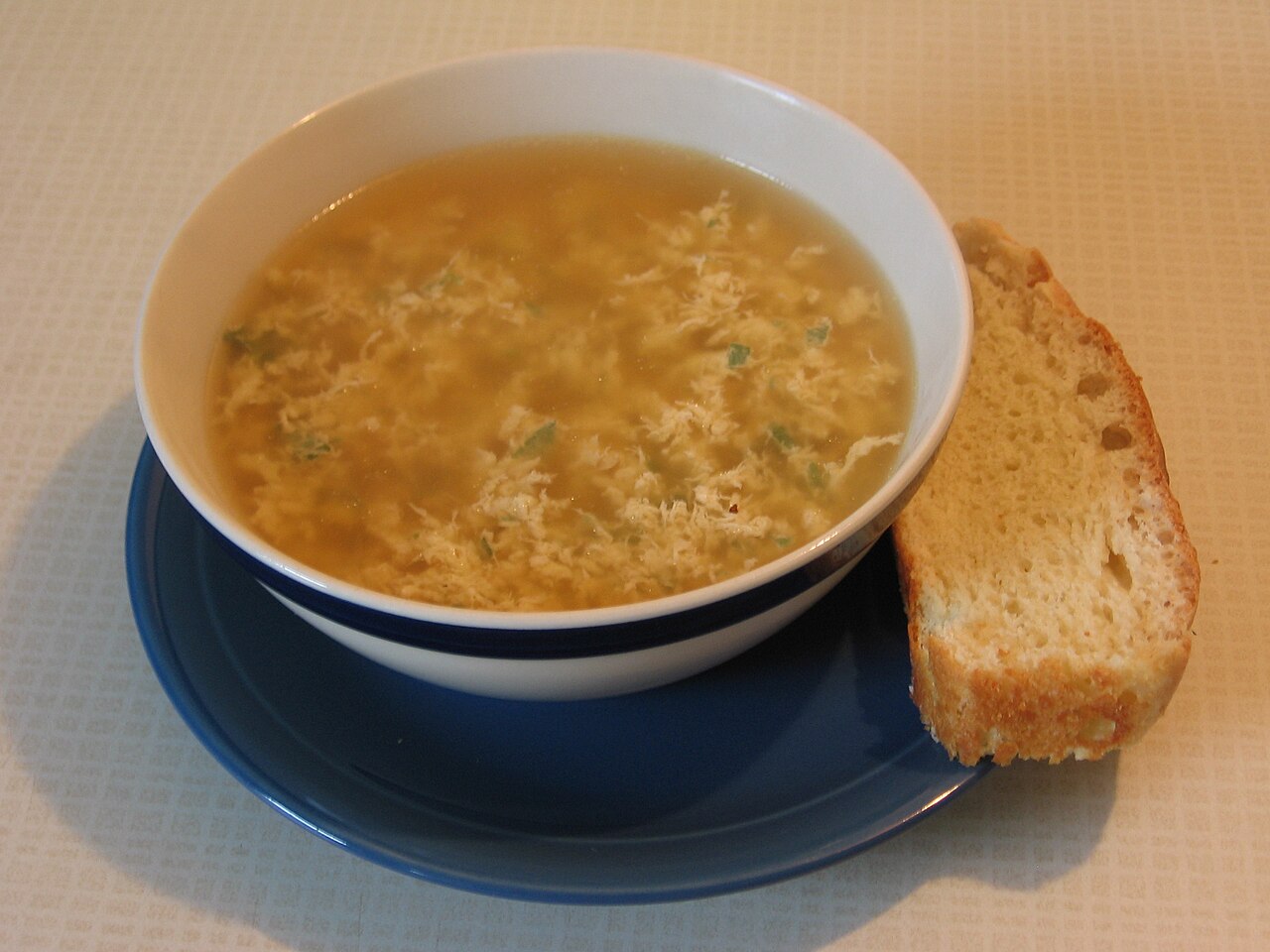
Stracciatella comes from straccio, Italian for "rag", and the name describes the soup exactly. Eggs beaten with grated parmigiano (Parmigiano Reggiano), a spoonful of semolina and a scrape of nutmeg are whisked into boiling broth, where they set into soft, ragged little shreds. The same word names the chocolate-flecked gelato and the shredded mozzarella and cream inside burrata, for the same reason. The soup belongs above all to Rome and the surrounding region of Lazio.
This version is quick because the broth comes ready-made, and I won't pretend otherwise: it means the stock is the whole flavour. Buy the best chicken stock you can, ideally a fresh one from the chiller cabinet, or use homemade from the freezer. Choose low-salt, because the cheese brings plenty of its own.
Semolina is a traditional addition. It gives the rags a little body and softness, so they're tender rather than rubbery. The mistake is pouring the egg into broth that's only hot, not boiling: it drifts, clouds the pot and turns grainy instead of setting into distinct rags. Get the broth to a proper rolling boil, then whisk as the egg goes in.
Ingredients
Method
Tap a step's number to tick it off, and a time to start a timer.
Make the egg mixture
Set aside 4 tbsp of the cold stock. Pour the rest into a saucepan, cover and bring it to a rolling boil over medium-high heat, 6–8 minutes.
Meanwhile, beat the eggs in a bowl with a fork until smooth. Beat in the parmigiano, semolina, nutmeg, parsley and a small pinch of salt, then the 4 tbsp cold stock, until you have a loose, evenly speckled batter that pours easily.
Cook the rags
When the stock is boiling, taste it. It should be slightly under-seasoned, since the cheese will add salt; add a little salt only if it tastes flat.
Keep the heat at medium-high. Stir the stock in a circle with a whisk or fork and pour in the egg mixture in a steady stream, whisking all the while. The egg will set almost at once into small, soft shreds.
Turn the heat down to low and simmer gently, stirring now and then, until the semolina has lost its raw, gritty feel and the rags are set right through, with no runny egg left, 2–3 minutes. The soup will have thickened very slightly. Taste for salt and add a few grinds of black pepper.
Ladle into warm bowls and serve straight away, with more grated parmigiano at the table.
Swaps
Cooking for coeliac disease or an allergy? Check every label: the notes below say which ones matter.
Gluten-free
- Not gluten-free as written: semolina is wheat. Leave it out (the rags will be finer and more delicate) and use a chicken stock labelled gluten-free. Parmigiano Reggiano is naturally gluten-free.
- The breadcrumb and pastina variations contain gluten too, unless you use versions labelled gluten-free.
Plant-based
- There's no real vegan stracciatella: egg and cheese are the dish, and a version without them is a different soup.
- For vegetarians, use a well-flavoured vegetable stock and a hard cheese made without animal rennet: Parmigiano Reggiano and Grana Padano are both made with calf rennet. The soup is lighter and less savoury than with chicken stock.
High-protein
- Chicken: warm 300 g shredded cooked chicken in the boiling stock before the egg goes in: about 20 g more protein per bowl.
- More egg: scale the egg mixture up by half (6 eggs, 60 g parmigiano, 3 tbsp semolina and 6 tbsp cold stock): about 5 g more per bowl, and a thicker soup.
Tips
- Taste the stock before you start. With nothing simmered in the pot, a thin, flat stock makes a thin, flat soup. If yours tastes weak, boil it uncovered for 10 minutes to concentrate it before you add the egg; the soup is still ready in about 25 minutes.
- Boil, then whisk. The egg needs a rolling boil to set into rags straight away. Stir slowly for large, soft rags or whisk hard for fine ones. Either way, turn the heat down afterwards: a hard boil toughens the egg.
- Grate the cheese finely and grate it yourself. A fine grater turns parmigiano into a fluffy powder that melts into the egg; coarse shreds clump and turn stringy in the hot broth. Grana Padano is a good alternative.
- Use fine semolina. The kind sold for puddings or gnocchi alla romana (baked semolina gnocchi) softens in a couple of minutes. Coarse semolina for pasta-making stays slightly gritty, so give it an extra minute.
- Serve it at once. The rags keep soaking up broth as they sit and turn spongy.
Make ahead and storage
- Beat the egg mixture up to 1 hour ahead and keep it covered in the fridge. Stir it well before using, since the semolina settles.
- Leftovers keep for 1 day in the fridge. Reheat gently to a simmer, stirring; the rags will break into smaller pieces. Don't freeze it.
Variations
- Breadcrumbs instead of semolina: use 3 tbsp fine, dry breadcrumbs. The rags come out a little fluffier and softer.
- With spinach: stir 100 g roughly chopped baby spinach into the boiling stock and cook for 1 minute before adding the egg.
- Lemon: a little finely grated lemon zest in the egg mixture brightens the soup without making it sour.
- With pastina: simmer 80 g tiny soup pasta in the boiling stock until just tender, then add the egg. It makes the soup more of a meal.
- Gluten-free: leave out the semolina (the rags will be finer and more delicate) and use a stock labelled gluten-free.
Your notes
Keep your cooking notes private in your account. Save what you changed and what you'd do next time.
Reviews & cooks' tips
Reviews and tips from people who've cooked this appear here.