
Mexico · Hearty & chunky
Pozole rojo
Pork simmered until it falls apart, plump hominy and a brick-red broth of toasted guajillo and ancho chiles, finished at the table with cabbage, radish, oregano and lime.
- Prep
- 30 min
- Cook
- 3 hr 15 min
- Total
- 4 hr
- Effort
- Takes some care
- Serves
- 8
The total includes 15 min of soaking, resting or chilling.
Ratings by the Soupmap Culinary Team, not readers.
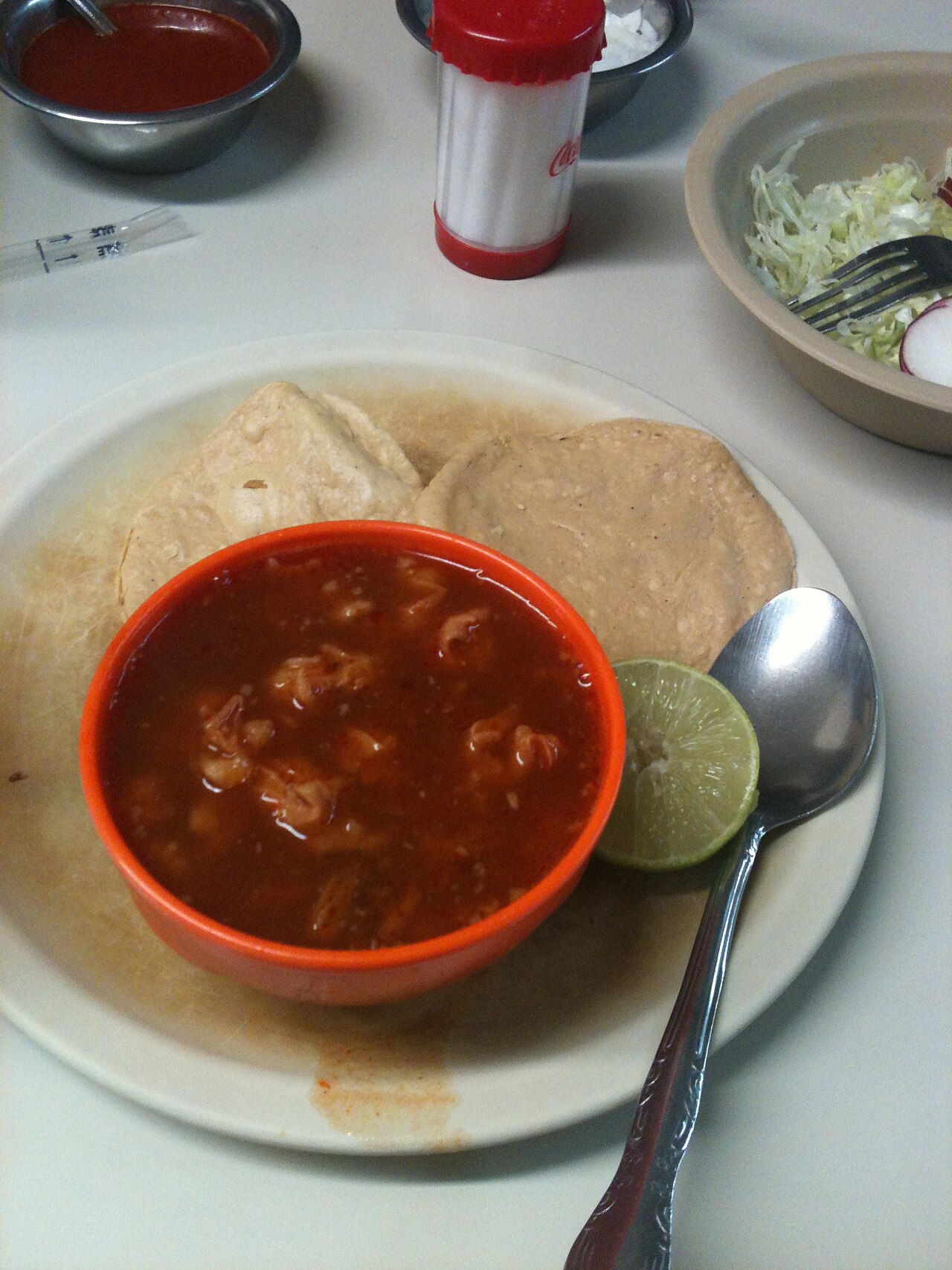
Pozole rojo, red pozole, is a soup built for a crowd and finished by each person at the table. The pot holds tender pork, a brick-red chile broth and hominy: big kernels of corn that have been nixtamalised, meaning cooked and steeped in an alkaline solution of slaked lime. That loosens their skins, softens the grain and gives them a gentle, tortilla-like flavour, and as they cook the kernels split open like flowers. Everything raw and crunchy (cabbage, radish, onion, oregano, lime) waits on the side.
The chile sauce is what makes it. Guajillo, the dried mirasol chile, brings a clean, tangy red; ancho, the dried poblano, adds a darker, raisin-like sweetness. Toasted for seconds, soaked, blended and then strained, they give a broth that is deep and smooth rather than gritty.
The usual mistake is scorching those chiles. They go from fragrant to burnt in moments, and one burnt chile can make the whole pot bitter. For pozole's place at Mexican celebrations, and its cousin menudo, see our journal piece.
Ingredients
Pork and broth
Red chile sauce
To serve
Method
Tap a step's number to tick it off, and a time to start a timer.
Simmer the pork
Put the pork shoulder and bone-in pork in a large pot (at least 8 l) with the cold water. Bring to a boil over high heat, then turn the heat down to medium-low and skim off the grey foam for the first 10 minutes.
Add the halved onion, garlic, bay leaves and 2 tsp salt. Simmer gently, with the lid ajar, until the shoulder pulls apart easily with a fork and the meat is slipping off the bones, 2–2 1/2 hours. If the liquid drops below the meat, top it up with hot water.
Make the chile sauce
While the pork simmers, wipe the chiles clean with a damp cloth. Pull off the stems, slit the chiles open and shake out the seeds, scraping away the pale veins.
Heat a dry heavy frying pan or comal (a flat griddle) over medium heat. Toast the chiles a few at a time, pressing them flat with a spatula, until they smell fragrant, blister slightly and turn a shade deeper, 10–20 seconds per side. They should stay pliable; any that smoke or blacken will taste bitter, so throw those out.
Put the toasted chiles in a heatproof bowl, cover them with just-boiled water and weigh them down with a small plate. Soak until soft and fleshy, about 20 minutes, then drain and discard the soaking water.
Put the chiles in a blender with the garlic cloves, quarter onion, 1 tsp oregano, cumin (if using), 1 tsp salt and the 500 ml broth ladled from the pork pot. Blend until completely smooth, about 2 minutes, with the lid's centre cap removed and a folded tea towel held over the opening so the steam can escape. Press the sauce through a fine sieve into a bowl with the back of a ladle, pour a little more broth through to rinse out the last of it, and discard the skins left behind.
Bring it together
When the pork is tender, lift the meat and bones onto a tray and fish out the onion, garlic and bay leaves. When the meat is cool enough to handle, about 10 minutes, tear it into large bite-sized pieces, discarding the bones, gristle and any big pieces of fat. Skim some of the fat off the broth if it looks heavy.
Heat the lard in a deep frying pan or saucepan over medium-high heat. Pour in the chile sauce, standing back because it will spit, and fry it, stirring often, until it darkens to a deep brick red and thickens slightly, 5–8 minutes.
Stir the fried sauce, the rinsed hominy and the pork into the broth. Simmer gently, uncovered, for 30 minutes, so the hominy soaks up the chile and the flavours come together. Pozole should be brothy, not stewy, so add hot water if it's thick.
Taste and season with salt. The broth should taste fully seasoned on its own, because the garnishes add none.
Serve
While the pozole simmers, prepare the garnishes and set them out in bowls with the tostadas.
Ladle the pozole into deep bowls and let everyone finish their own: a handful of cabbage, a few radish slices, a spoonful of onion, oregano crumbled between the palms, a good squeeze of lime and a pinch of ground chile for anyone who wants heat, with tostadas on the side.
Swaps
Cooking for coeliac disease or an allergy? Check every label: the notes below say which ones matter.
Gluten-free
- Already gluten-free as written: the hominy and tostadas are corn. Check that the tostadas are labelled gluten-free, since some are made with wheat flour blended in or fried in shared oil, and check the labels on the canned hominy, ground chile and dried spices if you're cooking for someone with coeliac disease.
Plant-based
- Use the neutral oil rather than lard, and make the broth with 3 l vegetable stock (check the label if you need it gluten-free) or water simmered for 45 minutes with the onion, garlic, bay and 20 g dried shiitake. Blend the chile sauce with this broth in step 6.
- In place of the pork, tear 600 g oyster or king oyster mushrooms into strips, brown them hard in a little oil and add them with the hominy in step 9. Check that the tostadas aren't fried in lard. It's a good, earthy bowl, but lighter than the pork original: the hominy, chile and garnishes carry it.
High-protein
- Already hearty: the shoulder alone gives roughly 25–30 g protein per bowl.
- Simmer an extra 600 g pork shoulder, in 5 cm chunks, with the rest (about 13 g more per bowl), or poach 500 g boneless, skinless chicken breast in the finished pozole for 15–20 minutes, until it reads 74°C in the middle, then shred it back in (about 14 g more per bowl).
Tips
- Toast by smell, not by colour. The moment the chiles smell toasty and soften in the pan, they're done. A few seconds too long and they turn bitter, so if in doubt, under-toast.
- Blend with broth, not the soaking water. The soaking water can carry bitterness and dust from the chiles, while the broth adds flavour.
- Strain the sauce. Guajillo skins are tough and never blend away completely. Sieving takes a few minutes and is the difference between a silky broth and a gritty one.
- Fry the sauce before it goes in. Cooking the purée in hot fat for a few minutes takes off its raw edge and deepens both its colour and its flavour. It's a basic step in Mexican chile cooking, and worth the spatter.
- Rinse the hominy. The canning liquid is starchy and salty and can taste of the can. Rinse the kernels in a sieve until the water runs clear.
- Substitutes. Mexican oregano is a different plant from Mediterranean oregano, more citrusy and grassy, and worth finding, but Mediterranean oregano works if you use a little less. Dried New Mexico red chiles can stand in for guajillo, and pasilla for ancho.
Make ahead and storage
- Pozole is even better the next day. Cool it quickly in shallow containers and refrigerate within 2 hours; it keeps for 4 days. The fat sets on top and is easy to lift off.
- It freezes well for up to 3 months, and the hominy holds its texture.
- The chile sauce can be made up to 3 days ahead (blend it with water instead of broth) and kept in the fridge.
- Prepare the garnishes up to 4 hours ahead. Keep the shredded cabbage covered in the fridge and the sliced radishes in a bowl of cold water.
Variations
- From dried hominy: soak 400 g dried, ready-nixtamalised hominy (maíz pozolero) overnight, then simmer it in unsalted water until the kernels burst open and are tender, 2–3 hours, before adding it in step 9. More work, and a chewier, more corn-flavoured kernel.
- Chicken pozole rojo: use 1.5 kg bone-in chicken thighs instead of the pork, simmer them in 3 l water with the onion, garlic and bay for 40–45 minutes, until cooked through (74 °C/165 °F), then shred and carry on as above.
- Pozole blanco: leave out the chile sauce for the clear "white" version, and put more ground chile on the table.
- Pressure-cooker shortcut: if your cooker holds everything at no more than two-thirds full, cook the pork and aromatics with 3 l water at high pressure for 45 minutes and let the pressure release naturally. Meanwhile do steps 3–5, then blend the sauce (step 6) with 500 ml broth from the cooker and carry on from step 7.
Your notes
Keep your cooking notes private in your account. Save what you changed and what you'd do next time.
Reviews & cooks' tips
Reviews and tips from people who've cooked this appear here.